

The most effective organic anti-pollution skincare methods combine two parallel defenses: a physical shield using plant-derived film-formers or mineral sunscreen, plus antioxidant-rich plant actives that neutralize the reactive oxygen species (ROS) pollution generates before they damage your skin. Research confirms that combining a polysaccharide film-former with mineral extracts outperforms either agent used solo against mixed pollutants and ozone. Neither approach alone is enough. Research on reconstructed epidermis models confirms that combining a polysaccharide film-former with mineral extracts outperforms either agent used solo against mixed pollutants and ozone. Here is your grab-and-go routine:
AM checklist:
- Gentle cleanse (low-pH, sulfate-free)
- Antioxidant serum (green tea polyphenols, vitamin C, resveratrol)
- Barrier moisturizer (ceramides, plant sterols, hyaluronic acid)
- Broad-spectrum physical sunscreen (zinc oxide, SPF 30 or higher)
PM checklist:
- Double-cleanse if you commuted or spent time outdoors
- Reparative antioxidant or peptide serum
- Barrier-repair moisturizer
- Gentle exfoliation 1–2 times weekly (enzyme or low-strength AHA)
“Physical shielding reduces particulate deposition while antioxidants neutralize radicals and metal chelators reduce catalytic metal-induced oxidation — combined strategies outperform single-mode protection for realistic daily exposure.” — Antipollution Skin Protection, PMC
Look for USDA Organic or COSMOS certification on every product you buy. Miraclegelnaturalskincare formulates around these principles: plant-derived actives, barrier repair, and a minimal synthetic load.
Table of Contents
- How urban pollution actually damages your skin
- Which organic ingredients are backed by science?
- How to build your AM and PM organic anti-pollution routine
- How to choose credible organic products and avoid greenwashing
- Practical ways to reduce your pollutant exposure beyond skincare
- When will you see results, and what does it cost?
- Your pre-purchase checklist for organic anti-pollution products
- What the research actually shows about plant polyphenols and film-formers
- Key Takeaways
- Miraclegelnaturalskincare makes this routine easier to build
- Useful sources for deeper reading
How urban pollution actually damages your skin
PM2.5 particles are small enough to sit on the skin surface and generate reactive oxygen species that overwhelm your skin’s natural antioxidant defenses. Ozone triggers oxidative signaling through a different pathway, depleting surface lipids and vitamin E. NOx and polycyclic aromatic hydrocarbons (PAHs) activate aryl-hydrocarbon receptors, which ramp up inflammatory cytokine production and stimulate melanin synthesis — the direct driver of pollution-linked pigmentation.
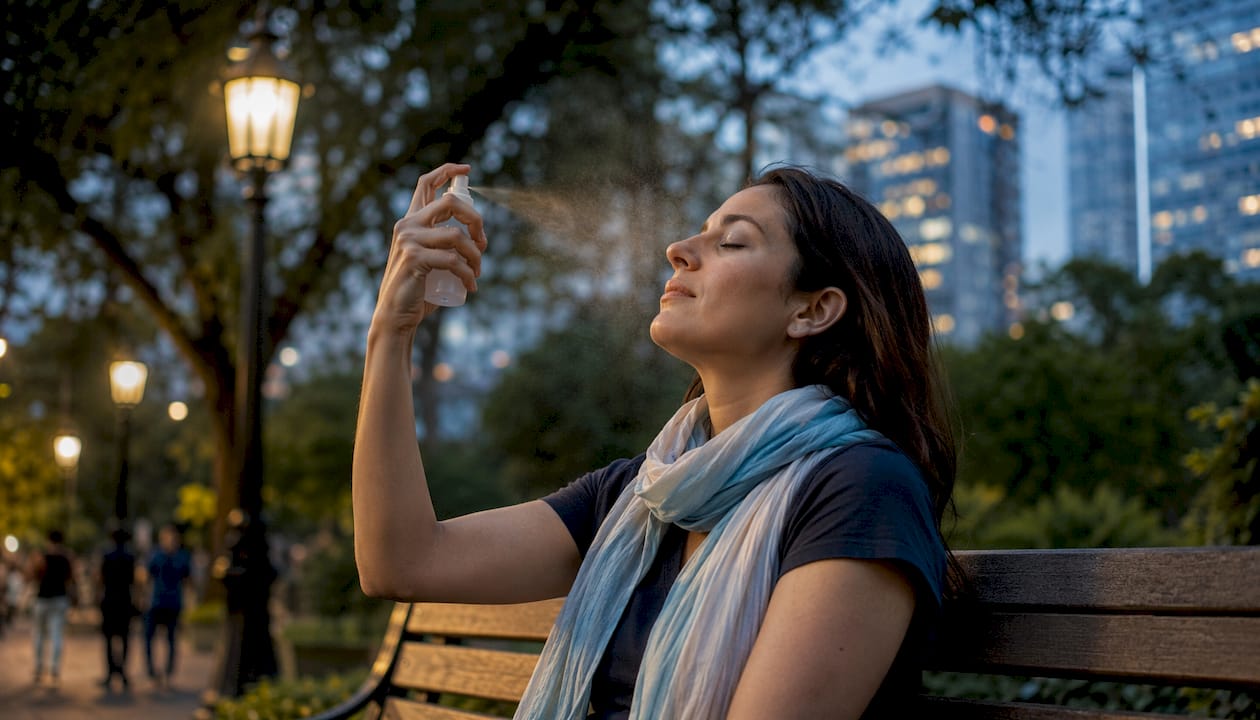
The visible result is a predictable pattern: dullness first, then uneven tone, then increased sensitivity and fine lines as the barrier weakens. Transepidermal water loss (TEWL) rises when the lipid matrix is compromised, which makes skin simultaneously dry and reactive. Studies linking PM2.5 exposure to measurable increases in inflammatory skin markers support what dermatologists see clinically: urban skin ages differently than rural skin, and the gap widens with cumulative exposure.
Each mechanism maps to a specific protection strategy. Remove deposited particles before they penetrate (cleanse). Neutralize ROS before they reach the dermis (antioxidants). Repair the lipid barrier so pollutants cannot enter as easily (barrier lipids). Shield the surface to reduce deposition in the first place (film-formers, physical sunscreen). That four-step logic is the backbone of every recommendation in this guide.
Statistic: A review of PM2.5 and skin research found consistent associations between particulate matter exposure and elevated inflammatory markers, including IL-1α, in human skin tissue models — the same biomarkers used to validate anti-pollution actives in clinical assays.
Which organic ingredients are backed by science?
The formulation science groups anti-pollution actives by mechanism, and that grouping is the most practical way to read a label. Here is what to look for and why it matters.
| Ingredient | Mechanism | Organic/Natural Source | Formulation Note |
|---|---|---|---|
| Green tea polyphenols (EGCG) | Neutralizes ROS; inhibits AhR-mediated inflammation | Camellia sinensis leaf extract | Pair with vitamin C for synergistic antioxidant effect |
| Resveratrol | Radical scavenger; downregulates pro-inflammatory cytokines | Grape skin, Japanese knotweed | Sensitive to light; prefer opaque packaging |
| Carotenoids (beta-carotene, lycopene) | Quench singlet oxygen; reduce UV + pollution oxidative load | Tomato, carrot, sea buckthorn | Fat-soluble; best in oil-based serums or creams |
| Vitamin C (botanical) | Regenerates vitamin E; brightens pigmentation | Kakadu plum, rosehip, acerola | Unstable at high pH; requires pH-controlled, encapsulated form |
| Biosaccharide gum / plant polysaccharides | Film-former; reduces particulate deposition and penetration | Fermented sugarcane, seaweed | High-MW versions create protective matrix without synthetic polymers |
| Ceramides (plant-derived) | Restores lipid barrier; reduces TEWL | Wheat germ, rice bran | Combine with cholesterol and fatty acids for full barrier repair |
| Hyaluronic acid | Humectant; maintains hydration under pollutant stress | Fermentation-derived (vegan) | Layer under moisturizer on damp skin |
| Zinc oxide | Physical UV + particulate shield; mild anti-inflammatory | Mineral (non-nano preferred) | Apply last in AM routine; pairs well with film-formers |
| Niacinamide | Reduces pigmentation; supports barrier lipid synthesis | Fermentation-derived | Compatible with most actives; stable across pH ranges |
Plant-derived polyphenols such as green tea catechins and resveratrol neutralize oxidative stress from PM2.5 and ozone and inhibit the aryl-hydrocarbon-receptor pathways that drive pollutant-triggered inflammation. Natural antioxidants including green tea, turmeric, vitamin C, and vitamin E show consistent protective effects in both in vitro and in vivo studies.
One formulation note worth emphasizing: botanical vitamin C derivatives can be unstable. Proper pH control, chelation, or encapsulation is required for real efficacy. If a brand does not disclose how they stabilize their vitamin C, that is a gap worth asking about. Industry formulators also recommend choosing plant-based polysaccharide film-formers over synthetic liquid polymers, which can contribute to microplastic pollution — a problem you do not want to trade one pollutant for another.
How to build your AM and PM organic anti-pollution routine
Sequence matters as much as ingredient selection. Layering in the wrong order reduces absorption and can even destabilize actives.
AM routine (protection focus)
- Gentle, low-pH cleanser. Remove overnight sebum and any residual environmental particles without stripping the acid mantle. Sulfate-free, plant-derived surfactants are the standard for chemical-free anti-pollution products.
- Antioxidant serum. Apply to slightly damp skin. Green tea, resveratrol, or vitamin C serums go first because they are typically water-based and lightest in texture. Wait 30–60 seconds before the next step.
- Barrier moisturizer. A ceramide-rich or plant sterol cream locks in the serum and reinforces the lipid matrix. This is the layer that reduces TEWL throughout the day.
- Physical sunscreen (zinc oxide, SPF 30+). This is non-negotiable. Zinc oxide doubles as a mild particulate shield and UV blocker. Apply generously and reapply every two hours if outdoors.
- Optional protective mist or primer. A polysaccharide-based mist or makeup primer with biosaccharide gum adds a film-forming layer over sunscreen for high-pollution commutes.
PM routine (repair focus)
- First cleanse. An oil or balm cleanser dissolves sunscreen, makeup, and lipid-soluble pollutants. This step is often skipped and should not be.
- Second cleanse. A water-based cleanser removes water-soluble residue and surface particles. Together, the two steps follow the remove → repair → protect sequence that formulation science recommends.
- Reparative serum. PM is when skin repairs itself. A peptide serum, a resveratrol concentrate, or a niacinamide formula supports collagen synthesis and reduces pigmentation signals. For those interested in how organic actives support structural repair, collagen-stimulating plant actives are worth understanding.
- Barrier-repair moisturizer. Heavier than your AM formula is fine here. Shea butter, plant sterols, and ceramide blends work overnight.
- Exfoliation (1–2 times weekly, not nightly). Enzyme exfoliants (papain, bromelain) or low-strength AHAs remove the surface layer of dead cells and deposited particles that cleansing alone misses. Sensitive skin does better with enzyme options.
Layering rule: lightest to heaviest, always. Water-based serums before oil-based, oils before creams, creams before sunscreen. Niacinamide and vitamin C are compatible in most organic formulations at moderate concentrations — the old advice to avoid them together was based on very high concentrations that are uncommon in natural products.
Pro Tip: For a commuter micro-routine at the office, keep a gentle micellar water or antioxidant facial mist at your desk. A quick midday refresh on high-AQI days removes surface particles before they have hours to generate ROS.
How to choose credible organic products and avoid greenwashing
“Natural” on a label means nothing legally in the United States. “Organic” means something only when it is backed by a third-party certification. USDA Organic certification requires at least 95% organically produced ingredients. COSMOS certification (used widely in Europe and increasingly recognized by US brands) applies stricter formulation rules including restrictions on synthetic preservatives and processing agents. EWG Verified is a US-specific third-party standard that screens for ingredient safety and transparency.
Beyond certification, look for a full INCI ingredient list, disclosed concentration ranges for key actives, and evidence of stability testing. Brands that publish biomarker assay results — even small-scale in vitro studies using IL-1α or PGE2 as markers — are giving you something to evaluate. Brands that only offer marketing language are not.
Red flags to walk away from:
- “Natural” or “clean” claims with no third-party certification
- “Fragrance” or “parfum” as a single undisclosed ingredient (can hide dozens of synthetic compounds)
- PFAS (per- and polyfluoroalkyl substances) in any form
- Synthetic liquid polymers (polyethylene, polypropylene derivatives) that release microplastics
- No patch-test guidance anywhere on the product or site
Pro Tip: Introduce one new active at a time. Patch test on the inner forearm for 48–72 hours before applying to your face. If you are adding both a new vitamin C serum and a new exfoliant in the same week, you cannot isolate which one caused a reaction.
Avoiding harsh synthetics is a separate skill from reading certifications. The guide to avoiding harsh chemicals covers the specific ingredient names to watch for on US product labels.
Practical ways to reduce your pollutant exposure beyond skincare
Topical products do a lot, but they cannot compensate for continuous, unmanaged exposure. These habits cut the actual pollutant load your skin faces each day.
Daily habits:
- Wash your face within 30 minutes of returning from a commute or outdoor time in a high-traffic area.
- Change pillowcases at least twice a week. Pillowcases accumulate skin cells, oils, and any particles that transfer from hair and face overnight.
- Never sleep in makeup. Makeup traps PM2.5 and other particles against the skin for hours.
- Use a clean, soft cloth or silicone cleansing tool rather than rough exfoliating cloths that compromise the barrier.
Indoor air quality:
- A HEPA air purifier removes particles down to 0.3 microns, which covers the PM2.5 range. Activated carbon filters add VOC and NOx reduction.
- Ventilate on low-AQI days; keep windows closed when AQI is above 100.
- Avoid indoor smoking entirely. Tobacco smoke generates the same ROS-producing compounds as outdoor pollution.
Outdoor timing and protection:
- Check a local AQI app (AirNow is the US government’s free tool) before outdoor exercise. Avoid heavy exertion when PM2.5 is elevated.
- A wide-brimmed hat and a scarf or buff over the lower face reduce direct particle deposition on skin during high-traffic commutes.
Lifestyle support:
- An antioxidant-rich diet (berries, leafy greens, tomatoes, nuts) replenishes systemic antioxidant capacity that pollution depletes.
- Adequate sleep is when skin repair peaks. Cutting sleep to under six hours measurably impairs barrier recovery.
When will you see results, and what does it cost?
Timeline expectations vary by what you are trying to fix. Barrier improvement and better hydration are typically noticeable within a few weeks of consistent use. Reduced redness and more even tone develop over longer use. Pigmentation and deeper structural repair require extended periods, and that timeline lengthens with ongoing high-pollution exposure. For mature skin, anti-aging tips for women 40+ address how these timelines interact with age-related barrier changes.
Budget ranges for organic anti-pollution products (US market):
- Entry-level cleansers: $12–$25 for a plant-based, sulfate-free formula. Cleansers are rinsed off, so spending heavily here is rarely worth it.
- Antioxidant serums: $30–$80 for a mid-range organic green tea or vitamin C serum with disclosed stability. This is where budget matters most — a poorly stabilized cheap serum delivers little benefit.
- Barrier moisturizers: $25–$65 for a ceramide or plant sterol cream with a clean ingredient list.
- Physical sunscreens (zinc oxide): $18–$45 for a mineral SPF 30–50 with no synthetic UV filters. Tinted zinc oxide formulas have improved significantly and are worth the extra few dollars for daily wear.
- Exfoliants (enzyme or low-AHA): $20–$55 for a gentle weekly treatment.
Value guidance: if you can only prioritize two products, make them a stable antioxidant serum and a physical sunscreen. Those two cover the neutralize and shield steps that matter most for daily urban exposure. A natural skincare regimen built around those two anchors outperforms a 10-step routine with weak or unstabilized actives.
One important note: organic certification and clinical efficacy are separate things. A product can carry a USDA Organic seal and still have no published evidence for its anti-pollution claims. Prefer brands that show both.
Your pre-purchase checklist for organic anti-pollution products
Before you click “add to cart,” run through these questions.
Ingredient and safety checks:
- Is the key active (vitamin C, green tea, resveratrol) backed by published research, not just marketing copy?
- Does the formula include a physical UV blocker (zinc oxide) or recommend one as part of the routine?
- Is “fragrance” or “parfum” listed as a single undisclosed ingredient? If yes, skip it.
- Are PFAS or synthetic liquid polymers absent from the INCI list?
- Is there a clear preservative system disclosed? Natural preservatives (sodium benzoate, phenoxyethanol at low levels, or rosemary extract) are acceptable; no preservative at all in a water-containing formula is a red flag.
- Does the brand provide patch-test instructions?
Questions worth asking customer support:
- What is the concentration range for the key active?
- How is the vitamin C stabilized (pH, encapsulation, anhydrous format)?
- Has the product been tested for stability under typical storage conditions?
- How does the formula layer with a mineral sunscreen?
Packaging and environmental impact:
- Is the packaging refillable, recyclable, or made from post-consumer recycled material?
- Is the formula concentrated enough that you are not paying for mostly water?
- Does the brand avoid single-use wipe formats where a reusable alternative exists?
Fewer, better products beat a crowded shelf of half-used bottles. K-beauty trend research consistently shows that multi-functional, evidence-backed formulas are displacing novelty-driven routines among informed skincare consumers.
What the research actually shows about plant polyphenols and film-formers
The evidence base for organic anti-pollution skincare has grown substantially over the past decade, and two categories stand out: plant polyphenols and natural film-formers.
A study using reconstructed epidermis models found that combining an anionic polysaccharide (PolluStop®) with Dead Sea minerals inhibited IL-1α and PGE2 — two key inflammatory markers — in mixed pollution and ozone exposure scenarios where either agent used alone failed in some test conditions. That result matters because real urban exposure is never a single pollutant. You face PM2.5, ozone, NOx, and heavy metals simultaneously, and a formula tuned for one may miss others.
Statistic: In reconstructed epidermis testing, the polysaccharide-mineral combination inhibited both IL-1α and PGE2 inflammatory markers across mixed pollution models, while single-agent applications showed incomplete protection in several conditions.
| Protection Strategy | Single-Agent Result | Combined Result |
|---|---|---|
| Polysaccharide film-former alone | Partial PM2.5 deposition reduction | N/A |
| Mineral extract alone | Partial antioxidant effect | N/A |
| Polysaccharide + mineral combination | Incomplete in some ozone models | Full inhibition of IL-1α and PGE2 in mixed pollution and ozone models |
Plant polyphenols work through a different but complementary mechanism. Green tea catechins and resveratrol act as direct radical scavengers and also modulate the aryl-hydrocarbon receptor pathway that pollution activates to drive inflammation and pigmentation. Reviews across multiple research databases find consistent protective effects for these compounds in human and laboratory studies. The practical takeaway: a formula that combines a polysaccharide film-former with polyphenol antioxidants is addressing pollution through two distinct, non-redundant pathways.
Anti-pollution skincare acts across six mechanisms: reducing deposition, preventing penetration, strengthening the barrier, replenishing antioxidants, reducing inflammation, and supporting collagen. No single ingredient covers all six. That is the scientific argument for a multi-step routine rather than a single “anti-pollution” product.
Key Takeaways
Organic anti-pollution skincare works best when a physical film-forming shield and antioxidant plant actives are layered together, because each addresses a different mechanism of pollution-induced skin damage.
| Point | Details |
|---|---|
| Combine shield and antioxidant | Polysaccharide film-formers reduce particle deposition; plant polyphenols neutralize ROS — use both, not one. |
| Prioritize sunscreen and serum | A stable antioxidant serum plus a zinc oxide SPF 30+ sunscreen covers the two most critical daily defense steps. |
| Certifications signal transparency | USDA Organic and COSMOS certification are the minimum credibility bar; clinical biomarker data (IL-1α, PGE2) is a stronger signal. |
| Results take time | Barrier improvement arrives in 2–4 weeks; tone and pigmentation take 6–12 weeks and 3–6 months respectively. |
| Miraclegelnaturalskincare | Formulates around plant-derived actives and barrier repair, with products that map directly to the cleanse, protect, and repair steps in this routine. |
Why organic anti-pollution methods deserve more credit than they get
The conventional skincare conversation still treats “organic” as a lifestyle preference and “effective” as a separate, higher bar. That framing is outdated. The research on polyphenols, biosaccharide film-formers, and mineral actives shows these are not compromise ingredients. They are often the mechanistically correct choice for pollution defense, because they address the actual pathways pollution exploits: ROS generation, AhR-mediated inflammation, and barrier lipid depletion.
What people underestimate is the formulation gap. Two products can both carry USDA Organic seals and perform completely differently, because one stabilizes its vitamin C and the other does not. One uses a high-molecular-weight plant polysaccharide that actually forms a protective matrix; the other uses a dilute gum that does nothing measurable. Certification tells you what is in the bottle. It does not tell you whether the formula was engineered to work.
The brands worth trusting are the ones that publish assay data, disclose concentration ranges, and explain their stability choices. Miraclegelnaturalskincare, founded by Shelly Maguire, builds its formulations around exactly this standard: plant-derived actives chosen for mechanism, not marketing, and barrier-repair ingredients that address what urban skin actually loses. That approach is what separates a genuinely protective organic routine from a shelf of well-labeled bottles that do not add up to much.
Miraclegelnaturalskincare makes this routine easier to build
Putting together a complete organic anti-pollution routine from scratch means sourcing a cleanser, a stable antioxidant serum, a barrier moisturizer, and an exfoliant that all work together without ingredient conflicts. Most people end up with a drawer full of products that do not quite fit.

Miraclegelnaturalskincare’s product line maps directly to the steps in this guide. The 2-Minute Miracle Gel handles the weekly exfoliation step with a gentle, enzyme-based formula designed for mature skin. The 2-Minute Miracle Moisturizer delivers the barrier-repair layer with plant-derived actives and the brand’s Tri-Moisture Cryo Complex™. For women 40+ who want a curated starting point rather than a guessing game, the natural anti-aging collection brings the cleanse, protect, and repair steps together in formulas built for skin that has been dealing with urban exposure for decades. Browse the full range and find the products that fit your routine.
Useful sources for deeper reading
- Antipollution Skin Protection — PMC: Reconstructed epidermis study demonstrating combined polysaccharide and mineral protection against mixed pollutants; the primary evidence base for film-former recommendations.
- Guidelines for Formulating Anti-Pollution Products — MDPI Cosmetics: Peer-reviewed formulation review covering the remove → repair → protect framework and multifunctional active strategies.
- Review on Anti-Pollution Skincare Formulations — Longdom: Covers plant polyphenol mechanisms, AhR pathway modulation, and immunomodulatory actives.
- Role of Natural Antioxidants in Anti-Pollution Skincare — Zenodo: Multi-database review of green tea, turmeric, vitamin C, and vitamin E protective effects in human and lab studies.
- Anti-Pollution Skincare: Protecting Skin in Urban Environments — News-Medical: Accessible overview of the six protection mechanisms and plant-derived ingredient categories.
- Sensory Texturizing Agents in Cosmeceuticals — ResearchGate: Covers plant polysaccharide film-formers and the case against synthetic microplastic-releasing polymers.
- How to Make Your Skincare Routine Kinder to the Planet — One Green Planet: Practical sustainability guidance on refillable formats, minimal routines, and reducing plastic waste.
- PMC — Skin and Air Pollution Research: Peer-reviewed research on PM2.5 mechanisms and skin inflammatory response.
- PMC — Barrier Function and Environmental Stress: Research on transepidermal water loss and barrier compromise under environmental pollutant exposure.