

TL;DR:
- Authentic testimonials are permission-based, specific stories from real users that enhance trust and aid purchase decisions.
- They influence consumer behavior significantly, with video testimonials outperforming text and mixed ratings indicating authenticity.
Scroll through any skincare website and you’ll find them immediately. Real people, real skin concerns, real results. The role of testimonials in skincare goes far deeper than social proof for its own sake. A well-placed testimonial can be the difference between a hesitant browser and a confident buyer. But not all testimonials carry equal weight, and knowing how to read them critically is a skill most shoppers never develop. This guide breaks down what makes testimonials genuinely useful, how they affect your purchasing decisions, and how to use them as a real decision-making tool rather than just noise.
Table of Contents
- Key takeaways
- The role of testimonials in skincare explained
- How testimonials shape skincare buying decisions
- What makes a skincare testimonial worth trusting
- How to use skincare testimonials as a smart consumer
- My take on testimonials and real skincare trust
- Testimonials you can trust at Miraclegelnaturalskincare
- FAQ
Key takeaways
| Point | Details |
|---|---|
| Testimonials differ from reviews | Curated testimonials are permission-based stories, while reviews are uncontrolled and often unstructured. |
| Specificity signals credibility | Testimonials that name a skin concern and describe a change are far more trustworthy than vague praise. |
| Video outperforms text | Video testimonials convert up to 80% more than text alone. |
| Mix of ratings matters | A blend of four- and five-star reviews reads as more authentic than a perfect score across the board. |
| Pair with ingredient data | Testimonials work best when you cross-reference them with clinical evidence and ingredient lists. |
The role of testimonials in skincare explained
Not every piece of customer feedback is a testimonial, though the terms get used interchangeably all the time. A testimonial is a curated, permission-based endorsement. A brand asks a customer, receives their story, and shares it with consent. A review is organic, uncontrolled, and submitted directly by the buyer on a platform. A celebrity endorsement is paid promotion by someone with influence but rarely direct experience with the product’s specific results on ordinary skin.
Why does that distinction matter? Because the source and structure of feedback shapes how you should weigh it.
“Consumers want unvarnished truth from relatable people, not polished celebrity endorsements.” This is why an authentic testimonial from a 52-year-old woman describing how a moisturizer changed her dry, dull complexion lands harder than any glossy ad campaign.
Testimonials show up in several formats, each with different strengths:
- Written quotes with name, age, and skin type provide quick, skimmable social proof
- Video stories capture emotion, facial expressions, and before-and-after visuals in a way text cannot replicate
- Case studies go deep on one customer’s journey, covering concerns, product use, and measurable outcomes
- Social media posts feel native and spontaneous, which adds a layer of perceived authenticity
What makes testimonials genuinely powerful is that they function as emotional mini-stories that speak directly to a buyer’s hesitations. When you’re unsure whether a serum will actually reduce the look of fine lines on mature skin, reading a story from someone with your exact concern creates a moment of recognition. That recognition drives trust.
How testimonials shape skincare buying decisions
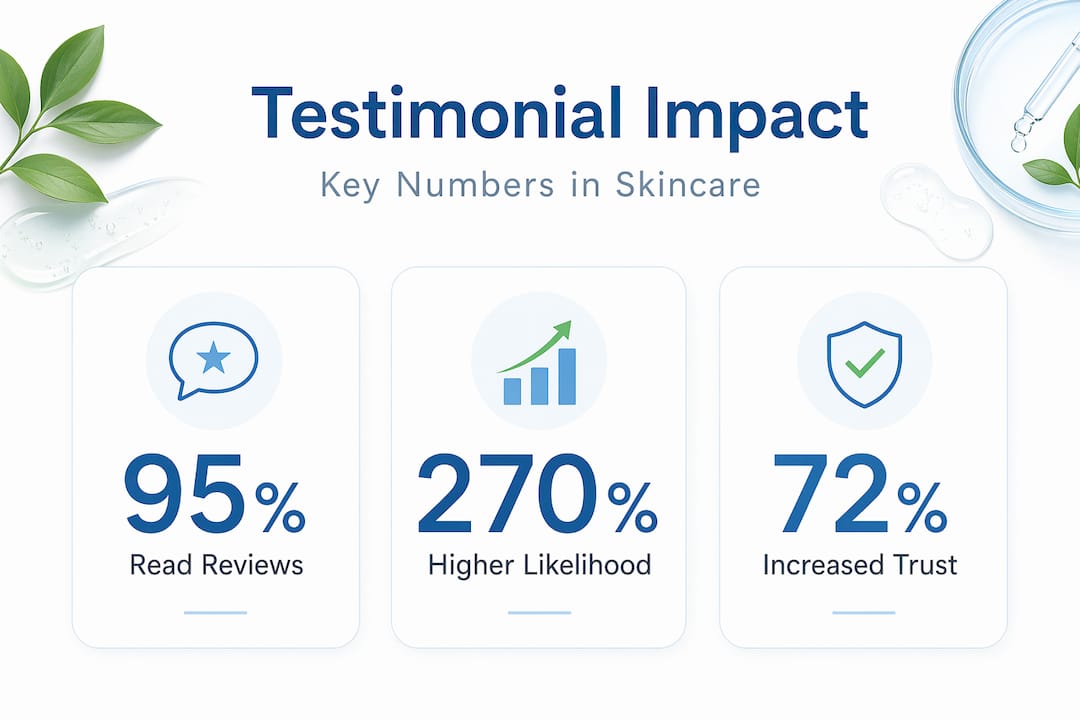
The numbers behind testimonials are harder to ignore than most people expect. 95% of consumers regularly read product reviews before buying, and only 43% would consider a purchase without seeing some form of social proof first. In a category like skincare, where results are deeply personal and products are not cheap, that skepticism is completely rational.
The importance of skincare reviews extends directly into purchase behavior. Products with customer feedback see 270% higher purchase likelihood than products without any. Adding testimonials to a product page drives a 34% increase in conversion rates. These are not marginal numbers.
| Factor | Effect on purchase behavior |
|---|---|
| Presence of any testimonials | 270% higher purchase likelihood |
| Verified buyer testimonials | 15% additional confidence boost |
| Video testimonials vs. text only | Up to 80% higher conversion rate |
| Consumers reading reviews and photos | 161% more likely to convert |
The impact of customer testimonials on trust is equally measurable. 72% of consumers say they trust a brand more after reading positive testimonials. That trust shift is not just emotional. It reduces the perceived risk of spending money on a product that might not deliver.
Pro Tip: When researching any skincare product, look for testimonials that describe your specific skin concern, not just general satisfaction. A testimonial from someone with oily, acne-prone skin tells you almost nothing if you are dealing with post-menopausal dryness.
One nuance worth understanding: the biggest jump in confidence comes early. The conversion lift from moving from zero to five reviews is larger than going from five to fifty. A handful of specific, genuine stories does more work than hundreds of generic ones. That means even newer or smaller skincare brands can build real trust quickly with quality over quantity.
Testimonial storytelling also helps overcome the skepticism that is common with anti-aging and skin-brightening claims. When a real person describes noticing their skin looked firmer after two weeks of consistent use, they are doing something a clinical claim alone cannot. They are giving the science a face.
What makes a skincare testimonial worth trusting
Specificity is the single biggest marker of a credible testimonial. Vague praise like “I love this product, my skin feels great!” tells you very little. Compare that with: “After four weeks using this morning and night, my forehead lines softened noticeably and my skin stopped feeling tight by midday.” That second version contains a timeline, a specific concern, a usage pattern, and a result. You can evaluate it.

Here is how different testimonial formats compare in terms of credibility and impact:
| Testimonial type | Credibility signal | Best used for |
|---|---|---|
| Written quote with name and photo | Medium to high | Quick trust building on product pages |
| Verified purchase badge | High | Reducing doubt about authenticity |
| Video testimonial | Very high | Showing visible before-and-after results |
| Social media post (user-generated) | High | Relatability and organic reach |
| Anonymous rating only | Low | Minimal trust, easy to fake |
Red flags to watch for when reading skincare product feedback:
- All five-star ratings with no variation. A mix of four and five stars actually reads as more trustworthy, because real experience is rarely perfect.
- Identical language across multiple testimonials, which suggests editing or fabrication.
- No mention of skin type, concern, or timeline. Useful feedback is grounded in specifics.
- Very recent dates on all testimonials, with nothing older. Genuine history matters.
Social proof aligned with your actual objections is far more valuable than scattered, glowing praise. If you are worried a product will cause breakouts on sensitive skin, look for testimonials from people who explicitly describe having sensitive skin and mention how their skin responded. That targeted match is what builds real confidence.
Pro Tip: Do not dismiss a one-star review if the brand responded to it with care and detail. A transparent, thoughtful response to a negative experience actually increases overall trust by showing the brand stands behind its customers.
Video testimonials deserve their own mention. Lo-fi, user-generated video shared on social platforms consistently outperforms polished studio content because it feels unscripted and native to the platform. When someone films themselves at their bathroom mirror showing their skin before and after using a product for a month, that carries a weight that a professionally produced brand video rarely achieves.
How to use skincare testimonials as a smart consumer
Reading testimonials well is a skill. Here is a practical approach that moves beyond surface-level browsing:
- Match to your concern first. Filter testimonials by skin type or issue if the platform allows. Skip ones that do not reflect your situation.
- Note the timeline. Testimonials that describe results after two to four weeks of consistent use are more realistic than ones claiming overnight transformation. Realistic timelines signal honesty.
- Cross-reference with the ingredient list. If a testimonial describes reduced dark spots, check whether the product contains vitamin C, niacinamide, or another proven brightening agent. The story should make sense with the formula.
- Prioritize verified purchases. Verified buyer testimonials increase purchase confidence by 15% for a reason. They confirm a real transaction happened.
- Seek out visual proof. Consumers who read reviews alongside photos are 161% more likely to convert, and the same logic applies to using that visual evidence to make better decisions. Before-and-after images add a layer of accountability.
Pro Tip: If a testimonial reads beautifully but contains no specific detail, treat it the way you would a movie blurb written by the studio. Useful for mood, not for facts. Seek out the ones that read like a person actually wrote them in their own voice.
You can also use the absence of testimonials as data. A new product with zero customer feedback is not necessarily bad. But for any product making strong anti-aging or brightening claims, look for clinically proven skincare results alongside testimonials rather than relying on either alone. The combination of scientific backing and real-world experience is the strongest possible foundation for a purchase decision.
Consider also how a brand handles less-than-perfect feedback. A skincare company that only shows five-star reviews may be curating out the truth. Brands confident in their products tend to show a range of experiences because they know their core results will speak for themselves.
My take on testimonials and real skincare trust
I’ve spent years reading, writing about, and evaluating skincare brands, and one thing I keep coming back to is how testimonials have changed the power dynamic between brands and consumers. In my experience, the best testimonials do not sell a product. They describe a relationship between a person and their skin, with a product as the catalyst.
What I’ve learned the hard way is that testimonials can become a crutch. I’ve seen shoppers so swayed by a moving story that they ignore an ingredient list full of known irritants. The emotional pull of a well-told testimonial is real, and it can bypass rational thinking if you are not paying attention. My advice: let testimonials open the door, but let the ingredients and clinical data close the deal.
What I find genuinely encouraging is how testimonials have pushed brands to become more accountable. When customers share their honest experience publicly, brands that deliver keep winning and brands that overpromise get called out. That is a healthy feedback loop. The organic skincare community especially benefits from this transparency because natural ingredient claims are notoriously hard to verify without lived experience from real users.
Curated testimonials, at their best, feel like advice from a trusted friend who tried something before you. That is not manipulation. That is genuinely useful information, as long as you read it with your eyes open.
— Barbara
Testimonials you can trust at Miraclegelnaturalskincare
If reading this has made you more discerning about where you put your trust, that is exactly the point. At Miraclegelnaturalskincare, every testimonial showcased reflects a real customer experience with natural, verified skincare solutions built for women who want results without compromise.
The product range at Miraclegelnaturalskincare, from the 2 Minute Miracle Gel to targeted eye serums, is supported by the kind of specific, story-driven customer feedback this article describes. Explore age-defying skincare for women 40+ and read the testimonials alongside the clinical ingredient explanations. You will find the combination that makes an informed, confident purchase possible. Founder Shelly Maguire built this brand on transparency and results, and the testimonial section of every product page reflects that commitment directly.
FAQ
What is the role of testimonials in skincare?
Testimonials help consumers evaluate whether a skincare product is likely to work for their specific skin concern by providing real-world experience from verified users. They reduce purchase risk and build brand trust more effectively than product descriptions alone.
How do testimonials differ from regular customer reviews?
Testimonials are curated, permission-based endorsements collected and shared by the brand, while reviews are organic submissions on third-party platforms. Both serve as skincare product feedback, but testimonials are typically more structured and story-driven.
Are video testimonials more effective than written ones?
Yes. Video testimonials increase conversions by up to 80% compared to text-only testimonials, largely because they show real skin, real expressions, and real emotion in a way written words cannot replicate.
How can I tell if a skincare testimonial is authentic?
Look for specificity: a named skin concern, a realistic timeline, and language that sounds personal rather than polished. A mix of four and five-star ratings across a product’s reviews also signals genuine feedback rather than curated perfection.
Should I rely on testimonials alone when choosing skincare?
No. Testimonials work best when paired with ingredient research and clinical data. Use them to understand real-world outcomes, then verify that the product’s formula actually contains what is needed to deliver those results for your skin type.