
TL;DR:
- Adaptogens in skincare are plant and mushroom extracts that help skin resist stressors like pollution and UV rays. They work by reducing inflammation, protecting against oxidative damage, and restoring barrier function, leading to healthier, more resilient skin over time. Regular use over several weeks can improve redness, firmness, and overall skin quality, especially for sensitive or aging skin.
Adaptogens in skincare are plant and mushroom extracts that help your skin resist and recover from stressors like pollution, UV radiation, and chronic inflammation. The term comes from traditional medicine, where oral adaptogens were used to build systemic resilience. In topical form, they work locally on the skin through antioxidant and anti-inflammatory pathways rather than systemic endocrine modulation. Ingredients like Ashwagandha, Reishi mushroom, and Centella asiatica are the most studied examples. Clinical evidence shows topical adaptogens reduce skin redness by 31% after four weeks and improve overall skin quality by 39% over 12 weeks. For anyone over 30 managing stressed, sensitive, or aging skin, that is a meaningful result.
What are adaptogens in skincare and how do they work?
Adaptogens in skincare are defined as botanical actives that help the skin maintain balance under stress by modulating inflammation, oxidative damage, and barrier function. The standard industry term is topical adaptogens, which distinguishes them from oral supplements that work systemically. Their core mechanism involves three overlapping actions that protect skin at the cellular level.

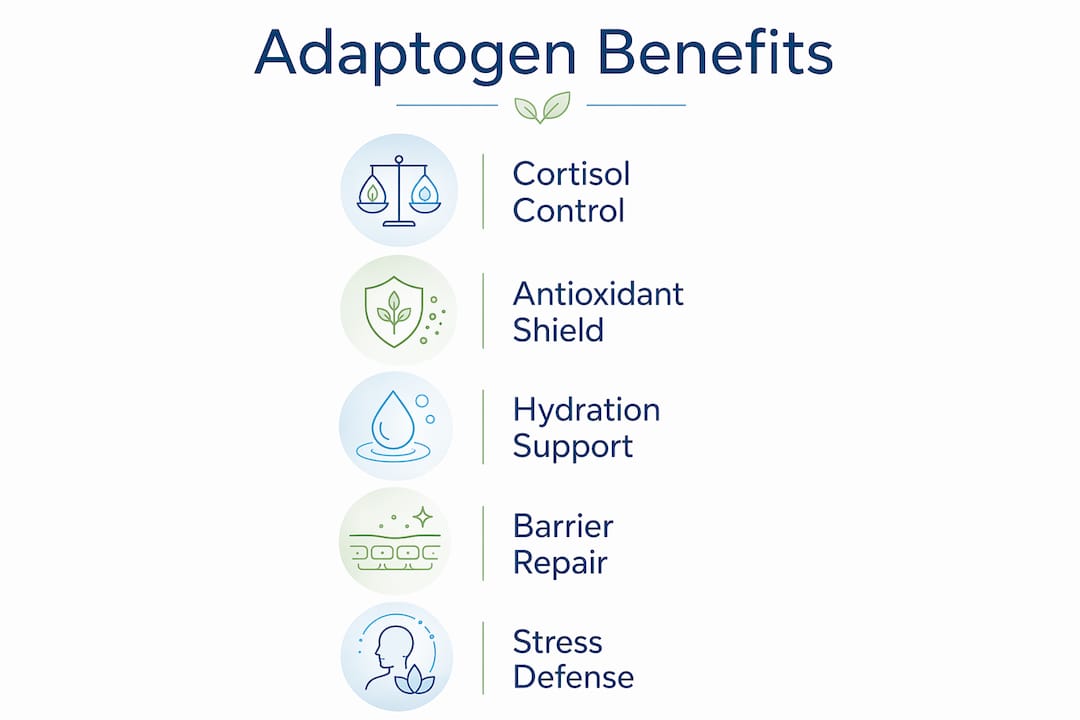
1. Cortisol modulation at the skin surface. Chronic stress triggers the skin’s own local stress response, releasing cortisol-like signals that break down collagen and weaken the barrier. Ashwagandha’s active compounds, called withanolides, suppress inflammatory markers including IL-6 and TNF-alpha. This directly reduces the redness and sensitivity that stress triggers.
2. Antioxidant protection against oxidative damage. Free radicals from UV exposure and pollution attack skin cells and accelerate visible aging. Reishi mushroom extracts reduce ROS-induced fibroblast damage by 38%. Fibroblasts produce collagen, so protecting them translates directly to firmer, more elastic skin over time.
3. Barrier restoration and hydration support. A compromised skin barrier is the root cause of dryness, sensitivity, and uneven tone. A systematic review identified 29 topical adaptogens that promote skin homeostasis through antioxidant and anti-inflammatory pathways. That breadth of evidence confirms adaptogens are not a trend. They are a clinically recognized category of skin support.
Pro Tip: If you are new to adaptogenic skincare, look for products that list Centella asiatica or Ashwagandha in the top five ingredients. Concentration matters more than the number of adaptogens on the label.
The result of these three mechanisms working together is skin that bounces back from environmental stressors like pollution and UV radiation more effectively. This shifts your skincare approach from reactive treatment to proactive resilience building.
Best adaptogens for skin: a breakdown by benefit
Not all adaptogens do the same job. Each brings a distinct set of active compounds that target different aspects of skin stress. Knowing which one addresses your primary concern helps you choose products that actually deliver.
| Adaptogen | Key Active | Primary Skin Benefit |
|---|---|---|
| Ashwagandha | Withanolides | Reduces cortisol-driven inflammation and redness |
| Reishi Mushroom | Beta-glucans | Strengthens barrier, neutralizes free radicals |
| Holy Basil | Ursolic acid | Inhibits COX-2 to calm chronic inflammation |
| Ginseng | Ginsenosides | Improves microcirculation and skin vitality |
| Centella Asiatica | Asiaticoside | Accelerates wound healing and soothes irritation |
Common adaptogens in skincare are frequently paired with ceramides or niacinamide to amplify barrier recovery. This pairing is deliberate. Ceramides physically rebuild the lipid barrier, while niacinamide reduces transepidermal water loss. Adaptogens address the inflammatory signals underneath. Together, they cover more ground than any single active can.
Here is how each adaptogen fits a specific skin concern:
- Ashwagandha works best for skin that flushes easily or reacts to temperature changes and stress.
- Reishi mushroom suits skin that looks dull and feels thin, particularly after years of sun exposure.
- Holy Basil is the right choice for persistently inflamed or acne-prone skin that does not tolerate strong actives.
- Ginseng addresses loss of radiance and circulation, making it a strong option for glowing skin over 40.
- Centella asiatica is the go-to for post-procedure recovery, rosacea, and any skin that needs consistent calming.
The adaptogen label in beauty is a modernization of traditional medicine, offering gentler and longer-term support compared to irritation-prone actives like retinoids. That gentleness is precisely what makes them so well suited to skin over 30.
How to add adaptogenic skincare to your natural routine
Integrating adaptogens into your routine does not require a complete overhaul. The goal is to layer them strategically so they support your existing actives rather than compete with them.
The most effective product formats for delivering adaptogens are serums, lightweight creams, and facial mists. Serums penetrate deeper and deliver higher concentrations. Creams provide sustained release alongside occlusive ingredients. Mists work well as a midday refresh for skin exposed to urban pollution.
Consistency is the non-negotiable factor. Clinical improvements require 4–8 weeks of consistent use. Adaptogens regulate your skin’s baseline over time. They are not designed to produce overnight results, and expecting them to do so leads to abandoning products that would have worked.
Pro Tip: Apply your adaptogen serum after cleansing and before heavier moisturizers. This positions the active compounds where they can interact directly with skin cells before occlusive layers slow absorption.
Combining adaptogens with niacinamide and peptides is a well-supported approach for mature skin. Niacinamide reduces pore appearance and controls oiliness. Peptides signal collagen production. Adaptogens manage the inflammatory environment that undermines both. The three categories work on different layers of the same problem.
A few practical guidelines for sensitive skin:
- Patch test any new adaptogen product on the inner arm for 48 hours before applying to the face.
- Start with one adaptogen product at a time so you can identify what your skin responds to.
- Avoid combining multiple high-concentration actives in the same routine until your skin has adjusted.
- Use adaptogen products as a foundation layer, not a replacement for SPF or prescription treatments.
Adaptogens are supportive rather than abrasive, which makes them safe for long-term daily use. That is a meaningful distinction when you are building a routine meant to last years, not weeks.
How do adaptogens compare to traditional skincare actives?
Traditional actives like retinoids, AHAs, and vitamin C deliver fast, measurable results. They also carry real risks for sensitive or mature skin: peeling, photosensitivity, and barrier disruption are common side effects. Adaptogens occupy a different position in your routine.
“Adaptogens are adjuncts to prescription therapy, enhancing skin barrier and inflammation control without replacing medical treatments.” — Dr. Zoe Diana Draelos, as cited in Dermatology Times
The table below clarifies where each category excels:
| Active Type | Primary Action | Best For | Sensitivity Risk |
|---|---|---|---|
| Retinoids | Cell turnover acceleration | Deep wrinkles, acne | High |
| AHAs (Glycolic, Lactic) | Surface exfoliation | Texture, dullness | Moderate |
| Vitamin C | Antioxidant brightening | Hyperpigmentation | Low to moderate |
| Topical Adaptogens | Stress modulation, barrier support | Resilience, redness, aging | Very low |
Topical adaptogens balance multiple skin stress pathways simultaneously without causing irritation. No retinoid or exfoliating acid can claim that. The trade-off is speed. Adaptogens build resilience gradually. Retinoids resurface skin faster but require careful management.
The smartest approach for skin over 30 is to use both categories with intention. Adaptogens complement prescription and active treatments by creating a protective, moisturizing environment that allows skin to heal from inflammation. You can explore how antioxidants transform anti-aging care to understand how these categories overlap and reinforce each other.
One nuance worth understanding: the term “adaptogen” technically applies to oral use under current regulatory definitions. Topically, these ingredients act through local antioxidant and anti-inflammatory effects. They do not modulate your endocrine system through your skin. That distinction matters for setting realistic expectations and for understanding why consistent, long-term use is the correct approach.
Key takeaways
Adaptogens in skincare work by modulating local inflammation, neutralizing oxidative damage, and restoring barrier function, making them the most suitable long-term active for stressed and aging skin.
| Point | Details |
|---|---|
| Clinical efficacy is real | Topical adaptogens reduce redness by 31% and improve skin quality by 39% over 12 weeks. |
| Each adaptogen targets a different concern | Ashwagandha calms inflammation, Reishi protects fibroblasts, Centella asiatica accelerates healing. |
| Results require consistency | Visible improvements take 4–8 weeks of daily use. Adaptogens regulate baseline, not acute symptoms. |
| They complement, not replace, actives | Pair adaptogens with niacinamide, peptides, or prescription treatments for the strongest outcomes. |
| Sensitivity risk is very low | Unlike retinoids or AHAs, topical adaptogens are safe for long-term daily use on sensitive and mature skin. |
Why i think adaptogens are the most underrated tool for skin over 30
I have spent years watching clients over 30 cycle through strong actives, get results, then hit a wall when their skin became too sensitized to tolerate the routine. The pattern is predictable and frustrating. Adaptogens break that cycle.
What I find most compelling is not the individual ingredient data. It is the concept of building skin resilience rather than chasing correction. Skin that handles stress better ages more gracefully. That is a fundamentally different goal than treating one wrinkle or one dark spot, and it requires a fundamentally different type of ingredient.
The honest caveat is this: adaptogens are not a shortcut. If you are expecting the visible speed of a chemical peel, you will be disappointed. But if you commit to 8–12 weeks and pair them with a holistic natural anti-aging approach, the cumulative effect on skin texture, tone, and sensitivity is genuinely impressive.
My advice is to start with Centella asiatica or Ashwagandha, use them daily in a serum format, and resist the urge to add three other new products at the same time. Let your skin show you what it can do when the inflammatory noise is turned down.
— Barbara
Discover miraclegelnaturalskincare’s adaptogen-rich formulas for 40+
Miraclegelnaturalskincare has built its natural skincare line around exactly this philosophy: ingredients that work with your skin’s biology rather than against it. The formulations combine adaptogens with complementary actives like ceramides, niacinamide, and peptides to support barrier health, reduce redness, and restore radiance for skin over 40.
If you are ready to move beyond reactive skincare and build genuine long-term resilience, the age-defying natural skincare collection at Miraclegelnaturalskincare is the right place to start. For targeted treatment, explore the anti-aging serum range featuring adaptogenic and barrier-restoring ingredients formulated specifically for mature skin. Free shipping is available on orders over €85.
FAQ
What do adaptogens do in skincare?
Topical adaptogens modulate the skin’s local stress response by reducing inflammation, neutralizing free radicals, and supporting barrier repair. They help skin maintain balance under stressors like pollution, UV exposure, and hormonal changes.
Are adaptogens good for sensitive or aging skin?
Adaptogens are particularly well suited to sensitive and aging skin because they balance multiple stress pathways without causing irritation. Unlike retinoids or exfoliating acids, they carry a very low sensitivity risk and are safe for long-term daily use.
How long does it take to see results from adaptogenic skincare?
Clinical data shows that consistent use for 4–8 weeks is required before visible improvements appear. Adaptogens regulate your skin’s baseline over time rather than delivering acute, rapid changes.
Can adaptogens replace prescription skincare treatments?
Adaptogens do not replace prescription treatments. Dr. Zoe Diana Draelos describes them as adjuncts that enhance barrier function and reduce inflammation alongside medical therapies, not substitutes for them.
Which adaptogen is best for glowing skin?
Ginseng is the strongest choice for radiance because its active compounds, ginsenosides, improve microcirculation and skin vitality. Centella asiatica and Reishi mushroom also contribute to a brighter, more even complexion through barrier repair and antioxidant action.