
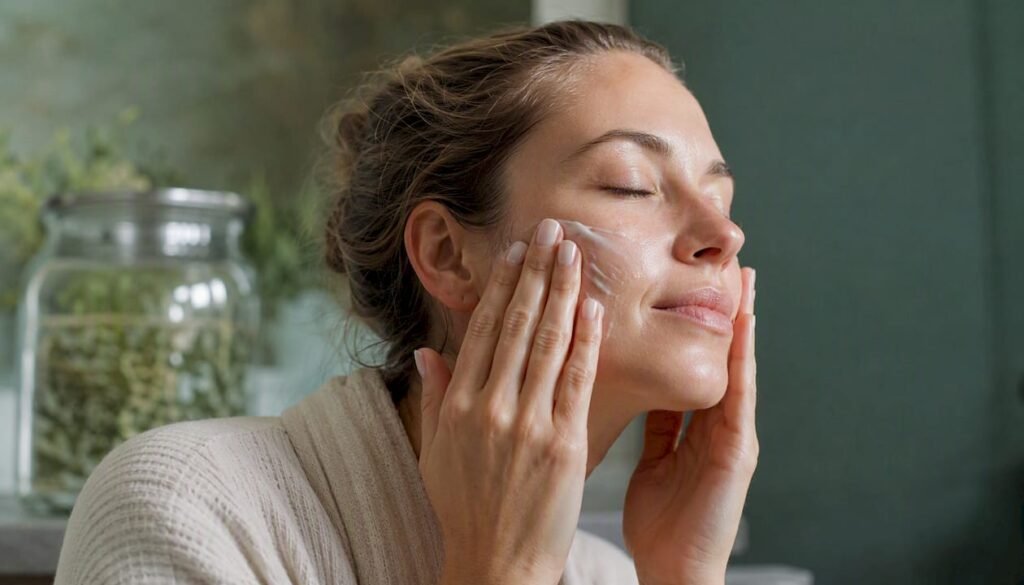
Moisturizing complexes fall into four functional classes: humectants, emollients, occlusives, and lipid/protein rejuvenators — and the most effective formulas combine all four of the first group into one product. For most people in Ireland, where wind and variable humidity strip moisture fast, a multi-functional complex that pairs a humectant with an emollient and an occlusive layer outperforms any single-class product. The 2-Minute Miracle Moisturizer from Miraclegelnaturalskincare is one Ireland-available example built around a Tri-Moisture Cryo Complex™ that maps directly to this combined approach.
Benchmark to know: Research published on PMC shows petrolatum, the gold-standard occlusive, can reduce transepidermal water loss through the epidermis by close to 99% — a figure that explains why even a small amount of an occlusive ingredient in a formula changes everything for very dry skin.
Key Takeaways
The most reliable approach to skin hydration is a multi-functional complex that combines humectants, emollients, and occlusives — matched to your skin type and adjusted seasonally for Ireland’s variable climate.
| Point | Details |
|---|---|
| Prefer balanced complexes | Humectant + emollient + occlusive outperforms any single-class product for sustained hydration. |
| Match texture to skin type | Light esters and gels suit oily skin; richer butters and creams suit dry or mature skin. |
| Pair humectant with occlusive in dry or windy conditions | In Ireland’s cold months, a humectant used alone can increase TEWL — always add an occlusive layer. |
| Check INCI order | Ingredients listed higher appear in greater concentration; glycerin or HA near the top signals a meaningful dose. |
| Miraclegelnaturalskincare’s Tri-Moisture Cryo Complex™ | The 2-Minute Miracle Moisturizer combines all three functional classes in one Ireland-available formula. |
Table of Contents
- How do moisturizing complexes actually work?
- What humectants do — and when they can work against you
- How emollients improve skin feel and which texture suits your skin type
- What occlusives do and how to use them without the grease
- Lipid-replenishing complexes and peptide rejuvenators
- How modern moisturizing complexes are formulated
- How to choose the right moisturizing complex for your skin and Ireland’s climate
- Miraclegelnaturalskincare’s Tri-Moisture Cryo Complex™ — a real-world example
- Sources
How do moisturizing complexes actually work?
Before choosing between types of skin moisturizers, it helps to understand what they are fighting. Transepidermal water loss (TEWL) is the passive evaporation of water through the skin’s outer layer. The stratum corneum — the outermost layer of the epidermis — acts as the primary barrier against that loss. When it is intact, it holds water well. When it is damaged by cold, wind, harsh cleansers, or aging, TEWL rises and skin feels tight, rough, or flaky.
Moisturizing complexes work by addressing TEWL from different angles. Formulators now use a framework called the 4+2+1 theory to design modern complexes that go beyond the classic three classes:
- Humectants — draw water into the stratum corneum from the environment or deeper tissue
- Emollients — fill gaps between skin cells, improving texture and softness
- Occlusives — form a physical film on the surface to slow water evaporation
- Keratolytics — loosen and remove dead cells, improving penetration of other ingredients
- Aquaporin support — ingredients like glycerin that support the skin’s own water-channel proteins
- Microbiome support — prebiotics and gentle actives that protect the skin’s microbial balance
- Anti-inflammatories — calm irritation that disrupts barrier function
Think of it as a layered system: humectants pull water in, emollients smooth the surface, and occlusives lock the door. Keratolytics and the newer additions improve how well the whole system functions over time.
Pro Tip: In Ireland’s frequently cold and windy months, a humectant used alone can backfire — it draws moisture toward the surface where wind strips it away faster. Always pair a humectant with an occlusive element, especially from October through March. The science behind this is explained well in this hydration guide from The Aesthetics Room.
What humectants do — and when they can work against you
Humectants are the water-magnets of any formula. They attract and bind moisture through hydrogen bonding, pulling water from the environment into the stratum corneum. The most common ones you will see on ingredient lists include:
- Glycerin — the most widely used humectant; also supports aquaporin function (the skin’s own water-channel proteins)
- Hyaluronic acid (HA) — holds up to 1,000 times its weight in water; available in multiple molecular weights that penetrate to different skin depths
- Urea — acts as both a humectant and a keratolytic at higher concentrations; supports barrier repair at dermatologist-recommended strengths
- Lactic acid — a mild alpha hydroxy acid (AHA) with humectant properties; also exfoliates at higher concentrations
- Propylene glycol — effective humectant but a known irritant for sensitive skin at higher concentrations
The practical limitation is real: according to NCBI Bookshelf, humectants often need an occlusive to prevent increased TEWL, particularly in low-humidity conditions. Without that seal, a humectant can draw water up from deeper tissue and let it evaporate at the surface — the opposite of what you want.
Urea and lactic acid deserve a specific note. Both are effective and clinically used, but concentration matters. Urea at lower concentrations is a gentle humectant and barrier supporter; at higher concentrations, it acts as a keratolytic used for thickened or callused skin. Lactic acid at low concentrations (around 5%) is well-tolerated by most skin types; higher concentrations require patch testing and are not appropriate for inflamed or sensitive skin. Anyone with reactive skin should introduce either ingredient gradually and check with a dermatologist for chronic conditions.
How emollients improve skin feel and which texture suits your skin type
Emollients do not hydrate in the way humectants do. Their job is to fill the microscopic gaps between corneocytes — the flattened cells of the stratum corneum — smoothing the surface and improving the skin’s feel, flexibility, and appearance. They also influence how a product spreads, absorbs, and sits under makeup.
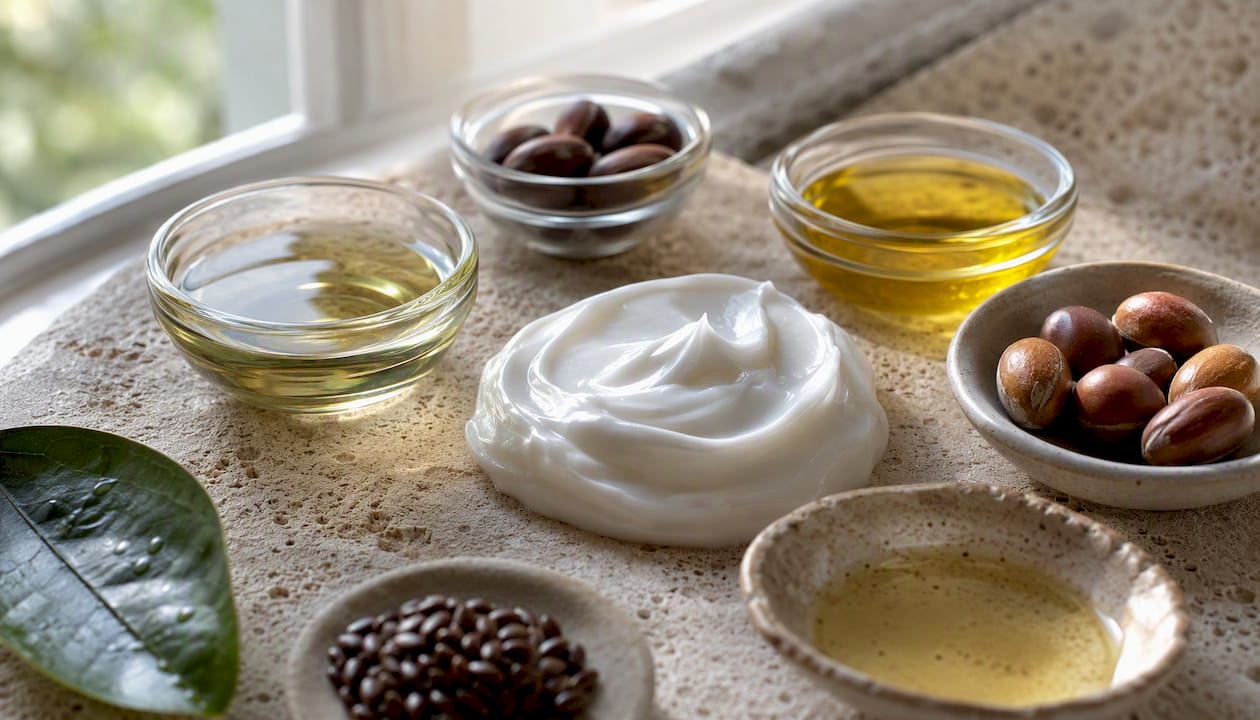
Emollient classes cover a wide range of textures and sources. Fatty acids (like linoleic acid and oleic acid) come from plant oils and support barrier lipid structure. Esters (such as isopropyl myristate or cetyl esters) are synthesized to give specific skin-feel properties — lighter esters absorb quickly and suit oily or combination skin, while heavier ones give a richer, more protective feel suited to dry or mature skin. Silicone derivatives like dimethicone create a smooth, non-greasy slip and are non-comedogenic, making them useful for acne-prone skin. Vegetable oils (jojoba, rosehip, squalane) and plant butters (shea, mango) bring natural emolliency along with fatty acids and antioxidants.
Comedogenicity is worth checking when you have acne-prone or oily skin. Heavier plant oils — coconut oil, for example — rank high on comedogenicity scales and can clog pores for some people. Lighter options like squalane or jojoba oil tend to be better tolerated. For botanical emollient examples suited to different skin types, the texture of the emollient is usually the clearest guide: if it feels heavy and slow to absorb on your skin, it is probably too rich for daytime use on an oily face.
Emollients also affect how your moisturizer layers with other products. A silicone-heavy formula can create a barrier that slows absorption of anything applied on top — relevant if you are layering serums or SPF.
What occlusives do and how to use them without the grease
Occlusives work by forming a semi-permeable film on the skin surface that physically slows water evaporation. They do not add water — they hold in what is already there. The PMC review on hydration and occlusive agents confirms petrolatum as the benchmark, capable of reducing epidermal water loss by close to 99%. Other common occlusives include:
- Mineral oil — lighter than petrolatum, widely used in body lotions
- Silicones (dimethicone, cyclomethicone) — non-comedogenic, breathable film; popular in facial moisturizers
- Beeswax and carnauba wax — natural options used in balms and lip products
- Plant butters (shea, cocoa) — provide both occlusive and emollient properties; heavier feel
- Lanolin — highly effective but a known allergen for some people; patch test first
The best time to apply an occlusive is immediately after bathing, while skin is still slightly damp, or layered over a humectant serum. DermNet NZ recommends applying leave-on moisturizers right after bathing to trap absorbed water — the same logic applies to occlusive-rich creams and ointments.
For the face, heavier occlusives like petrolatum or thick plant butters can feel greasy and may not suit acne-prone skin. Silicone-based occlusives or lightweight wax blends are better choices for facial use. For hands, feet, elbows, and body use — especially in Ireland’s winter months — a richer occlusive is exactly what compromised or very dry skin needs. Overnight use is the practical sweet spot: apply a richer formula before bed and let it work while you sleep.
Lipid-replenishing complexes and peptide rejuvenators
Beyond the classic three classes, a fourth category addresses the structural components of the skin barrier itself. The stratum corneum’s lipid matrix is made up of ceramides, cholesterol, and free fatty acids in a specific ratio. When that ratio is disrupted — by aging, eczema, over-cleansing, or environmental stress — the barrier leaks and no amount of humectant or occlusive fully compensates.
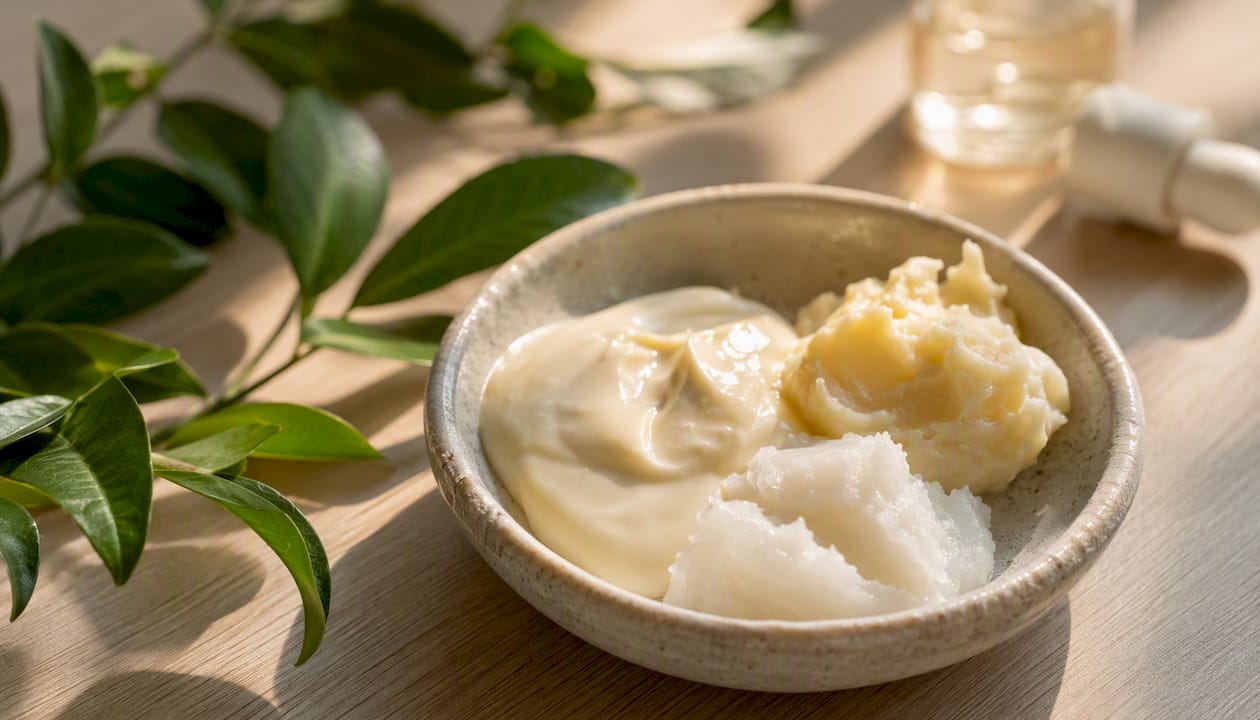
Lipid-replenishing complexes supply ceramides, cholesterol, and fatty acids to restore that matrix. They are particularly relevant for atopic or barrier-compromised skin, where the lipid ratio is chronically disrupted, and for mature skin, where ceramide production naturally declines with age. A review in the Journal of Skin and Sexually Transmitted Diseases confirms that moisturizers now serve therapeutic roles in barrier repair and as adjuncts in inflammatory and xerotic disorders, with ingredient selection tailored to disease severity and body site.
Peptide and protein rejuvenators take a different approach. Small polypeptides and collagen fragments signal the skin to support its own structural proteins. Natural moisturizing factor (NMF) components — including urea, pyrrolidone carboxylic acid (PCA), and amino acids — are naturally present in healthy skin and can be supplemented topically to support hydration at the cellular level. These ingredients are especially relevant for mature skin that needs structural support, where both barrier lipids and NMF components are reduced.
A practical note: some ceramide-rich formulas and prescription-adjacent barrier repair products sit close to the boundary between cosmetic and therapeutic use. For chronic conditions like eczema, psoriasis, or severely compromised barrier function, a dermatologist’s guidance on formulation choice and concentration is worth seeking before self-selecting a product.
How modern moisturizing complexes are formulated
The shift in formulation science over the past decade has been away from single-class products and toward multi-functional complexes that address TEWL, barrier repair, and skin feel simultaneously. Cosmetics & Toiletries describes this evolution through the 4+2+1 framework — a formulation philosophy that stacks humectants, emollients, occlusives, and keratolytics with newer microbiome and anti-inflammatory elements.
A few formulation flags are worth knowing when you read labels:
Hyaluronic acid molecular weight matters more than most people realize. High-molecular-weight HA sits on the surface and plumps skin visually. Low-molecular-weight HA penetrates deeper and supports hydration at a structural level. The best hydrating complexes often include both.
Glycerin concentration affects how well it works.
Ceramide/cholesterol ratios in lipid blends are not always disclosed, but look for all three components (ceramides, cholesterol, fatty acids) listed together — a blend that includes only ceramides without the supporting lipids is less effective at restoring the barrier matrix.
| Complex type | Humectant | Emollient | Occlusive | Optional add |
|---|---|---|---|---|
| Light facial complex | Glycerin, HA | Lightweight ester (e.g., isopropyl myristate) | Dimethicone | Niacinamide (anti-inflammatory) |
| Repair complex | Urea (5%) | Ceramide blend | Petrolatum | Cholesterol, fatty acids |
| Overnight body complex | Glycerin | Shea butter | Mineral oil | Lactic acid (keratolytic) |
| Sensitive skin complex | Glycerin | Squalane | Beeswax | Allantoin (soothing) |
Pro Tip: Reading the INCI (International Nomenclature of Cosmetic Ingredients) list is the fastest way to assess a formula. Ingredients appear in descending order of concentration — if glycerin is listed third, it is a meaningful dose; if it appears near the bottom, it is largely cosmetic. The same applies to ceramides and HA.
How to choose the right moisturizing complex for your skin and Ireland’s climate
Start with your skin type and primary concern, then factor in the season.
- Dry or very dry skin: Reach for a cream or ointment with a humectant (glycerin or HA) plus a richer emollient (shea butter, fatty acid blend) and a meaningful occlusive. Apply to slightly damp skin. AAD guidance recommends applying moisturizer immediately after bathing to lock in absorbed water.
- Oily or combination skin: A gel or light lotion with glycerin and a non-comedogenic emollient (squalane, dimethicone) is enough for most days. Skip heavy plant butters on the face.
- Sensitive skin: Fragrance-free, minimal ingredient lists. Glycerin plus squalane plus a small amount of beeswax or dimethicone is a low-risk starting point. Avoid high-concentration AHAs on irritated or broken skin.
- Mature skin (40+): Prioritize complexes that include ceramides, peptides, or NMF components alongside the classic three classes. Richer textures are generally better tolerated and more effective as sebum production decreases with age. See the natural moisturizers guide for skin over 40 for more detail on ingredient choices.
- Layering order: Cleanser → humectant serum (HA or glycerin-based) → moisturizer with emollients → occlusive if needed (overnight or very dry conditions). Serums go before creams; ointments go last.
Ireland’s climate specifically: The Atlantic weather pattern means frequent wind, low winter temperatures, and humidity that shifts fast. From roughly October through March, a multi-functional complex with a meaningful occlusive component is the practical default. In milder, more humid months (May through August), a lighter humectant-rich lotion or gel is usually sufficient and less likely to feel heavy. A simple seasonal swap — richer cream in winter, lighter gel in summer — is more effective than buying a new product range.
Red flags to watch for: Fragrance (especially in sensitive or reactive skin), high-concentration AHAs on inflamed skin, heavy plant oils (coconut, palm) on acne-prone faces, and lanolin if you have a known wool allergy. Formulation guidance from The Aesthetics Room also highlights urea’s role in barrier repair — useful context when evaluating products that include it.
Quick buying checklist:
- Does the formula include at least one humectant (glycerin, HA, urea)?
- Is there an emollient suited to your skin type (lightweight ester for oily; richer butter for dry)?
- Does it contain an occlusive for your climate and season?
- Is it fragrance-free if your skin is sensitive?
- Are ceramides or peptides present if barrier repair or anti-aging is a priority?
Miraclegelnaturalskincare’s Tri-Moisture Cryo Complex™ — a real-world example
The 2-Minute Miracle Moisturizer from Miraclegelnaturalskincare is built around the Tri-Moisture Cryo Complex™, a multi-functional formulation designed to address hydration, barrier support, and skin feel in a single product. It is available to shoppers in Ireland directly through the Miraclegelnaturalskincare website, with free shipping on orders over €85.
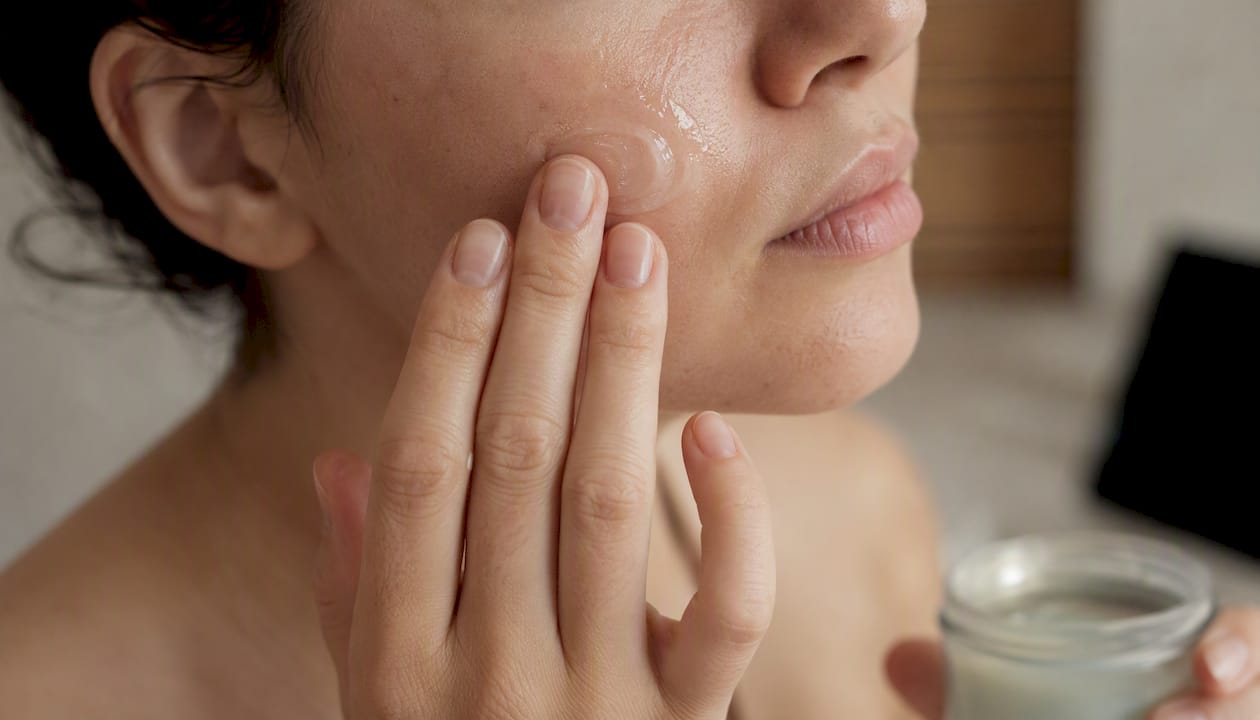
The table below maps the complex’s functional roles to the ingredient classes covered in this guide:
| Functional role | Ingredient class | Example in Tri-Moisture Cryo Complex™ |
|---|---|---|
| Water attraction and binding | Humectant | Glycerin, Hyaluronic Acid |
| Surface smoothing and softness | Emollient | Plant-derived esters, botanical oils |
| Moisture sealing | Occlusive | Wax/butter blend |
| Barrier and structural support | Lipid rejuvenator | Ceramide-supporting actives |
*Note: Full INCI ingredient list is available on the product page. Patch-test before first use, particularly if you have sensitive or reactive skin. For severe skin conditions, consult a dermatologist before introducing any new product.
Miraclegelnaturalskincare was founded by Shelly Maguire, a recognized skincare industry professional. For complex skin conditions, a dermatologist consultation is always the right first step — no topical product replaces clinical assessment.
For a broader look at how barrier-focused ingredients work together, the natural skin barrier boosters guide on the Miraclegelnaturalskincare site covers the science in more depth.
Why ingredient balance matters more than any single hero ingredient
Skincare marketing loves a hero ingredient. Hyaluronic acid gets the spotlight; ceramides get the clinical credibility; retinol gets the anti-aging crown. What rarely gets said clearly enough is that none of them work as well in isolation as they do in a well-balanced complex.
The evidence for this is not subtle. Humectants increase TEWL without an occlusive seal. Occlusives feel heavy and do nothing for hydration without a humectant underneath. Ceramides restore barrier structure, but without the right cholesterol-to-fatty-acid ratio, the matrix does not reassemble correctly. The 4+2+1 framework exists precisely because single-class thinking kept producing products that worked in lab conditions and disappointed in real use.
What this means practically: when you are evaluating a moisturizer, the ingredient list matters less than the combination logic behind it. A formula with five mediocre ingredients working together will outperform a formula with one excellent ingredient working alone. That is the case for multi-functional complexes, and it is why the anti-aging benefits of consistent moisturizing compound over time rather than showing up in a single application.
The 2-Minute Miracle Moisturizer is worth trying if you want a ready-made solution
If you have read this far and want a formula that does the ingredient-balancing work for you, the 2-Minute Miracle Moisturizer is a practical starting point. It combines humectant, emollient, and occlusive elements through the Tri-Moisture Cryo Complex™ in one step, which suits the kind of efficient routine most people in Ireland actually maintain.
The Dynamic Duo set pairs it with the 2-Minute Miracle Gel for a complete cleanse-and-hydrate routine. Both ship free within Ireland on orders over €85. Patch-test before full use, and consult a dermatologist if you are managing a chronic skin condition.
Sources
- Moisturizers: What They Are and a Practical Approach to Product Selection (NCBI Bookshelf)
- Maximizing Moisturization for Sustained Skin Health: The 4+2+1 Theory | Cosmetics & Toiletries
- Hydration and occlusive agents review (PMC4025519)
- Beyond emollients: A review of moisturizers in dermatology (JSSTD)
- Emollients and moisturisers — DermNet NZ
- Dermatologists’ tips to relieve dry skin | AAD