

TL;DR:
- pH balanced skincare products are formulated to support the skin’s natural acidic pH of 4.5 to 5.5, enhancing barrier and microbiome health. The benefits include reduced dryness, sensitivity, and improved moisture retention, especially for mature or sensitive skin; however, results develop gradually over about 30 days. Choosing water-based products like cleansers and toners with appropriate pH levels is crucial, while oils and balms do not have a pH and are less impactful on skin’s acidity.
If you’ve ever picked up a cleanser labeled “pH balanced” and wondered what that actually means for your face, you’re not alone. What is pH balanced skincare, exactly? It’s not just a marketing badge. Your skin maintains a naturally acidic environment that controls everything from moisture retention to bacterial balance. When that environment gets disrupted, dryness, breakouts, and sensitivity follow. This guide breaks down the science behind pH balance in skincare, explains what the label means on your products, and gives you the practical knowledge to build a routine that works with your skin instead of against it.
Table of Contents
- Key Takeaways
- What pH balanced skincare really means for your skin
- Understanding the pH balanced product label
- The real benefits of pH balanced skincare
- How to identify and select the right products
- My honest take on pH balance in skincare
- Discover natural skincare that works with your skin
- FAQ
Key Takeaways
| Point | Details |
|---|---|
| Skin thrives at pH 4.5–5.5 | Your skin’s acid mantle needs this acidic range to maintain barrier function and healthy microbiome balance. |
| Alkaline products disrupt your barrier | Common soaps and harsh cleansers push skin pH up, causing dryness, redness, and increased sensitivity. |
| pH only applies to water-based products | Oils and balms don’t have a pH, so focus your attention on cleansers, toners, and serums. |
| Results take weeks, not days | Clinical evidence shows barrier improvements from pH balanced products typically emerge over a 30-day period. |
| Healthy skin may not need specialty products | pH balanced formulas matter most when your skin is already showing signs of sensitivity or barrier disruption. |
What pH balanced skincare really means for your skin
Before you can evaluate whether a product is worth your money, you need to understand what pH is actually measuring. The pH scale runs from 0 to 14. Zero is the most acidic, 14 is the most alkaline, and 7 is neutral (think pure water). Your skin sits comfortably on the acidic side of that scale, typically between 4.5 and 5.5.
That acidity isn’t accidental. It’s the product of your acid mantle, a thin film of sebum, sweat, and natural moisturizing factors that sits on the surface of your skin. The acid mantle regulates microbiome balance and barrier integrity, acting as your skin’s first line of protection against environmental aggressors, bacteria, and moisture loss.
Here’s what that acid environment is doing for you every single day:
- Barrier function: The slightly acidic pH activates the enzymes responsible for producing ceramides and other lipids that keep your skin barrier intact.
- Microbiome regulation: Beneficial bacteria like Lactobacillus thrive at acidic pH, while harmful pathogens are suppressed.
- Enzymatic activity: Key enzymes involved in skin cell turnover and natural moisturizing factor synthesis are pH-dependent. Shift the environment too far alkaline, and those processes slow down.
- Pathogen defense: An acidic surface makes it harder for bacteria like Staphylococcus aureus (a key driver of eczema flares) to colonize your skin.
“The acid mantle is not simply a passive film. It is an active biological system maintaining homeostasis, and disrupting it triggers cascading skin pathology.” — Adapted from The Skin Acid Mantle: An Update on Skin pH
When alkaline products repeatedly push your skin’s pH up, you don’t just feel tightness. You actually compromise the enzymatic machinery that builds your barrier from within. For anyone over 30, this matters more than it did at 22. Skin produces less sebum with age, which means the acid mantle is naturally thinner and more vulnerable to disruption.
Understanding the pH balanced product label
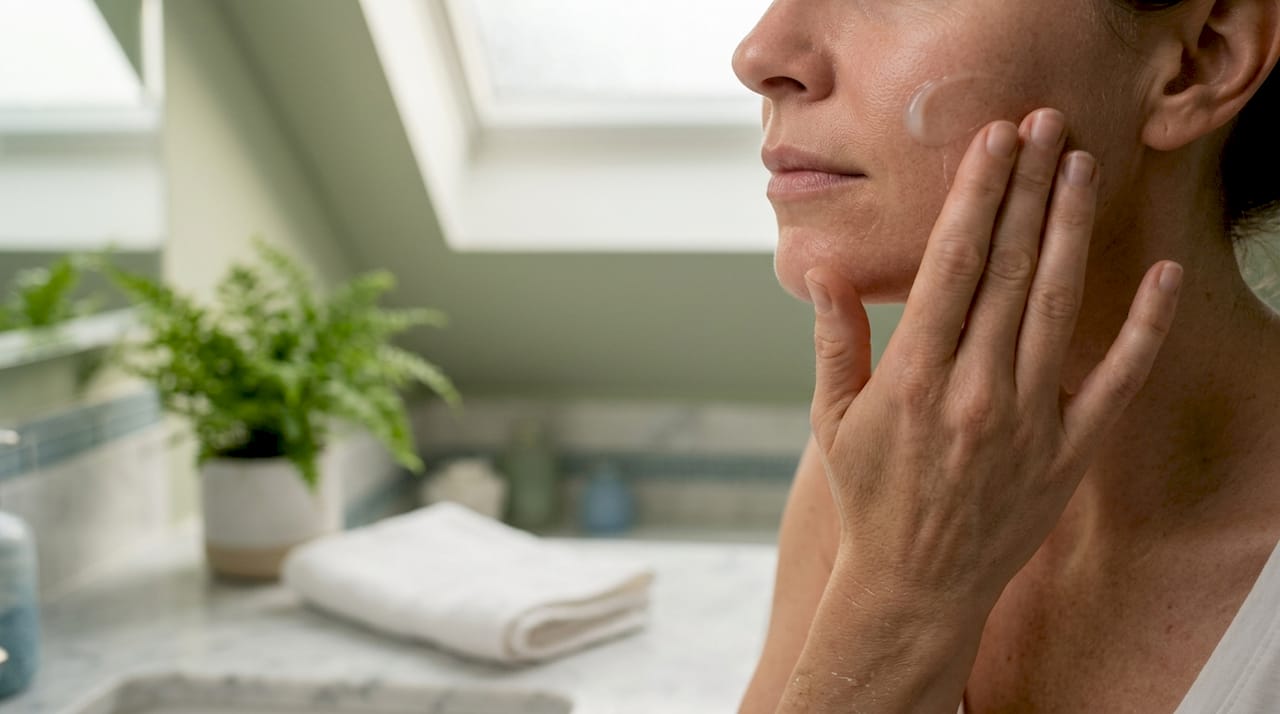
So you’re standing in the store and a cleanser says “pH balanced.” What does that label actually guarantee?
The honest answer: less than you might hope, but more than nothing. A pH balanced label typically signals a formulation designed to sit closer to skin’s acidic pH range rather than a conventional alkaline soap. Most traditional bar soaps register between pH 9 and 11. A well-formulated pH balanced cleanser should fall between 4.5 and 6.5.
Before you start auditing every product in your bathroom, here’s what you need to know about where pH actually applies:
- Water-based products are pH relevant. Cleansers, toners, serums, and water-based moisturizers all have a pH that affects your skin.
- Oils and balms do not have a pH. pH only applies to water-containing formulations, so your face oil or cleansing balm is neutral in this conversation.
- Leave-on products matter more than rinse-off. A mildly alkaline cleanser that you rinse off in 30 seconds causes less disruption than a leave-on toner sitting at pH 8 for hours.
- Surfactants matter alongside pH. Two cleansers can share the same pH but behave very differently on your skin. Harsh surfactants strip barrier lipids regardless of formulation acidity.
- Not all pH balanced claims are equal. Product residence time and surfactant strength affect barrier impact even within the “pH balanced” category.
Pro Tip: If you want to verify a cleanser’s pH at home, pH testing strips (sold in aquarium or pool supply sections) can give you a rough reading. Dip a strip into the product and compare. Look for a reading between 4.5 and 6.
The practical takeaway is that pH balance in skincare is a formulation philosophy as much as a measurement. When a brand commits to pH balanced formulas, they’re signaling a broader intention to create gentle, barrier-supportive products. For people exploring natural face cleansing options, that philosophy aligns directly with what mature skin needs most.
The real benefits of pH balanced skincare
Let’s get specific about what pH balanced products actually deliver and where the evidence holds up.
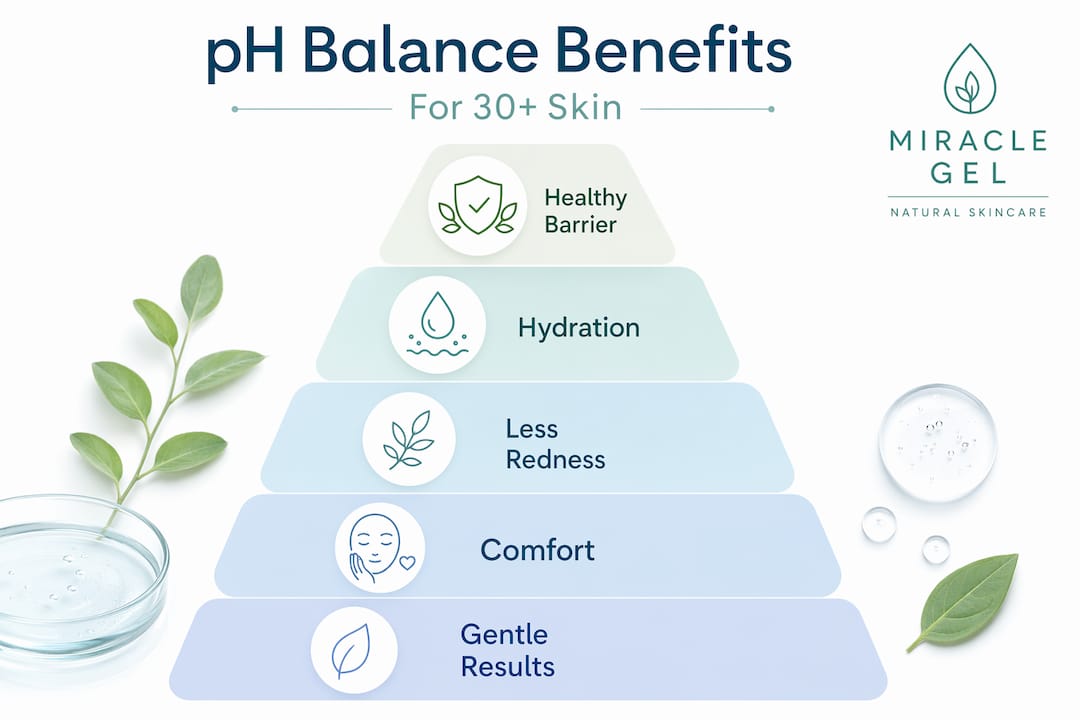
The clearest benefit of pH balanced skincare is barrier support. A 2025 clinical study found that a soap-free, mildly acidic cleansing lotion maintained and enhanced both hydration and skin barrier function across diverse skin types. That’s not a trivial result. A functioning barrier means water stays in and irritants stay out.
For people over 30, this connects to several very tangible skin improvements:
- Less dryness and tightness after washing. Alkaline cleansers disturb barrier lipids. A mildly acidic replacement reduces that immediate post-wash stripping sensation.
- Reduced redness and sensitivity. Alkaline products risk barrier disruption leading to visible redness and reactive skin. Correcting pH at the cleansing step alone can calm down chronically reactive skin over time.
- Better moisture retention. When your barrier is intact, your moisturizer actually works. A disrupted barrier loses water faster than any serum can replace it.
- Acne reduction in some cases. Keeping skin at its natural acidic pH maintains an environment hostile to acne-causing bacteria while supporting a healthy microbiome.
One thing worth setting straight: you will not see dramatic results overnight. Skin hydration and barrier improvements from pH aligned products typically develop over a 30-day assessment period. The changes are real and measurable, but they are gradual. You’re rebuilding a biological system, not applying a quick fix.
Pro Tip: Track your skin’s comfort rather than its cosmetic appearance in the first few weeks. Less stinging, tightness, or flaking after washing are early signs that your barrier is recovering. Those signals are more reliable than looking for visible glow.
It’s also worth acknowledging that if your skin is healthy and not reactive, you may not need to seek out specialist pH balanced products. The label becomes most relevant when you are already dealing with sensitivity, dryness, or breakouts that point to a compromised barrier. Think of it as targeted support rather than a universal upgrade. Learning about organic skincare for mature skin can help you see where pH balance fits into the bigger picture of skin health at 30 and beyond.
How to identify and select the right products
Knowing the signs of pH imbalance in skin is the first step to recognizing when your routine needs adjusting. If your skin regularly feels tight, stings when you apply products, shows persistent redness, breaks out in areas that don’t make sense, or just looks dull and rough-textured, your barrier and pH balance are worth examining.
Here’s how pH balanced and conventional products compare across the key product types you use daily:
| Product type | Conventional formula | pH balanced formula |
|---|---|---|
| Bar soap | pH 9–11, strips acid mantle | Soap-free alternatives at pH 4.5–6 |
| Liquid cleanser | pH 6–8, varies widely | Formulated at pH 4.5–5.5 |
| Toner | Often astringent, pH 5–8 | Hydrating, pH 5–6 range |
| Moisturizer | Variable, rarely labeled | Barrier-focused at skin-compatible pH |
| Exfoliating serum (AHA/BHA) | Active at low pH (3–4) intentionally | Should be used with care when barrier is disrupted |
When you’re building or adjusting your routine with pH balance in mind, start with the cleanser. Switching to a mildly acidic, soap-free cleanser is the single most impactful step in barrier repair protocols because cleansing is where the greatest pH challenge occurs. Everything else in your routine is easier to manage once you get that foundation right.
A few principles to guide your selection:
- Look for cleansers labeled soap-free, sulfate-free, or with a stated pH around 5.
- Prioritize hydrating toners over astringent ones. Witch hazel-heavy formulas tend to run alkaline and strip skin.
- Choose barrier-supportive moisturizers with ceramides, hyaluronic acid, and niacinamide over those heavy on fragrance and alcohol.
- Avoid layering strong exfoliating actives (retinol, high-percentage AHAs) when your barrier is already compromised. Wait until skin has stabilized.
- Natural and organic formulations often align well with pH balance goals because they tend to avoid the aggressive surfactants and preservatives that disrupt the acid mantle.
My honest take on pH balance in skincare
I’ve spent years watching people in their 30s and 40s cycle through expensive serums and treatments while still washing their faces with a bar of soap that costs less than a cup of coffee. The cleanser is almost always the problem. It’s the step that happens twice a day, every day, and it’s the step most people underestimate.
What I’ve learned is that pH balance is not a magic number you chase. It’s a framework for choosing products that respect your skin’s biology rather than overriding it. I’ve seen people switch to a simple soap-free cleanser and watch their chronic redness calm down within two weeks. No new serum. No fancy treatment. Just stopping the twice-daily disruption.
What I also know is that the 30+ audience is often dealing with a thinner, drier acid mantle that needs more consistent support than it did a decade ago. Moisturizing consistently matters more than most people realize for maintaining that acid mantle environment. Products do not need to be medically formulated to achieve good pH alignment. Many natural and organic formulas land in exactly the right range, because they’re built without the harsh surfactants that create the problem in the first place.
My advice: pay more attention to how your skin feels 20 minutes after washing than to any number on a label. Comfort, not perfection, is the goal. When your skin stops reacting and starts retaining moisture, you’ve found your baseline.
— Barbara
Discover natural skincare that works with your skin
If this article has you rethinking your routine, Miraclegelnaturalskincare offers a range of natural and gentle formulations built for exactly this kind of skin support. The products are designed with mature and sensitive skin in mind, emphasizing effective ingredients without the harsh chemicals that compromise your acid mantle.
From gentle cleansers to barrier-supportive moisturizers, each product in the Miraclegelnaturalskincare line is chosen for its compatibility with skin that needs real, sustained nourishment rather than aggressive active ingredients. If you’re ready to start building a routine that supports your skin’s natural environment, explore the full collection of natural skincare for 40+ skin and find the products that match where your skin is right now. For those who want a more structured starting point, the anti-aging skincare tips for women 40+ page walks through a complete pH-friendly routine step by step.
FAQ
What does pH balanced mean for skin?
pH balanced skincare refers to products formulated to match skin’s natural acidic pH range of 4.5 to 5.5, supporting barrier function and reducing irritation rather than disrupting the acid mantle.
Is pH balanced skincare necessary?
Not always. pH balanced products are most beneficial when skin is sensitive, dry, or reactive. If your skin is comfortable and healthy, you may not need to seek out specialty pH labeled products.
What are the signs of pH imbalance in skin?
Common signs include persistent tightness after washing, stinging when applying products, chronic redness, recurring breakouts, and rough or dull texture. These point to a disrupted acid mantle that pH aligned products can help restore.
How long does it take to see benefits?
Clinical evidence shows skin hydration and barrier function improvements from pH balanced cleansers typically develop over a 30-day period. Track comfort markers like reduced tightness and stinging rather than waiting for visible cosmetic changes.
Do all skincare products have a pH?
No. pH only applies to water-containing products like cleansers, toners, and water-based serums. Face oils, balms, and anhydrous formulas do not have a pH and won’t affect your skin’s acid balance directly.