
TL;DR:
- Proper skincare layering from thin to thick ensures active ingredients absorb fully and work effectively. Applying serums first, waiting 30 to 60 seconds between layers, and ending with sunscreen optimize results and prevent irritation. Tailoring routines based on skin type and avoiding conflicting actives help maintain skin health and barrier strength.
You spend real money on serums, moisturizers, and treatments, yet your skin still looks the same. The problem usually has nothing to do with what you’re buying. Knowing how to layer skincare products correctly is what separates a routine that actually works from one that just burns through your budget. Proper layering helps products work synergistically to address acne, dryness, and visible aging more effectively. This guide covers the exact sequence, timing, and techniques to get the most from every product you already own.
Table of Contents
- Key takeaways
- How to layer skincare products: the foundation you need first
- Your morning and evening layering routine, step by step
- Common layering mistakes that undermine your routine
- Tailoring your layering routine to your skin type
- My honest take on skincare layering
- Build your layering routine with Miraclegelnaturalskincare
- FAQ
Key takeaways
| Point | Details |
|---|---|
| Thin to thick is the rule | Apply products from lightest to heaviest consistency so each layer absorbs fully before the next. |
| Actives go on first | Serums and active treatments contact bare skin first to maximize absorption before moisturizer seals them in. |
| Wait between layers | Give each product 30 to 60 seconds to absorb before adding the next layer to prevent pilling. |
| Sunscreen is always last | Apply SPF as the final morning step, over dry moisturizer, to protect your skin barrier without disruption. |
| Separate conflicting actives | Never combine exfoliating acids and retinoids in the same session to avoid compromising your skin barrier. |
How to layer skincare products: the foundation you need first
Before you apply a single drop, you need to understand what you’re working with. Skincare products fall into a few core categories: cleansers, toners, essences, serums, eye creams, moisturizers, facial oils, and sunscreen. Each one has a different molecular weight, texture, and purpose, and that’s exactly what dictates the order they go on your face.
The governing rule for layering skincare essentials is thin to thick. Products layered from thinnest to thickest consistency allow each formula to penetrate properly before the next one creates a physical barrier over it. Apply a rich cream before your serum and you’ve essentially blocked the serum from reaching the deeper skin layers where it does its job.
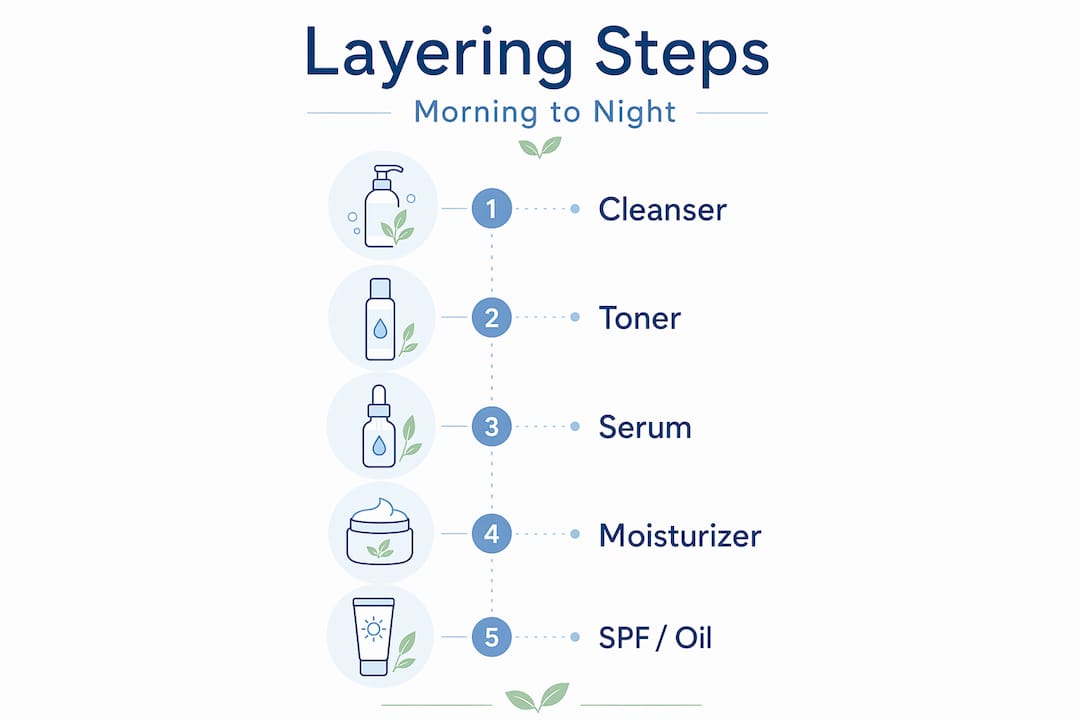
Here is how the standard product lineup stacks up:
| Product type | Texture | Primary function | Layering order |
|---|---|---|---|
| Cleanser | Liquid or gel | Removes debris and oil | Step 1 (off-skin) |
| Toner / Essence | Very watery | pH balance, hydration prep | Step 2 |
| Vitamin C serum | Light liquid | Antioxidant, brightening | Step 3 (AM) |
| Treatment serum | Thin gel or liquid | Actives: retinol, peptides, acids | Step 3 (PM) |
| Eye cream | Light cream or gel | Targeted treatment | Step 4 |
| Moisturizer | Medium cream | Hydration, barrier support | Step 5 |
| Facial oil | Oil | Seals moisture | Step 6 |
| Sunscreen | Lotion or gel | UV protection | Step 7 (AM only) |
Understanding the function of each product matters as much as the texture. Actives should contact skin first to maximize absorption, while moisturizers seal everything in and protect the barrier afterward. This is not just about absorption efficiency. It directly determines whether your vitamin C, retinol, or acid treatment delivers any meaningful result.
Pro Tip: Always start on freshly cleansed skin. Residual sunscreen, makeup, or sebum from earlier in the day physically blocks ingredient penetration. The cleanser is the foundation of every layering sequence, not an optional first step.
For morning routines, antioxidant serums like vitamin C are non-negotiable early layers. For evening, treatment actives like retinoids or chemical exfoliants take that slot. Knowing which actives belong in which routine is half the battle.
Your morning and evening layering routine, step by step
A solid layering routine takes under five minutes once you know the sequence. The steps below represent the expert-recommended order for both routines, with specific guidance on timing and product placement.
Morning routine
- Cleanse with a gentle, non-stripping formula. If your skin isn’t particularly oily, a splash of water may be sufficient in the morning.
- Apply toner or essence while your skin is still slightly damp. Pat gently with your hands rather than dragging a cotton pad across your face.
- Layer your vitamin C serum. Vitamin C applied early in the morning before moisturizer and SPF delivers antioxidant protection and significantly boosts the efficacy of your sunscreen. Wait 20 to 30 seconds.
- Apply eye cream by pressing lightly around the orbital bone. Never rub or drag this delicate area.
- Apply moisturizer across your face and neck. Give it a full 30 to 60 seconds to absorb before the final step.
- Finish with sunscreen. Sunscreen is always the final morning step. Applying it over still-wet moisturizer increases the risk of pilling and patchy coverage, which compromises your UV protection.
Evening routine
- Double cleanse if you wore sunscreen or makeup. An oil-based cleanser followed by a water-based one removes everything thoroughly.
- Tone or use an essence to prep the skin and restore moisture balance before actives.
- Apply your treatment serum. This is where organic night skincare habits really pay off. Retinol, peptide serums, or gentle exfoliating serums like a low-dose AHA go here. Apply to dry skin to manage intensity.
- Eye cream goes on next, same technique as the morning.
- Moisturizer is not optional at night. It seals in your actives and supports your skin’s overnight repair cycle. Moisturizers placed after actives help prevent the irritation and sensitivity that come with regular retinol or acid use.
- Facial oil, if you use one, goes on last since it is the heaviest layer and nothing absorbs through an oil barrier.
Pro Tip: Waiting 30 to 60 seconds between layers is not just about absorption. It also prevents products from balling up or sliding off each other. The total added time across your routine is roughly two minutes, and the payoff in product performance is significant.
The morning and evening routines differ mainly in the active ingredient choices and the presence or absence of SPF. Once you internalize that structure, adapting it to your specific products becomes straightforward.

Common layering mistakes that undermine your routine
The most frequent error is also the most damaging one: applying a thick cream or face oil before your serum. It creates a physical seal that the serum cannot penetrate. Your expensive active treatment ends up sitting on the surface of the cream, not your skin.
Here is a quick breakdown of what to stop doing and what to do instead:
Do this:
- Apply actives to bare, clean skin for maximum absorption
- Let each layer settle for 30 to 60 seconds before the next
- Use retinoids in the evening and vitamin C in the morning to separate reactive actives
- Apply sunscreen as the absolute last step on dry moisturizer
- Introduce one new active at a time and wait two weeks before adding another
Stop doing this:
- Layering exfoliating acids with retinoids in the same session. Combining AHA/BHA with retinoids dramatically increases irritation and barrier damage. Alternate them on different nights instead.
- Over-exfoliating. Daily use of exfoliating acids compromises your skin barrier and leads to chronic redness and dryness. Two to three times a week is plenty for most skin types.
- Mixing vitamin C with benzoyl peroxide. These two actives cancel each other out through an oxidation reaction. Use them at different times of day or on alternate days.
- Applying sunscreen in the middle of your routine thinking it works under moisturizer. It does not.
Pilling happens when too many product layers are applied before each one has absorbed, or when silicone-heavy products are layered under water-based ones. If you notice your products balling up, cut your routine down to the essentials and build back up slowly.
Pro Tip: If your skin is reactive to a new active, try the buffering technique: apply a thin hydrating layer first, then add the active on top. It slows penetration slightly and can make the difference between a tolerable introduction and a week of redness.
The best skincare layering techniques are less about perfection and more about eliminating the habits that are actively working against you.
Tailoring your layering routine to your skin type
No two routines look exactly the same, and they should not. Your skin type and your specific concerns should shape which products you prioritize and how you sequence them.
| Skin type / goal | Recommended adjustments | Key actives to prioritize |
|---|---|---|
| Oily / acne-prone | Skip heavy oils and rich creams. Use lightweight, water-based moisturizer. | Niacinamide serum, low-dose BHA (PM only) |
| Dry / dehydrated | Add a hyaluronic acid serum before moisturizer. Layer a facial oil as the last PM step. | Hyaluronic acid, ceramides, peptides |
| Sensitive | Use buffering technique with all actives. Avoid multiple actives in same routine. | Centella asiatica, gentle peptides, barrier repair |
| Anti-aging (40+) | Focus on retinol or retinaldehyde at night, vitamin C in the morning. Do not skip SPF. | Retinoids, vitamin C, growth factors, peptides |
| Brightening | Double down on vitamin C in the AM. Add a gentle AHA two to three nights per week. | Vitamin C, niacinamide, low-dose AHA |
For women over 40, the layering sequence deserves extra attention. Mature skin tends to be drier, more sensitive to actives, and in need of stronger barrier support. The skin actives placement before moisturizer rule still applies, but the moisturizer itself needs to work harder. Look for formulas with ceramides, peptides, or hyaluronic acid rather than basic emollient creams.
Sensitive skin types benefit most from a simplified routine. Using fewer, well-chosen products improves how well you stick to your regimen and significantly lowers irritation risk. A three-step routine done consistently beats a ten-step routine done erratically every single time.
For anyone dealing with skin barrier concerns, understanding pH and ingredient interactions when layering is critical. Acids lower pH; applying an alkaline product directly after disrupts the acid’s activity. Let acids work for a few minutes before layering over them, or simply use them as the final serum step before your moisturizer.
My honest take on skincare layering
I’ve been writing about skincare long enough to know that most people are not failing at layering because they lack information. They’re failing because they have too much of it and no clear framework to act on.
What I’ve learned is that the biggest misconception in this space is the idea that more products equals better skin. In practice, the opposite is usually true. Every time I’ve simplified a routine, the skin improves faster. When you build an organic skincare workflow around a handful of well-chosen products and use them consistently in the right order, the results are genuinely visible within weeks.
The other thing I’d push back on is the obsession with using every trending active at once. Your skin needs time to adapt. Retinol, acids, and vitamin C are all worth using, but not all at the same time, on the same day, in the same session. I’ve watched people redden and sensitize their skin by stacking too many actives too fast, then blaming the products when the real issue was the sequence and frequency.
My honest advice: pick the two actives that match your primary skin concern, learn exactly where they fit in your routine, and commit to that routine for 30 days before evaluating anything. Skincare is a long game. Patience with your sequence will always outperform impatience with your product collection.
— Barbara
Build your layering routine with Miraclegelnaturalskincare
If you have the right sequence locked in but you’re still not sure you have the right products to fill it, Miraclegelnaturalskincare has you covered. The range is built specifically for women who want real results from natural formulations without the irritation that comes from synthetic-heavy alternatives.

The anti-aging skincare collection at Miraclegelnaturalskincare is designed to slot perfectly into a layered routine, from lightweight active serums through to protective moisturizers that seal everything in. If you’re building a routine for mature or sensitive skin, their natural anti-aging tips and products take the guesswork out of which actives to pair and in what order. Explore the full product range and start layering smarter today.
FAQ
What is the correct order of skincare products?
The standard order of skincare products runs from thinnest to thickest: cleanser, toner, serum, eye cream, moisturizer, and sunscreen (morning only). Applying products in this sequence ensures each layer absorbs properly before the next one is applied.
How long should you wait between skincare layers?
You should wait 30 to 60 seconds between most skincare layers. This prevents pilling, allows each product to absorb properly, and improves the overall performance of your routine.
Can you layer multiple serums at once?
Yes, you can layer multiple serums, but apply them in order from thinnest to thickest and avoid combining conflicting actives like vitamin C and benzoyl peroxide, or exfoliating acids and retinoids, in the same session.
Where does sunscreen go in a skincare routine?
Sunscreen is always the last step in your morning skincare routine, applied over dry moisturizer. Applying it mid-routine or over wet products increases the risk of pilling and reduces UV protection.
How do you layer skincare for sensitive skin?
For sensitive skin, use the buffering technique by applying a light hydrating layer before stronger actives to slow penetration. Keep your routine to three to five products maximum and introduce new actives one at a time, two weeks apart.