

TL;DR:
- The skin barrier is the outermost protective layer that retains moisture and blocks environmental threats, requiring careful maintenance. Damage manifests as redness, sensitivity, and dryness, often caused by over-exfoliation, harsh cleansers, or environmental factors. Repair involves simple routines with pH-balanced cleansers, ceramides, hyaluronic acid, and healthy habits like adequate sleep to restore barrier function effectively.
The skin barrier is defined as the outermost protective layer of your skin, designed to lock moisture in and keep environmental threats out. Known clinically as the stratum corneum, this structure sits at the top of your epidermis and performs a job that no moisturizer alone can replicate. When it functions well, your skin stays hydrated, calm, and resilient. When it breaks down, you feel it fast: stinging, redness, tightness, and breakouts that seem to come from nowhere. Understanding how this system works is the first step toward protecting it.
What is the skin barrier and how is it structured?
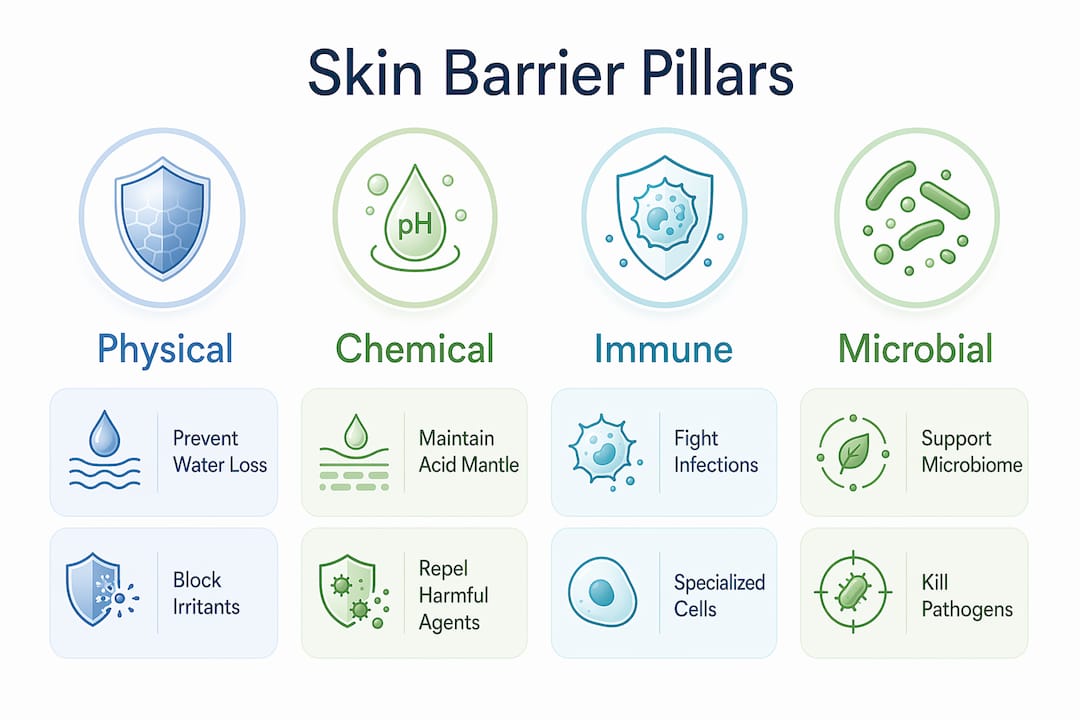
The skin barrier operates through four integrated pillars: physical, chemical, immune, and microbial. Each pillar performs a distinct function, but they depend on each other to maintain overall protection. Weakening any one of them triggers a cascade that compromises the rest. This is why barrier damage rarely shows up as a single symptom.
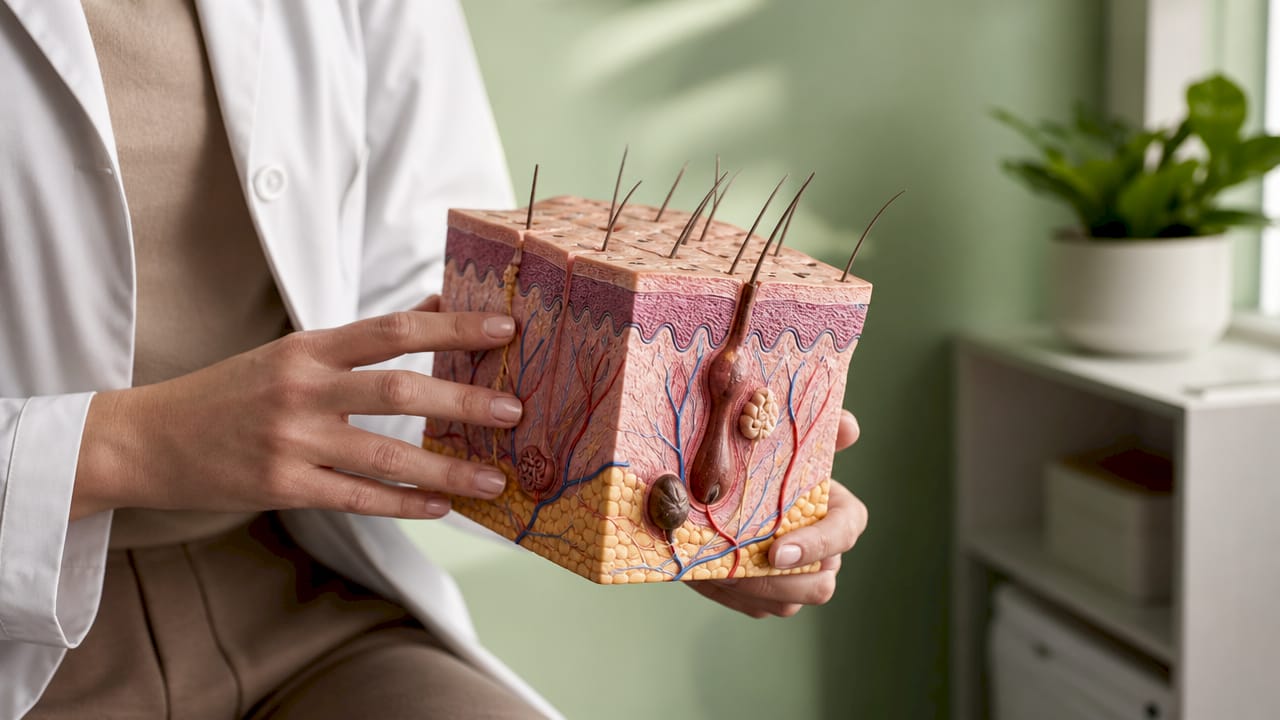
The physical barrier is built from the epidermis and stratum corneum in what dermatologists describe as a “brick and mortar” system. Corneocytes, the dead skin cells, act as the bricks. Lipids, including ceramides, cholesterol, and fatty acids, act as the mortar that holds them together and traps moisture between them. Without this lipid matrix, water evaporates freely and irritants pass through unchecked.
The chemical barrier centers on your skin’s slightly acidic pH, known as the acid mantle. This acidic environment repels harmful microorganisms while supporting the beneficial bacteria your skin needs. Alkaline soaps, harsh cleansers, and even tap water can disrupt this pH balance, leaving your skin temporarily defenseless.
The immune barrier consists of specialized cells in both the epidermis and dermis. These immune cells fight infections rapidly before they can spread deeper into the body. They also regulate inflammation, which is why a damaged barrier so often produces visible redness and swelling.
The microbial barrier is your skin’s resident microbiome. Healthy microbes produce molecules that kill pathogens and compete for space and nutrients against harmful bacteria. They also stimulate lipid production, directly reinforcing the physical layer above them.
| Pillar | Primary function | Key components |
|---|---|---|
| Physical | Prevents water loss and blocks irritants | Stratum corneum, corneocytes, lipids |
| Chemical | Repels pathogens through acidic pH | Acid mantle, sebum, fatty acids |
| Immune | Detects and neutralizes threats | Langerhans cells, T-cells, cytokines |
| Microbial | Outcompetes harmful bacteria | Skin microbiome, commensal bacteria |
Pro Tip: Avoid cleansers with a pH above 6.5. Most traditional bar soaps sit between pH 9 and 11, which strips the acid mantle and leaves your barrier vulnerable for hours after washing.
How does skin barrier function maintain hydration and block irritants?
Skin barrier function works through a sequence of overlapping defenses, not a single mechanism. Here is how that sequence operates:
- The lipid matrix in the stratum corneum slows transepidermal water loss (TEWL), the process by which water migrates from deeper skin layers and evaporates at the surface. When ceramides are depleted, TEWL increases sharply, and skin becomes visibly dry and tight.
- The acid mantle maintains a pH between 4.5 and 5.5, creating conditions where most pathogens cannot survive. This chemical environment also activates enzymes that regulate skin cell turnover.
- Immune cells in the epidermis scan for foreign particles. When they detect a threat, they trigger a localized inflammatory response to contain it before it spreads.
- The microbiome produces antimicrobial peptides and competes directly with harmful bacteria for surface territory, adding a biological layer of defense.
“The skin barrier is not one thing. It’s a system. When patients come in with reactive skin, we’re usually looking at multiple pillars failing at once, not just dryness.” — Dermatologist perspective on barrier synergy, as cited in Time
The concept of a “broken skin barrier” has been popularized on social media, but it reflects a real physiological breakdown. True barrier damage often manifests as skin that stings or reddens when you apply products you have used for years without issue. That reactivity is the immune barrier firing in overdrive because the physical and chemical layers are no longer absorbing the initial hit.
What damages the skin barrier and how do you recognize it?
A compromised barrier produces symptoms including redness, stinging, sensitivity, acne, and visible dryness caused by increased transepidermal water loss. These symptoms differ from ordinary dry skin in one key way: damaged barrier skin reacts. It stings when you apply toner. It flushes after cleansing. It breaks out even when your diet and stress levels have not changed.
Common causes of barrier damage include:
- Over-exfoliation with acids like glycolic acid, salicylic acid, or physical scrubs more than two to three times per week
- Alkaline cleansers and soaps that strip the acid mantle
- Long, hot showers that dissolve surface lipids
- Prolonged sun exposure without SPF protection
- Environmental factors including cold, dry air and pollution
- Fragrance and alcohol-heavy products that irritate the lipid matrix
- Certain prescription retinoids used without adequate moisturization
- Chronic stress, which elevates cortisol and suppresses immune barrier function
Signs your skin barrier may be compromised:
- Persistent tightness or flaking that does not resolve with standard moisturizer
- Redness or flushing after cleansing or applying serum
- Sudden sensitivity to products you have used for months
- Breakouts that appear in unusual patterns or locations
- Skin that feels rough or uneven in texture despite hydration
The difference between dry skin and a damaged barrier matters for treatment. Dry skin lacks oil and responds well to rich moisturizers. A damaged barrier lacks structural integrity and requires targeted repair with specific ingredients, not just more product layering.
Pro Tip: If your skin stings when you apply a water-based serum or toner, that is a reliable signal of barrier damage, not product sensitivity. Pause actives, strip your routine back to cleanser and moisturizer, and give your barrier two to four weeks to recover.
How to strengthen and repair the skin barrier effectively
The most evidence-based approach to barrier repair follows what researchers call the TLC strategy: Target inflammation, Lock in moisture, and Connect skin cells. This multilevel method restores metabolic, immune, and microbial balance simultaneously rather than addressing symptoms one at a time.
Simplifying your routine is the first practical step. pH-balanced cleansers combined with ceramides, hyaluronic acid, and petrolatum reinforce the lipid matrix and reduce transepidermal water loss. This combination works because each ingredient addresses a different layer of the barrier system.
| Ingredient | Barrier function | Best used |
|---|---|---|
| Ceramides | Replenish lipid mortar between skin cells | Morning and evening moisturizer |
| Hyaluronic acid | Draws water into the stratum corneum | Serum applied to damp skin |
| Petrolatum | Occlusive layer that locks moisture in | Final step in evening routine |
| Niacinamide | Stimulates ceramide production and reduces inflammation | Serum or moisturizer, twice daily |
| Colloidal oatmeal | Soothes immune response and reduces TEWL | Sensitive skin cleansers and masks |
Avoiding harsh chemicals in your skincare routine is equally important during repair. Fragrance, denatured alcohol, and synthetic preservatives all stress the lipid matrix. When repairing your barrier, treat your skin the way you would treat a healing wound: clean, protected, and undisturbed.
Pro Tip: Apply hyaluronic acid to slightly damp skin, then seal it immediately with a ceramide-rich moisturizer. Hyaluronic acid pulls moisture from its environment. On dry skin in a dry room, it can actually draw water out of deeper skin layers instead of the air.
Understanding pH-balanced skincare is a practical foundation for anyone rebuilding their routine. Products that match your skin’s natural pH range of 4.5 to 5.5 support the acid mantle rather than disrupting it with every wash.
How does aging affect the skin barrier after 30?
Aging reduces barrier function, leading to increased irritation, dryness, and susceptibility to environmental damage. This is not a gradual, invisible process. Most people over 30 notice it as a shift in how their skin responds: products that once felt fine now sting, skin takes longer to recover from sun exposure, and hydration seems harder to maintain regardless of how much moisturizer you apply.
The structural reason is straightforward. Ceramide production slows with age. Cell turnover decreases, meaning the stratum corneum becomes less efficient at renewing itself. Sebum production also drops, reducing the natural lipid supply that feeds the acid mantle. The result is a physical barrier that is thinner, drier, and slower to repair after damage.
Nutrition and lifestyle directly influence how quickly this decline progresses. Diets rich in omega-3 fatty acids, found in salmon, flaxseed, and walnuts, support lipid production in the skin. Adequate hydration, quality sleep, and stress management all preserve immune barrier function. Chronic sleep deprivation and high cortisol levels accelerate barrier breakdown at the cellular level.
Key protective behaviors for mature skin include:
- Using SPF 30 or higher daily, even in winter, to prevent UV-driven lipid degradation
- Switching to cream-based or oil-based cleansers that do not strip natural sebum
- Adding a ceramide-rich moisturizer morning and evening as a non-negotiable step
- Limiting exfoliation to once per week maximum and choosing lactic acid over glycolic acid for gentler cell turnover
- Incorporating natural ingredients for mature skin like squalane, rosehip oil, and bakuchiol to support lipid replenishment without irritation
The science behind moisturizing becomes more relevant with every decade. After 40, moisturizing is not a cosmetic preference. It is a functional intervention that directly slows barrier decline.
Key takeaways
A healthy skin barrier requires consistent reinforcement of all four pillars: physical, chemical, immune, and microbial.
| Point | Details |
|---|---|
| Four-pillar structure | The barrier operates through physical, chemical, immune, and microbial layers working together. |
| Damage recognition | Stinging, redness, and sudden product sensitivity signal barrier compromise, not just dryness. |
| Repair ingredients | Ceramides, hyaluronic acid, and petrolatum address barrier repair at three distinct levels. |
| Aging accelerates decline | After 30, ceramide production slows and the barrier requires targeted daily support to maintain function. |
| Routine simplicity wins | Stripping back to a pH-balanced cleanser and ceramide moisturizer is the fastest path to barrier recovery. |
Why I think most people are repairing their skin barrier wrong
After years of working in skincare and watching clients cycle through product after product, the pattern I see most often is this: people add more when the answer is almost always less. A damaged barrier does not need a 10-step routine loaded with actives. It needs two weeks of doing almost nothing.
The second mistake I see constantly is confusing dehydration with barrier damage. Dehydrated skin lacks water and responds quickly to hyaluronic acid and a good moisturizer. A damaged barrier is a structural problem. Pouring more product onto a compromised barrier is like painting over a cracked wall. It looks better briefly, then the cracks come back worse.
What actually works is boring and consistent. A gentle, pH-balanced cleanser. A ceramide moisturizer. SPF. That is the entire routine for the first month of repair. No retinol, no vitamin C, no exfoliating acids. The skin barrier is not a problem you solve with the right serum. It is a system you maintain with the right habits, and those habits have to be sustainable, not just effective for two weeks.
The most underrated barrier repair tool is sleep. Skin cell renewal peaks between 11 PM and 2 AM. Consistent, quality sleep does more for barrier recovery than most products on the market, and it costs nothing.
— Barbara
Natural skincare formulated to support your skin barrier
If you are over 40 and your skin has started feeling reactive, tight, or harder to keep hydrated, your barrier needs more than a standard moisturizer. Miraclegelnaturalskincare formulates products specifically for mature skin that prioritize ceramides, hyaluronic acid, and natural occlusives to address barrier repair at every layer.
The 2-Minute Miracle Moisturizer delivers deep hydration through the Tri-Moisture Cryo Complex™, designed to reinforce the lipid matrix and reduce transepidermal water loss without harsh chemicals or synthetic fragrances. For a broader look at what your skin needs after 40, the age-defying skincare range from Miraclegelnaturalskincare covers cleansers, serums, and moisturizers built around barrier-first formulation principles. Your skin barrier is worth protecting with ingredients that work with it, not against it.
FAQ
What is the skin barrier in simple terms?
The skin barrier is the outermost layer of your skin, called the stratum corneum, that keeps moisture in and blocks irritants, bacteria, and environmental damage from getting through.
What are the signs of a weak skin barrier?
A weak skin barrier typically shows up as persistent redness, stinging when applying products, unusual dryness or flaking, and sudden sensitivity to products you have used before without issue.
What damages the skin barrier most?
Over-exfoliation, alkaline cleansers, hot showers, fragrance-heavy products, and chronic stress are the most common causes of barrier damage. Each one disrupts the lipid matrix or acid mantle that holds the barrier together.
How long does it take to repair a damaged skin barrier?
Most dermatologists estimate two to four weeks of simplified, gentle skincare to restore basic barrier function, though severely compromised skin can take up to three months to fully recover.
What ingredients repair the skin barrier fastest?
Ceramides, petrolatum, and hyaluronic acid are the most research-supported ingredients for barrier repair. The TLC repair strategy uses these in combination to target inflammation, lock moisture, and reconnect skin cells simultaneously.