

TL;DR:
- Skin elasticity depends mainly on elastin fibers, which decline naturally and are damaged by environmental factors. Early signs include delayed rebound after stretching and surface sagging, making prevention critical. Consistent protection, targeted topicals, and professional treatments help maintain skin resilience over time.
Skin elasticity is defined as the skin’s biomechanical ability to stretch and return to its original shape, a function controlled primarily by elastin fibers in the dermis. The clinical term for elasticity loss is elastosis, and it begins earlier than most people expect. Elastin and collagen form the two main structural proteins of the extracellular matrix, with collagen providing strength and elastin providing resilience. Understanding what is skin elasticity, and what erodes it, gives you a real foundation for making smarter anti-aging decisions after 30.
What is skin elasticity and what drives it biologically?
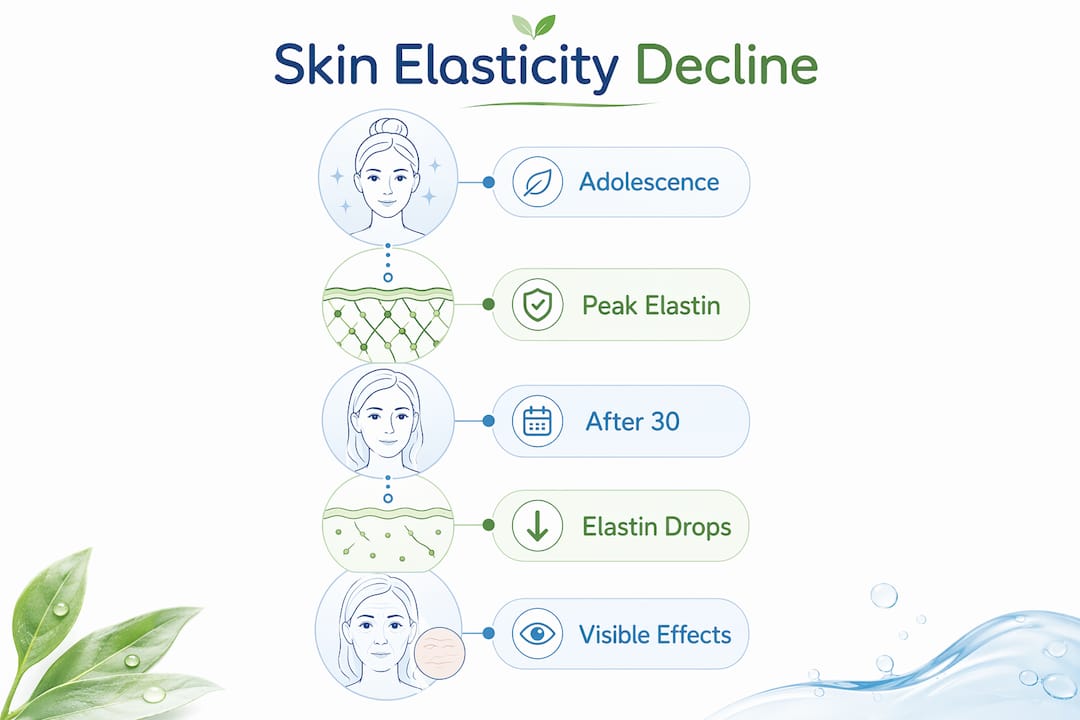
Skin elasticity is the skin’s biomechanical capacity to stretch and return to its original form, managed primarily by elastin. Think of elastin as a coiled spring buried in the dermis. When you smile, squint, or press your cheek, elastin pulls the skin back into place. Without it, skin stays displaced.
The numbers behind this are striking. Elastin makes up just 2–4% of dermal dry weight, while collagen accounts for roughly 75%. That small elastin fraction carries an outsized mechanical role. Its half-life is approximately 75 years, which means the elastin you have now is largely the elastin you were born with.
Elastin production peaks during adolescence and slows dramatically after that. Collagen can be stimulated by treatments and topical ingredients, but elastin regeneration is far more limited. This biological asymmetry is why preservation matters far more than repair when it comes to elastin.
Hydration also plays a direct role. Well-hydrated skin responds better to repair signals and feels more resilient under mechanical stress. Dehydrated skin loses its ability to buffer movement, which accelerates visible wear on the fiber network.
What causes skin elasticity to decline with age?
Elasticity decline is driven by two overlapping forces: intrinsic aging and extrinsic damage. Intrinsic aging refers to the biological slowdown in elastin and collagen synthesis that happens regardless of lifestyle. Extrinsic damage is caused by environmental and behavioral factors that accelerate that slowdown.
The extrinsic culprits are well established:
- UV exposure is the single largest driver of premature elastosis. Ultraviolet radiation breaks down elastin fibers and disorganizes the collagen network in the dermis.
- Smoking reduces blood flow to the skin and generates free radicals that degrade structural proteins.
- Air pollution deposits particulate matter that triggers oxidative stress, weakening the extracellular matrix over time.
- Poor nutrition deprives the skin of the amino acids, vitamins, and antioxidants needed to maintain fiber integrity.
- Chronic dehydration reduces the skin’s mechanical buffer, making fibers more vulnerable to stress fractures.
Chronic UV exposure, smoking, and pollution disorganize both collagen and elastin networks, a process that becomes self-reinforcing once it starts. Damaged fibers cannot repair themselves efficiently, so each new insult compounds the previous one.
The result is elastosis: a state where the dermis loses its organized fiber architecture. Skin that once snapped back in under a second begins to lag. Over time, that lag becomes visible sagging, crepiness, and deepened lines. The process is gradual, which is exactly why early intervention matters.
How can you test and recognize poor skin elasticity?
Reduced elasticity shows up in the skin before most people notice it consciously. The two most reliable self-assessment methods are the pinch test and the rebound speed test.
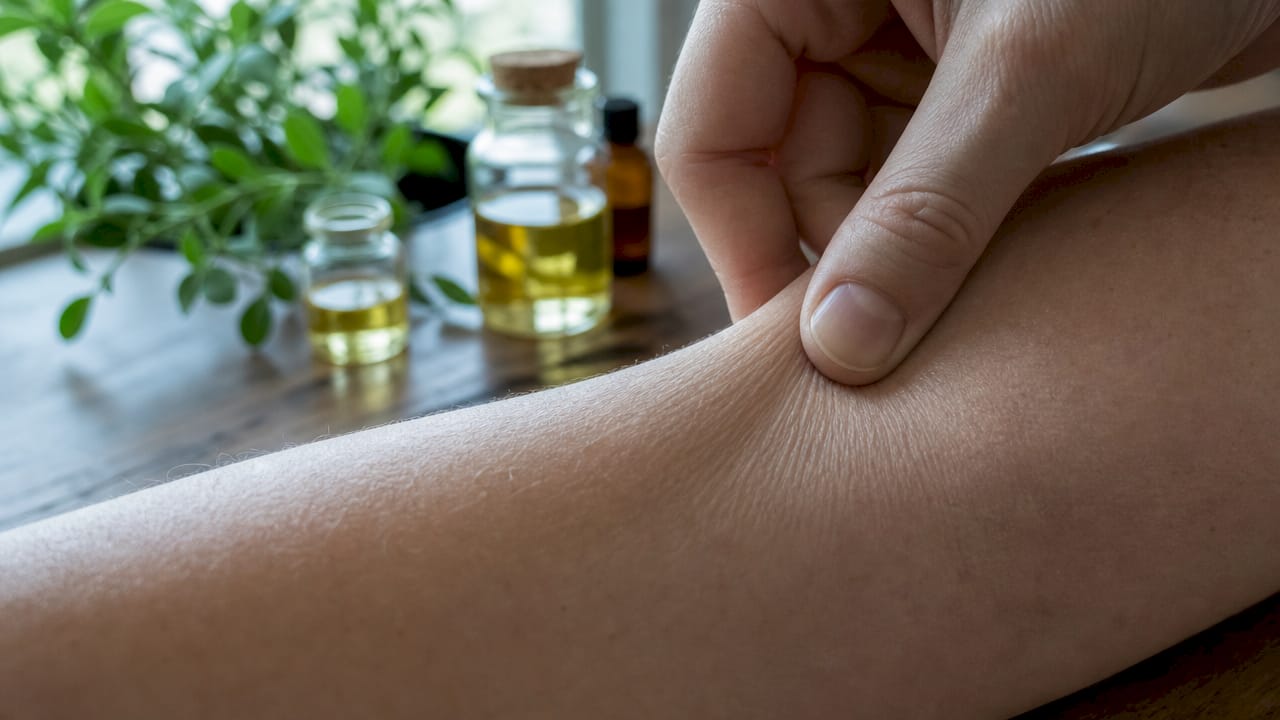
- Pinch test. Gently pinch a small section of skin on the back of your hand or cheek between two fingers. Hold for two seconds, then release. Skin with good elasticity snaps back almost immediately.
- Rebound speed test. Press two fingers lightly against your cheek and release. Watch how quickly the skin returns to its resting position. A delay of more than one to two seconds signals reduced resilience.
- Visual scan. Look for crepey texture, fine lines that persist even when your face is relaxed, or areas where skin appears to “hang” slightly rather than sit flush.
- Expression lines. Notice whether smile or squint lines linger after your expression relaxes. Persistent lines after movement are an early elasticity signal.
- Neck and décolletage check. These areas lose elasticity faster than the face because they receive UV exposure but are often skipped in skincare routines.
The earliest warning sign is a delayed rebound after stretching, which appears before visible sagging or deep wrinkles. Most people miss this window entirely because they are waiting for something more dramatic to appear.
Distinguishing between elasticity loss, laxity, dehydration, and volume loss is critical for choosing the right treatment. Each condition looks similar on the surface but requires a different approach. Dehydrated skin, for example, can mimic elasticity loss but responds quickly to hydration alone.
Pro Tip: Press a finger gently into the center of your cheek and count how long the indentation takes to disappear. Healthy skin rebounds in under one second. If it takes longer, your elasticity deserves attention now, not later.
What effective methods improve skin elasticity?
Improving skin elasticity requires a layered approach. No single product or treatment addresses all the biological variables at once. The most effective plans combine daily protection, targeted topicals, and periodic professional treatments.
Daily protection and hydration
Daily sunscreen use is the single most evidence-backed step for preventing further elastin fiber damage. SPF 30 or higher, applied every morning, stops the UV degradation cycle that accelerates elastosis. Pair that with a hydrating moisturizer to keep the extracellular matrix supple and responsive.
Topical ingredients with clinical support
Several ingredients have strong evidence for supporting skin structure:
- Retinol stimulates collagen production and accelerates cell turnover, improving skin texture and firmness over time.
- Vitamin C is a cofactor in collagen synthesis and neutralizes free radicals that degrade elastin.
- Hyaluronic acid draws water into the dermis, plumping the extracellular matrix and improving the skin’s mechanical response.
- Peptides signal fibroblasts to produce more collagen and elastin, supporting the fiber network from within.
Miraclegelnaturalskincare formulates products around these actives, including the 2 Minute Miracle Gel with its Tri-Moisture Cryo Complex™, designed to deliver visible hydration and firmness results quickly. You can also explore key anti-aging ingredients that support skin resilience at 40 and beyond.
Non-invasive and professional treatments
| Treatment | Mechanism | Best for |
|---|---|---|
| Radiofrequency | Heats dermis to stimulate collagen and elastin remodeling | Mild to moderate laxity |
| Ultrasound (HIFU) | Delivers focused energy to deeper tissue layers | Moderate elasticity loss |
| Microneedling | Creates micro-injuries that trigger collagen repair response | Surface texture and early laxity |
| Surgical lifting | Repositions and removes excess tissue | Severe laxity with significant descent |
Non-invasive treatments like radiofrequency and ultrasound can improve mild to moderate elasticity loss, but severe laxity may require surgical intervention. Expectations for non-surgical methods must be realistic. These treatments slow and partially reverse decline; they do not restore the elastin density of younger skin.
Pro Tip: Combine a vitamin C serum in the morning with retinol at night, and apply SPF 30 every single day. This three-step foundation addresses free radical damage, collagen stimulation, and UV protection simultaneously. Consistency over 12 weeks produces measurable results.
You can find firming skincare options that support this kind of layered routine at home.
How does skin elasticity differ from skin laxity and wrinkles?
These three terms describe related but distinct changes in the skin. Conflating them leads to mismatched treatments and frustration.
Skin elasticity refers to the mechanical property of the skin itself: its ability to stretch and rebound. It is a tissue-level quality governed by elastin fiber density and hydration.
Skin laxity describes the visible sagging that results from loss of structural support beneath the skin’s surface. Skin laxity involves deeper structural support loss, causing tissue to descend rather than simply lose bounce. One useful way to picture it: laxity is like a table shrinking beneath a tablecloth. The cloth (skin) hangs because the support structure underneath has diminished.
Wrinkles are surface creases caused by repeated facial movements, volume loss, or UV damage to the upper skin layers. Wrinkles are creases from dynamic facial movements, while laxity relates to deeper tissue descent. Treating one does not solve the other.
| Condition | Primary cause | Key sign | Effective treatment |
|---|---|---|---|
| Elasticity loss | Elastin fiber degradation | Slow skin rebound | Retinol, peptides, radiofrequency |
| Skin laxity | Structural support loss | Visible sagging and descent | Ultrasound, surgical lifting |
| Wrinkles | Dynamic movement, UV damage | Surface lines and creases | Retinol, neuromodulators, resurfacing |
| Dehydration | Moisture deficit | Dull, tight, fine-lined texture | Hyaluronic acid, moisturizers |
Clinical experts emphasize that each condition requires a distinct cosmetic approach. A treatment targeting wrinkles will not restore the fiber architecture that prevents sagging. Knowing which condition you are addressing keeps your skincare spending focused and effective.
Progressive elasticity loss is a structural change, not just surface damage. That distinction matters because it shifts the treatment logic from “fix the surface” to “support the structure.”
Key Takeaways
Skin elasticity is primarily governed by elastin, and preserving it through daily sun protection, targeted topicals, and early intervention produces the most measurable long-term results.
| Point | Details |
|---|---|
| Elastin is finite | Elastin production peaks in adolescence; preservation matters more than regeneration. |
| UV is the top threat | Daily SPF 30 or higher prevents the irreversible elastin fiber damage that drives elastosis. |
| Test early | A delayed skin rebound after pinching signals elasticity loss before visible sagging appears. |
| Layer your approach | Combine retinol, vitamin C, hyaluronic acid, and professional treatments for best results. |
| Laxity and wrinkles differ | Each condition requires a distinct treatment; addressing one does not automatically fix the other. |
What I’ve learned about skin elasticity after years of watching it change
After years of working with skincare formulations and talking with women in their 30s, 40s, and 50s, one pattern stands out clearly. The people who maintain the best skin resilience are not the ones spending the most money. They are the ones who started paying attention early, before anything looked obviously wrong.
The pinch test is something I recommend to every person who asks me where to begin. Not because it is a clinical diagnostic, but because it makes the abstract concrete. When you feel your skin lag for two seconds instead of snapping back, you stop treating elasticity as a future problem.
The other thing I have seen consistently: people underestimate hydration and overestimate treatments. A well-hydrated skin barrier responds better to every active ingredient you apply. Skipping moisturizer while spending on serums is like watering a plant through a cracked pot.
My honest advice for anyone over 30 is to build the boring foundation first. SPF every morning, a hydrating moisturizer, and a retinol three nights a week. Add vitamin C when you are ready. That routine, done consistently, outperforms expensive treatments used inconsistently. Skin elasticity rewards patience and repetition far more than it rewards dramatic interventions.
For those interested in a skincare and beauty bundle that supports skin health, exploring options that combine hydration and protection is a practical starting point.
— Barbara
Miraclegelnaturalskincare: natural support for resilient skin after 40
Skin elasticity responds to consistent, targeted care. Miraclegelnaturalskincare builds its formulations around that principle, using natural ingredients clinically associated with firmness, hydration, and structural skin support.

The age-defying skincare range at Miraclegelnaturalskincare includes moisturizers, eye serums, and body products formulated without harsh chemicals. The 2 Minute Miracle Gel, featuring the Tri-Moisture Cryo Complex™, is designed for people who want visible results without waiting weeks to see a difference. If you are building or refining your anti-aging routine, the natural skincare regimen guide at Miraclegelnaturalskincare is a practical next step for skin over 40.
FAQ
What is skin elasticity in simple terms?
Skin elasticity is the skin’s ability to stretch and return to its original shape. It is controlled primarily by elastin fibers in the dermis, with collagen and hydration also playing supporting roles.
What is skin laxity and how does it differ from elasticity loss?
Skin laxity is the visible sagging caused by loss of structural support beneath the skin’s surface, while elasticity loss refers to reduced mechanical rebound in the skin tissue itself. Laxity involves deeper tissue descent; elasticity loss shows up as a slower snap-back after stretching.
How can you test skin elasticity at home?
Pinch the skin on the back of your hand, hold for two seconds, and release. Skin with good elasticity returns to its original position almost immediately. A delay of more than one to two seconds indicates reduced elasticity.
What are the most effective ways to improve skin elasticity?
Daily SPF use, retinol, vitamin C, and hyaluronic acid form the evidence-backed foundation. Non-invasive treatments like radiofrequency and ultrasound can address moderate elasticity loss, while severe laxity may require surgical options.
At what age does skin elasticity start to decline?
Elastin production slows significantly after adolescence, and measurable elasticity decline typically becomes noticeable in the 30s. Extrinsic factors like UV exposure and smoking accelerate this process well ahead of biological aging alone.