
TL;DR:
- Vitamin C serum is a proven antioxidant that brightens skin, stimulates collagen, and reduces aging signs. Consistent use for 12 weeks can significantly improve fine lines and hyperpigmentation, especially when formulated properly with active ingredients. It works best in the morning alongside SPF to protect against UV damage and pollution.
Vitamin C serum is defined as a topical antioxidant formulation containing L-ascorbic acid or its derivatives, clinically proven to brighten skin, stimulate collagen production, and reduce visible signs of aging. If you are over 30 and wondering why use vitamin C serum, the answer is grounded in decades of dermatological research. Consistent use for 12 weeks produces up to 39% reduction in fine lines and a 31–35% improvement in hyperpigmentation. These are not marketing claims. They are measurable outcomes from controlled clinical studies, and they make vitamin C serum one of the most evidence-backed ingredients in modern skincare.
Why use vitamin C serum: the science behind the benefits
Vitamin C serum works at the cellular level through three distinct mechanisms: antioxidant protection, collagen stimulation, and pigmentation control. Each mechanism addresses a specific concern that becomes more pressing after age 30.

Antioxidant protection is the first line of defense. Vitamin C neutralizes free radicals caused by UV exposure and pollution, reducing oxidative damage that accelerates skin aging. Free radicals break down collagen and elastin fibers, which is why unprotected skin ages faster in urban environments.
Collagen stimulation is where the anti-aging power becomes structural. Vitamin C activates enzymes prolyl hydroxylase and lysyl hydroxylase, which are required for collagen fiber formation and stability. Without adequate vitamin C, collagen fibers form poorly and break down faster. This is why skin loses firmness and develops fine lines as we age and vitamin C levels in the skin decline.
Pigmentation control works through a different pathway. Vitamin C inhibits tyrosinase, the enzyme responsible for melanin production. Less melanin means fewer dark spots, more even skin tone, and a brighter complexion overall. This is particularly relevant for adults over 30, who often notice post-inflammatory hyperpigmentation and sun damage accumulating from years of UV exposure.
- Antioxidant action reduces oxidative stress from UV and pollution
- Collagen enzyme activation improves skin firmness and texture
- Tyrosinase inhibition fades dark spots and evens skin tone
- Synergistic formulations with vitamin E and ferulic acid amplify all three effects
- Photoaging prevention slows the visible aging process over time
Pro Tip: Pair your vitamin C serum with a broad-spectrum SPF 30 or higher every morning. Vitamin C and sunscreen together provide superior UV defense compared to either product used alone. Learn more about vitamin C after 30 to understand why this combination matters for your skin.
What does clinical research say about the effectiveness of vitamin C serum?
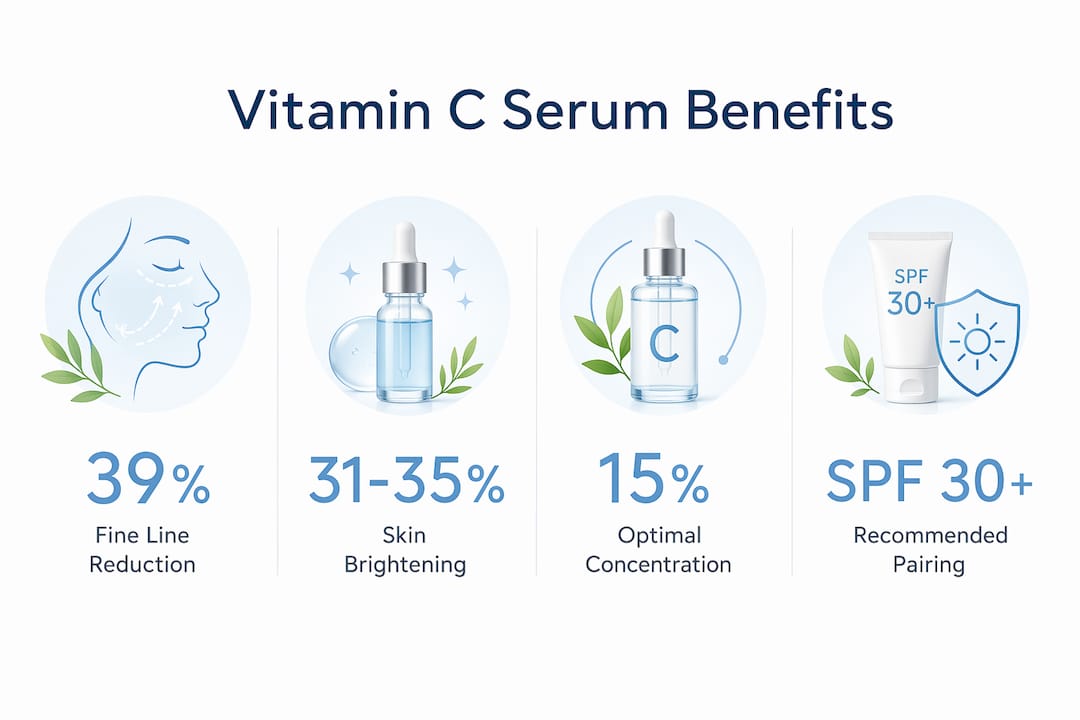
The clinical evidence for vitamin C serum is specific and reproducible. After 12 weeks of consistent use, study participants showed up to 39% reduction in fine lines, 31–35% improvement in hyperpigmentation, and measurable gains in skin firmness. That 12-week window is the standard timeframe dermatologists use to assess meaningful skin change.
Formulation matters as much as consistency. The gold standard formulation contains 15% L-ascorbic acid, 1% vitamin E, and 0.5% ferulic acid. This combination works because ferulic acid stabilizes both vitamin C and vitamin E, doubling their antioxidant activity. The result is a formulation that outperforms any single ingredient used alone.
pH is a factor most people overlook. L-ascorbic acid requires a pH below 3.5 to remain stable and penetrate the skin effectively. Above that pH, the molecule degrades before it can reach the dermis. This is why cheap or poorly formulated serums often deliver no visible results despite containing vitamin C on the label.
| Formulation factor | Optimal specification | Why it matters |
|---|---|---|
| L-ascorbic acid concentration | 15% | Clinically linked to measurable skin improvement |
| Vitamin E (tocopherol) | 1% | Stabilizes L-ascorbic acid and boosts antioxidant effect |
| Ferulic acid | 0.5% | Doubles antioxidant activity and improves stability |
| Formulation pH | Below 3.5 | Required for skin penetration and molecular stability |
| Visible results timeline | 8–12 weeks | Consistent daily use needed for measurable change |
Pro Tip: Check the pH of any vitamin C serum you buy. A serum with L-ascorbic acid at pH 4.0 or above will oxidize quickly and deliver little benefit. Look for brands that publish their formulation pH or use amber glass packaging as a signal of quality.
How to choose the right vitamin C serum for your skin type
Not all vitamin C serums use the same form of vitamin C, and that distinction matters for your skin type. L-ascorbic acid (LAA) is the most potent and most studied form, but it is also the most acidic and can cause tingling or redness in sensitive skin. For people with reactive or sensitive skin, derivatives like magnesium ascorbyl phosphate (MAP) or ascorbyl glucoside deliver similar brightening and antioxidant benefits with significantly lower irritation risk.
Other derivatives worth knowing include sodium ascorbyl phosphate, which is water-soluble and gentle, and tetrahexyldecyl ascorbate, which is oil-soluble and penetrates deeply into the skin. Each derivative converts to active vitamin C once absorbed, though typically at a slower rate than LAA. For most people over 30 with normal to combination skin, a 15–20% LAA formulation is the most effective choice. For those with dry or sensitive skin, a 10% LAA or a MAP-based formula is a better starting point.
Packaging and storage directly affect how long your serum stays active. Dark-colored glass bottles in cool, airtight conditions prevent oxidation and preserve potency. A serum that has turned orange or brown has already oxidized and lost most of its effectiveness. Store your serum away from direct sunlight and heat, and replace it within three to six months of opening.
- Normal to combination skin: 15–20% L-ascorbic acid at pH below 3.5
- Sensitive or reactive skin: magnesium ascorbyl phosphate or ascorbyl glucoside
- Dry skin: tetrahexyldecyl ascorbate (oil-soluble, deeply hydrating)
- All skin types: dark glass packaging, cool storage, airtight seal
- Pairing: vitamin C works well with hyaluronic acid and niacinamide at lower concentrations
For those exploring sensitive skin-safe options, choosing a derivative-based formula is the most practical path to consistent, irritation-free use. Consistency is what drives results, so a gentler formula you use daily beats a potent one you avoid.
What is the best way to use vitamin C serum in your skincare routine?
The advantages of vitamin C serums are only realized with correct application. Timing, layering order, and frequency all affect how much benefit you actually get from the product.
- Apply in the morning. Vitamin C serum is most effective as a morning antioxidant shield. UV exposure and pollution peak during daylight hours, and vitamin C neutralizes the free radicals these generate before they damage skin cells.
- Cleanse first. Apply serum to clean, dry skin. Residual dirt or oils reduce absorption and can dilute the active ingredient.
- Use 3–5 drops. A small amount covers the full face and neck. More product does not mean more benefit once the skin is saturated.
- Wait 60–90 seconds before layering. Let the serum absorb before applying moisturizer. This prevents dilution and allows the low-pH formula to work before a higher-pH product alters the skin surface environment.
- Apply moisturizer next. Follow with a hydrating moisturizer to lock in the serum and support the skin barrier.
- Finish with broad-spectrum SPF. Vitamin C enhances sunscreen protection but does not replace it. Apply SPF 30 or higher as the final step every morning without exception.
- Patch test before full use. Apply a small amount to the inner forearm for two days before using it on your face. This is especially important with LAA formulas above 15%.
- Use daily for 8–12 weeks. Visible results require consistent daily application. Skipping days resets the antioxidant reservoir in the skin and slows progress.
For a broader view of how vitamin C fits into a complete routine, the top skin renewal tips for adults over 30 offer practical context on sequencing actives effectively. The benefits of vitamin C serum compound over time, so patience and routine are the two most underrated factors in getting results.
Key Takeaways
Vitamin C serum is the most clinically supported brightening and anti-aging ingredient available for adults over 30, with measurable results in fine lines, pigmentation, and firmness after 12 weeks of consistent use.
| Point | Details |
|---|---|
| Clinical results are real | Up to 39% reduction in fine lines and 31–35% improvement in hyperpigmentation after 12 weeks. |
| Formulation determines effectiveness | The gold standard is 15% L-ascorbic acid, 1% vitamin E, and 0.5% ferulic acid at pH below 3.5. |
| Sensitive skin has options | Derivatives like MAP or ascorbyl glucoside deliver benefits with lower irritation risk. |
| Storage protects potency | Dark glass bottles and cool, airtight storage prevent oxidation and preserve active ingredients. |
| Sunscreen is non-negotiable | Vitamin C enhances UV defense but must be paired with broad-spectrum SPF every morning. |
What I have learned from years of watching vitamin C serum work
The most common mistake I see is people abandoning vitamin C serum after two or three weeks because they do not see dramatic results. Skin renewal at the cellular level takes time. The clinical data is built on 12-week trials for a reason. Collagen remodeling is a slow biological process, and no serum changes that timeline.
The second mistake is chasing the highest concentration available. A 30% L-ascorbic acid serum sounds impressive, but concentrations above 20% do not deliver proportionally better results. They do deliver more irritation, more oxidation risk, and more wasted product. The skin-firming benefits people want come from consistent use of a well-formulated product, not from the highest number on the label.
What I find genuinely underappreciated is the sunscreen pairing. Vitamin C serum alone slows photoaging. Vitamin C serum plus SPF actively prevents it. For anyone over 30 who has already accumulated some sun damage, that combination is the single most effective daily habit you can build. Dermatologists and plastic surgeons consistently recommend this pairing as a foundation of any evidence-based skin treatment plan.
My honest recommendation: choose a stable, well-packaged formula, use it every morning without skipping, and give it three full months before you judge it. The people who do this consistently are the ones who stop asking whether vitamin C serum is worth it. They already know the answer.
— Barbara
Natural vitamin C skincare from Miraclegelnaturalskincare
Miraclegelnaturalskincare formulates its products around the same principles the clinical research supports: stable active ingredients, natural formulations, and results that are visible over time rather than promised overnight.
For adults over 30 looking to build a brightening and anti-aging routine grounded in science, Miraclegelnaturalskincare offers a curated range of age-defying natural skincare products designed for mature and sensitive skin. The formulations prioritize ingredient stability, gentle delivery, and compatibility with daily SPF use. Whether you are starting with vitamin C or building on an existing routine, the anti-aging serum collection gives you options matched to your skin’s specific needs.
FAQ
Why use vitamin C serum instead of a regular moisturizer?
Vitamin C serum delivers concentrated antioxidant and collagen-stimulating actives that a standard moisturizer cannot replicate. Clinical studies show measurable reductions in fine lines and hyperpigmentation after 12 weeks of serum use.
Is vitamin C serum worth it for people over 30?
Yes. After 30, collagen production slows and sun damage accumulates. Vitamin C serum directly addresses both by stimulating collagen synthesis and inhibiting the melanin production that causes dark spots.
How long before vitamin C serum shows results?
Visible improvement in skin tone and texture typically appears after 8–12 weeks of consistent daily use. Collagen remodeling is a gradual biological process that cannot be accelerated by higher concentrations.
Can sensitive skin tolerate vitamin C serum?
Sensitive skin tolerates derivatives like magnesium ascorbyl phosphate and ascorbyl glucoside well. These forms convert to active vitamin C in the skin and deliver brightening benefits with significantly lower irritation risk than L-ascorbic acid.
Should I use vitamin C serum in the morning or at night?
Morning application is preferred. Vitamin C serum builds an antioxidant shield against UV and pollution exposure during the day, and it works synergistically with broad-spectrum sunscreen for superior photoaging protection.