
TL;DR:
- The myth that only expensive creams can reverse aging is false; proven antioxidants like vitamins C, E, and ferulic acid provide significant skin benefits at any price. Scientific research confirms that topical antioxidants reduce wrinkles, improve elasticity, and enhance skin tone, especially when used consistently with other treatments. To see real results, choose well-formulated products with proper ingredient concentrations, stable packaging, and integrate them into a daily routine with sun protection.
The idea that only expensive creams can turn back the clock is one of the most persistent myths in skincare, and it costs women real money every year. What best antioxidant face serums research consistently shows is that vitamins C and E combined with ferulic acid can increase photoprotection eightfold, promoting collagen and brightening tone in ways a high price tag alone never could. If you are over 40 and searching for a genuinely effective, natural approach to anti-aging skincare, understanding antioxidants is the single most impactful shift you can make. This article walks you through the science, the clinical evidence, the ingredients worth seeking out, and exactly how to put it all into practice.
Table of Contents
- What are antioxidants and why do they matter in skincare?
- Science-backed benefits: Evidence for mature skin
- Top antioxidant ingredients to look for
- How to use antioxidants for the best results at 40+
- The truth most skincare guides won’t tell you about antioxidants
- Discover naturally powerful antioxidant skincare for women 40+
- Frequently asked questions
Key Takeaways
| Point | Details |
|---|---|
| Antioxidants fight visible aging | Powerful antioxidants protect, repair, and boost mature skin’s resilience and youthfulness. |
| Evidence backs proven ingredients | Vitamin C, E, polyphenols, and synergistic blends show measurable anti-aging effects for women 40+. |
| Not all products are equal | Choose clinically-supported, stable formulas over trendy ‘antioxidant’ claims for true results. |
| Routine and pairing matter | Apply antioxidants consistently, pair with SPF, and align with your unique skin needs for best outcomes. |
What are antioxidants and why do they matter in skincare?
Antioxidants are substances that neutralize free radicals, which are unstable molecules produced by sun exposure, pollution, stress, and even normal metabolism. Think of free radicals like tiny sparks landing on dry paper. Left unchecked, they cause a chain reaction that breaks down collagen and elastin, the structural proteins that keep skin firm and smooth. Wrinkles, sagging, uneven tone? Free radical damage is a major driver of all three.
After 40, your skin’s own antioxidant defenses naturally decline. The enzymes and compounds your body produced effortlessly in your 20s are less abundant now, which is why external antioxidant support through skincare becomes genuinely important rather than optional. This isn’t marketing language. It’s basic biology.
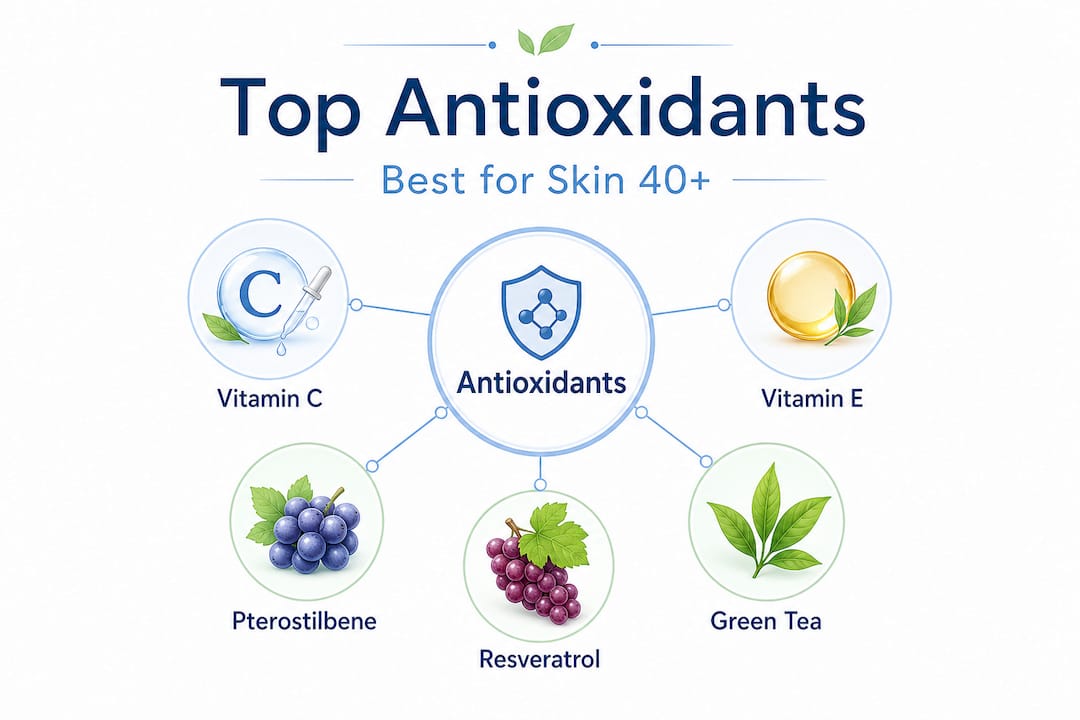
The good news is that specific antioxidants have strong evidence behind them. Here are the ones that matter most for mature, sensitive skin:
- Vitamin C: Stimulates collagen production, brightens dark spots, and shields skin from UV damage
- Vitamin E (tocopherol): Deeply moisturizing, stabilizes vitamin C, and repairs the skin barrier
- Ferulic acid: A plant-derived antioxidant that dramatically amplifies the effectiveness of vitamins C and E
- Resveratrol: Found in grapes and berries, it calms inflammation and suits sensitive skin types common in Ireland and the UK
- Green tea extract (EGCG): Gentle, anti-inflammatory, and particularly well suited to reactive or redness-prone complexions
These five ingredients are not trendy fillers. When formulated correctly, they deliver real, measurable results. The combination of vitamins C, E, and ferulic acid is especially powerful, offering eightfold photoprotection that no single ingredient achieves alone. For a deeper look at building a foundation around these actives, explore natural skincare tips for mature women or browse antioxidant-rich serums formulated without harsh chemicals.
Pro Tip: Pair vitamin C in the morning with vitamin E for maximum free radical protection throughout the day. Vitamin E helps prevent vitamin C from oxidizing, keeping both ingredients active longer on your skin.
Science-backed benefits: Evidence for mature skin
Understanding the importance of antioxidants is one thing. Seeing what rigorous clinical research actually demonstrates for women in your age group is another, and the results are genuinely impressive.

One published clinical trial on pterostilbene, a potent stilbene antioxidant found in blueberries, showed that a 0.1% pterostilbene emulsion reduced wrinkle depth and improved skin elasticity in women aged 32 to 53 over just 28 days of use. That is under a month of consistent application. A separate study examining polyphenol cream effects found that a 4% polyphenol formula reduced wrinkle depth by 15.9%, improved skin pigmentation, and strengthened biomechanical properties in women aged 45 to 65 over 56 days.
| Antioxidant studied | Key result | Age group | Duration |
|---|---|---|---|
| 0.1% Pterostilbene emulsion | Reduced wrinkle depth, improved elasticity | 32 to 53 years | 28 days |
| 4% Polyphenol (Aliophen) cream | 15.9% wrinkle depth reduction, improved pigmentation | 45 to 65 years | 56 days |
| Vitamin C, E, ferulic acid (post-microneedling) | Superior elasticity, pigmentation vs. placebo (p<0.001) | Mixed adult women | 8 weeks |
The post-procedure evidence is particularly striking. A double-blinded split-face clinical trial found that applying a vitamin C, E, and ferulic acid formula after microneedling produced significantly better improvements in elasticity, fine lines, and pigmentation compared to a placebo, with statistical significance at p<0.001.
“Antioxidant combinations consistently outperform individual ingredients in clinical settings. The synergy isn’t a marketing claim. It’s a measurable, statistically significant result.”
Here are the most important takeaways from the clinical evidence:
- Topical antioxidants work. Multiple peer-reviewed trials confirm measurable wrinkle and firmness improvements for women specifically in the 40 to 65 age range.
- Synergy amplifies results. Combining two or more antioxidants produces greater benefits than using any single ingredient on its own.
- They are not a sunscreen replacement. Antioxidants enhance UV protection but cannot substitute for a broad-spectrum SPF applied daily.
- Post-procedure application is particularly powerful. If you are using treatments like microneedling or laser therapy, antioxidant serums applied afterward can dramatically improve outcomes.
If clinical wrinkle results and improving skin firmness are your priorities, the research strongly supports building antioxidants into your daily routine as a non-negotiable, not an afterthought.
Top antioxidant ingredients to look for
Walking into a pharmacy or browsing skincare online and seeing the word “antioxidant” on a label tells you almost nothing useful. The real question is which antioxidants, at what concentration, and in what kind of formula.
Here is a clear comparison of the most evidence-backed options for women 40 and above:
| Ingredient | Key benefit | Best for | Sensitivity notes |
|---|---|---|---|
| Vitamin C (L-ascorbic acid) | Collagen boost, brightening | All skin types | Start low (5-10%), can sting at high % |
| Vitamin E (tocopherol) | Barrier repair, moisture | Dry, mature skin | Generally very well tolerated |
| Ferulic acid | Amplifies C and E, UV protection | All types, especially aging | Usually well tolerated |
| Resveratrol | Anti-inflammatory, antioxidant | Sensitive, redness-prone | Excellent for reactive skin |
| Green tea (EGCG) | Soothing, antioxidant | Sensitive, combination | One of the gentlest options |
| Pterostilbene | Wrinkle reduction, elasticity | Aging skin, 40 plus | New but well-tolerated in trials |
The eightfold photoprotection increase achieved when vitamins C, E, and ferulic acid are combined is one of the most compelling reasons to choose a product containing all three rather than just one. For women with the sensitive skin types so common in Ireland and the UK, resveratrol and green tea extract are smart choices because they deliver strong antioxidant activity without the risk of irritation.
When reading labels, here is what to look for beyond just the ingredient name:
- Position in the ingredient list: Active antioxidants should appear in the first half of the list, not buried near the bottom where concentrations are often negligible
- Stable packaging: Vitamin C oxidizes quickly in light and air; look for opaque or airless packaging to protect the formula
- Concentration information: Effective vitamin C typically sits between 10% and 20%; below 5% is unlikely to produce noticeable results
- Formulation pH: Vitamin C (L-ascorbic acid) is most effective at a pH below 3.5; some brands list this on their packaging or website
- Absence of destabilizing ingredients: Avoid formulas that combine vitamin C with niacinamide in high concentrations, as this can reduce efficacy
For guidance on natural brightening ingredients and curated anti-aging serums that meet these formulation standards, it’s worth looking at products specifically designed for mature skin rather than generic formulas aimed at all age groups.
Pro Tip: If a product simply says “contains antioxidants” without naming them or providing any concentration detail, treat that as a red flag. Transparency in ingredient labeling is usually a sign of a brand that actually stands behind its formula.
How to use antioxidants for the best results at 40+
Knowing what to buy is only half the equation. How you use antioxidants in your daily routine determines whether you see real results or waste a perfectly good product.
Follow this sequencing for a morning routine built around antioxidant protection:
- Cleanse gently. Use a mild, non-stripping cleanser suited to mature skin. Avoid anything that leaves your face feeling tight, as this signals barrier disruption that undermines antioxidant absorption.
- Apply antioxidant serum first. Serums go on clean, slightly damp skin before moisturizer. A vitamin C serum in the morning is the gold standard starting point. Press it gently into skin rather than rubbing.
- Follow with a moisturizer. Choose one that contains vitamin E or niacinamide to support the antioxidant layer beneath it and lock in hydration.
- Finish with broad-spectrum SPF 30 or higher. Every single morning, including overcast days in Ireland and the UK. Antioxidants and SPF together provide protection that neither achieves alone.
- Evening routine: layer strategically. In the evening, a resveratrol or green tea serum pairs beautifully with a nourishing night moisturizer. This is also when retinol or peptide products can be added if you use them.
For women who undergo aesthetic treatments, the clinical evidence on microneedling shows that applying vitamin C, E, and ferulic acid formulas in the days following a procedure significantly amplifies elasticity and pigmentation outcomes compared to doing nothing. Always follow your practitioner’s guidance on timing post-treatment application.
Diet also plays a supporting role. A systematic review of RCTs confirmed that dietary antioxidants including carotenoids and polyphenols improve photoaging markers and elasticity in women aged 20 to 75. Think colorful vegetables, berries, olive oil, and green tea as daily food choices. That said, topical application reaches the skin directly and produces more visible, measurable improvements. Diet supports from the inside; topicals act on the outside. You want both.
For gentle organic skincare options that fit seamlessly into this kind of layered routine, prioritize products formulated without alcohol, synthetic fragrance, or known irritants.
Pro Tip: Always use SPF regardless of the season or weather. Antioxidants boost UV defense but they are not a replacement for sunscreen. Think of SPF as your primary shield and antioxidants as the reinforcing layer behind it.
The truth most skincare guides won’t tell you about antioxidants
Here is something the industry rarely says plainly: the majority of products labeled “antioxidant formula” or “with vitamin C” would not pass even basic efficacy standards if independently tested. The ingredient can be listed on the label in a concentration too low to be active, in a formula too unstable to survive shelf life, or in packaging that allows it to oxidize before it ever touches your skin.
The evidence for antioxidants is robust, but as label scrutiny reveals, efficacy varies dramatically by formulation quality and stability. Buying a product with vitamin C in the name means nothing if the formula has degraded to an ineffective orange-brown liquid in its clear glass bottle.
What this means practically is that your job as a consumer is to read more carefully, not spend more. A mid-range serum in opaque, airless packaging with a named concentration of 15% vitamin C, vitamin E, and ferulic acid will outperform a prestige product with elegant branding that buries “vitamin C extract” near the bottom of its ingredient list.
Consistency also matters far more than people realize. The clinical trials showing 15.9% wrinkle reduction and improved elasticity all involved daily use over weeks. Skin renewal cycles run approximately 28 days. Results build gradually, and the women who see the most transformation are those who treat their antioxidant serum the same way they treat brushing their teeth: non-negotiable, every day, no skipping.
The right age-defying routines are built on consistency, realistic expectations, and genuinely well-formulated products. Antioxidants are a powerful pillar of that routine but only when the formula actually delivers.
Discover naturally powerful antioxidant skincare for women 40+
Armed with clarity and confidence in antioxidants, it’s time to build your best anti-aging routine with trusted, evidence-based solutions.
At Miracle Gel Natural Skincare, every formulation is designed with mature skin in mind, using natural and organic actives that respect the skin’s barrier while delivering visible results. Our natural age-defying skincare range brings together the antioxidant combinations the science supports, in stable, skin-friendly formulas developed for women who want results without harsh chemicals.
Explore our collection of proven anti-aging serums to find antioxidant-rich options that fit your skin type and concerns, whether you are dealing with fine lines, uneven tone, or loss of firmness. For a closer look at what genuinely proven formulations can do for your skin, visit our clinical skincare results page, where real outcomes speak louder than any marketing claim. Free shipping on orders over €85 makes it easier to start your routine today.
Frequently asked questions
Can I use antioxidants with retinol or other actives after age 40?
Yes, antioxidants work well alongside retinol and other actives. Apply your antioxidant serum first in the morning, use retinol at night, and always follow with SPF, as synergistic combinations consistently outperform single-ingredient approaches.
Are antioxidants safe for sensitive skin in Ireland and the UK?
Most antioxidants, especially resveratrol, green tea extract, and moderate-strength vitamin C, are well tolerated by sensitive skin types common in Ireland and the UK, making them an accessible option for most women over 40.
How long does it take to see results from antioxidant skincare?
You can expect noticeable improvements in as little as 28 days with pterostilbene, while broader wrinkle and pigmentation benefits typically become clear after 6 to 8 weeks, as shown in the polyphenol cream study involving women aged 45 to 65.
Can diet really improve my skin through antioxidants, or is topical best?
Both help, but topical application is more direct and produces more visible results. A meta-analysis of dietary antioxidants confirms that carotenoids and polyphenols improve elasticity and reduce photoaging, making diet a valuable complement rather than a replacement for topical use.
Do all products labeled “antioxidant” deliver the benefits promised?
No. Effectiveness depends on concentration, formulation stability, and packaging, not just the label. As independent reviews confirm, many products list antioxidants at levels too low to produce measurable results, so always check ingredient order and concentration details before purchasing.