

TL;DR:
- Miraclegelnaturalskincare offers a streamlined “basics +” approach with targeted active ingredients for natural anti-aging. Their starter set, the Dynamic Duo, provides a simple, effective routine combining the 2-Minute Miracle Gel and moisturizer. Evaluating skincare brands online requires focusing on ingredients, clinical proof, and cost-per-use rather than price and star ratings.
If you want one brand to start with for premium natural anti-aging, try Miraclegelnaturalskincare first. The reason is straightforward: the line is built around a streamlined “basics +” philosophy, meaning you get targeted actives like the Tri-Moisture Cryo Complex™ in multi-functional formulas rather than a shelf full of single-purpose products. Founder Shelly Maguire’s formulation approach prioritizes clinical results over complexity. The best entry point is the Dynamic Duo set, which pairs the 2-Minute Miracle Gel with the companion moisturizer, giving you a complete trial in two steps.
Start here:
- Starter set: The Dynamic Duo (2-Minute Miracle Gel + Moisturizer) covers cleanse-and-treat in one pairing
- Single product trial: The 2-Minute Miracle Gel alone works as a low-commitment first order
- Next step: Check the brand’s anti-aging serum collection to add a targeted serum once you know how your skin responds
Table of Contents
- What should you compare when evaluating skincare brands online?
- How do you read ingredient lists and pick the right actives?
- How do you judge price versus value for premium natural anti-aging products?
- How do you trial new products safely and set realistic expectations?
- Why Miraclegelnaturalskincare is worth trying first
- How to build a simple “basics +” routine with one brand
- Key Takeaways
- Why picking one brand and sticking with it actually works
- Ready to try Miraclegelnaturalskincare? Here is where to start
What should you compare when evaluating skincare brands online?
Comparing beauty products online goes wrong when shoppers focus on price tags and star ratings and skip the dimensions that actually predict results. Here is the checklist that matters.
| Comparison Dimension | Why It Matters | What to Look For |
|---|---|---|
| Best for (skin goal) | Matches the product to your actual concern | Anti-aging, brightening, barrier repair — stated clearly on the product page |
| Key active ingredients | Determines whether the formula can deliver the claimed result | Peptides, vitamin C forms, retinoids, multi-acid complexes, hyaluronic acid |
| SKU strategy (steps required) | Fewer well-chosen products means you actually use them consistently | 3–5 product routines outperform 10-step regimens for compliance |
| Clinical proof | Separates marketing language from measurable outcomes | Look for stated study data, before/after methodology, or third-party testing |
| Price per product and per month | Unit price alone misleads; cost-per-use is the honest number | Divide product price by expected uses; factor in how many SKUs you need |
| Texture and sensorial experience | Determines whether you will use it every day | Lightweight, non-greasy finishes encourage consistent morning use |
| Ingredient transparency and allergen policy | Protects sensitive skin and builds trust | Full INCI list published; allergens flagged; fragrance-free options noted |
| Trialability (samples, returns, shipping to US) | Reduces financial risk on a first order | Sample sizes available, clear return window, US shipping confirmed |
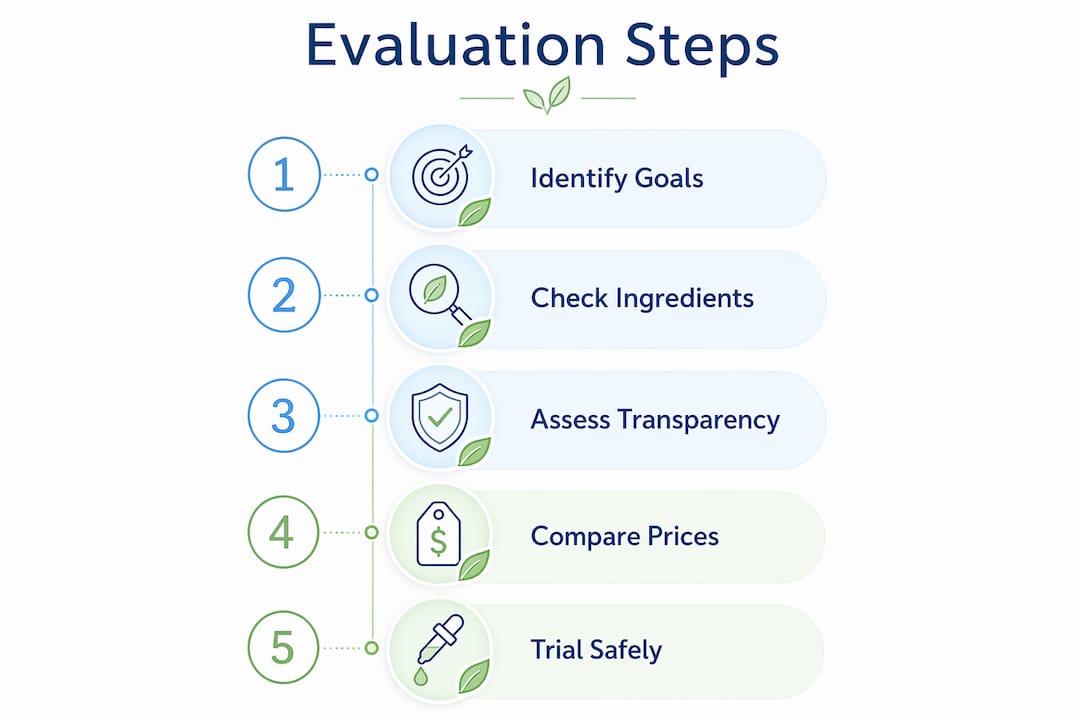
Weight these dimensions by your priorities. If you have reactive skin, ingredient transparency and allergen policy move to the top. On a tight budget, cost-per-use and SKU count matter most. If you want fast visible feedback, look for brands with a clear clinical proof page and a generous return window.
How do you read ingredient lists and pick the right actives?
Active purpose beats brand hype every time. When you pull up an INCI list, you are looking for a short list of evidence-backed workhorses, not a long list of botanical extracts with no functional role.
Active ingredients worth prioritizing for anti-aging:
- Peptides (look for “palmitoyl,” “acetyl,” or “tripeptide” in the INCI name): signal skin to produce collagen
- Vitamin C forms (ascorbic acid, sodium ascorbyl phosphate, ascorbyl glucoside): brighten and protect; natural actives for mature skin explain the stability trade-offs between forms
- Retinoids/retinal: the most studied anti-aging actives; start at low frequency
- Multi-acid complexes (glycolic, lactic, mandelic): resurface and improve texture
- Barrier support (hyaluronic acid, ceramides, glycerin): non-negotiable for mature skin that loses moisture faster
Concentration hints from the INCI list: Ingredients appear in descending order by concentration. An active listed in the top five is present at a meaningful level. One buried near the preservatives is likely below 1%. Brands that disclose percentages outright, as Miraclegelnaturalskincare does with its Tri-Moisture Cryo Complex™, give you far more to work with than those that don’t.
Potential irritants to flag: Denatured alcohol (alcohol denat.) high on the list, synthetic fragrance (parfum), and high-concentration essential oils are common triggers for mature or reactive skin.
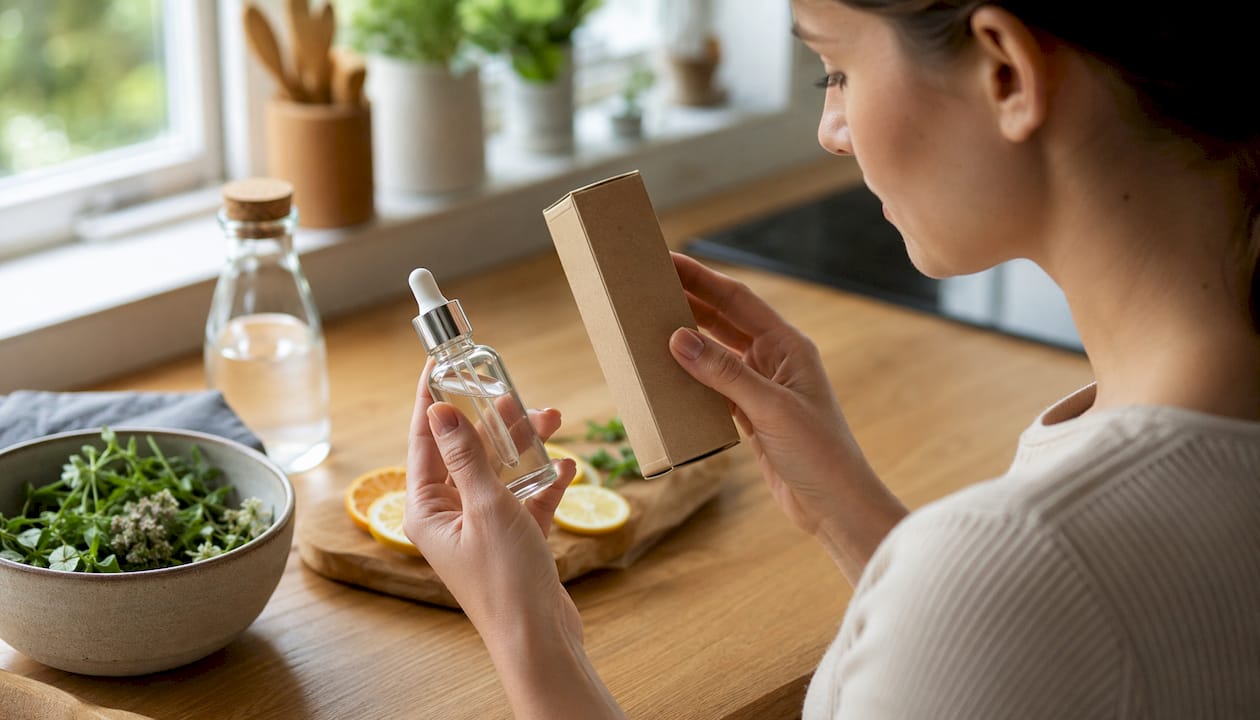
Layering basics: Apply thinnest to thickest. Vitamin C serum goes on clean skin before moisturizer. Retinoids go on at night, after cleansing, before a barrier-supportive moisturizer. Avoid layering a high-acid exfoliant directly with retinoids on the same evening until your skin has built tolerance. Layering peptides and serums correctly is what separates a routine that works from one that just costs money.
For side-by-side INCI comparisons, tools like SkinSort and SkinWis let you paste two product names and see shared actives, unique ingredients, and flagged allergens at once.
Pro Tip: A slightly tacky finish on a serum is often a deliberate design choice, not a flaw. That grip helps your moisturizer and sunscreen adhere and stay active longer, which improves overall routine efficacy.
How do you judge price versus value for premium natural anti-aging products?
Judge by cost-per-actual-use and the number of SKUs required, not the sticker price. A $90 serum that lasts four months and replaces two other products is cheaper per day than a $40 serum you burn through in six weeks.
Simple calculation:
- Find the volume (ml or oz) and the pump size (typically 0.5–1 ml per pump)
- Divide total volume by pump size to get total uses
- Divide price by total uses for cost per application
- Multiply by 30 for monthly cost
A single potent serum used once daily at $80 for 30 ml (roughly 60 pumps) costs about $1.33 per application, or $40 per month. Add a moisturizer at $60 for 50 ml and your full “basics +” routine runs around $60–$70 per month for two products. That is the honest number to compare across brands.
The market has moved clearly toward fewer, multi-functional products. The “basics +” trend, where targeted actives sit in hydrating bases so one product does double duty, is now the dominant approach among premium natural lines. Editorial tests of minimal product lines consistently show that a three-product routine maintained for weeks delivers measurable improvements when the formulas are thoughtfully built.
A brand that requires six products to get results is not a premium brand. It is a marketing strategy.
How do you trial new products safely and set realistic expectations?
Always patch test, start slow with actives, and use samples or travel sizes when available. Visible results follow a predictable timeline, and knowing it prevents you from abandoning a product that is actually working.
- Patch test first. Apply a small amount to the inner arm or behind the ear for 24–48 hours before full-face use.
- Introduce one new product at a time. Wait two weeks before adding the next. This tells you exactly which product caused a reaction if one occurs.
- Start actives at low frequency. Retinoids and acids: two to three nights per week for the first month, then increase.
- Track at 4 weeks. Look for hydration improvement and surface glow. These are the earliest visible signals.
- Track at 8–12 weeks. Measurable textural changes and pigmentation improvements typically appear in this window. Editorial testers confirm that deeper structural results take consistent use over this period.
- Check return policy before ordering. Confirm the brand’s return window, whether it covers opened products, and whether US shipping is available.
For Miraclegelnaturalskincare, check the brand’s clinically proven results page before ordering to understand what the brand’s own testing shows and over what timeline.
Why Miraclegelnaturalskincare is worth trying first
Miraclegelnaturalskincare fits the “basics +” checklist better than most brands at its price point. The line is built around streamlined SKUs with targeted actives, so you are not buying filler products to complete a routine.
The 2-Minute Miracle Gel’s Tri-Moisture Cryo Complex™ delivers hydration and surface renewal in a single step, which means your routine starts with a product doing real work rather than a placeholder cleanser. Founder Shelly Maguire built the brand around the principle that clinical results should be visible and measurable, not buried in fine print.
The brand publishes clinical skincare results with methodology, which is a meaningful transparency signal when you are comparing brands online. Ingredient lists are detailed and accessible. The product descriptions explain what each active does and why it is in the formula.
For a first order, the Dynamic Duo (2-Minute Miracle Gel + 2-Minute Miracle Moisturizer) gives you a complete two-step routine to test. If you want to add a targeted serum next, the anti-aging serum range is the logical third step. Shipping to the US is available; check the current terms at checkout.
How to build a simple “basics +” routine with one brand
A routine built around three to five core products is the sweet spot for premium anti-aging. More steps than that and compliance drops; fewer and you are likely missing either a targeted active or adequate barrier support.
Morning routine:
- Cleanse: A gentle, non-stripping cleanser from Miraclegelnaturalskincare’s cleanser range sets the base without disrupting the skin barrier
- Targeted serum: Apply your vitamin C or peptide serum on clean skin; serums deliver actives most efficiently at this stage
- Moisturizer: The 2-Minute Miracle Moisturizer provides barrier support and locks in the serum’s work
- Sunscreen: Non-negotiable for anti-aging; add a broad-spectrum SPF 30+ over the moisturizer
Evening changes: Swap vitamin C for a retinoid or retinal option two to three nights per week. Keep the moisturizer. Skip the sunscreen. If your skin is adjusting to retinoids, a slightly richer whipped body butter at night helps buffer any dryness. Layering peptides with antioxidants on the nights you skip retinoids keeps the routine working without adding irritation risk.
The pairing that works hardest: the 2-Minute Miracle Gel as your treatment step plus the Moisturizer as your barrier finisher. Two products, consistent use, and a clear timeline. That is the routine.
Key Takeaways
When comparing skincare brands online, the brands worth buying are the ones that match your skin goals at the ingredient level, cost less per use than they appear to, and let you trial before committing.
| Point | Details |
|---|---|
| Ingredient match over hype | Prioritize peptides, vitamin C forms, retinoids, and barrier actives; check INCI order for concentration clues. |
| Cost-per-use is the real price | Divide product price by total pumps/uses; a $80 serum at $1.33/use often beats a cheaper product used twice as fast. |
| Trialability reduces risk | Confirm sample availability, return window, and US shipping before ordering any premium brand. |
| Clinical proof signals transparency | Brands that publish study methodology and timelines are more trustworthy than those citing vague “clinically tested” claims. |
| Miraclegelnaturalskincare as first choice | The Dynamic Duo starter set covers a complete “basics +” routine in two steps, with clinical results and transparent ingredient lists. |
Why picking one brand and sticking with it actually works
The conventional advice when comparing skincare brands online is to mix and match the “best” product from each brand. That approach sounds logical. In practice, it creates a routine you cannot troubleshoot, because when something goes wrong, or right, you have no idea which product caused it.
Picking one brand with a coherent formulation philosophy means the products are designed to layer together. The actives are chosen to complement rather than compete. The pH levels across the line are calibrated. When Miraclegelnaturalskincare pairs the 2-Minute Miracle Gel with its Moisturizer, that is not just a marketing bundle. It is a formulation decision.
There is also a compliance argument. Aesthetician guidance consistently favors streamlined, high-performance formulations over complex multi-brand routines, because people actually use a three-step routine every day. A five-brand, eight-step routine gets skipped on busy mornings, and consistency is what drives results at 8–12 weeks.
The one caveat: if a brand cannot show you its ingredient list, its clinical methodology, or its return policy before you buy, that is your answer. Move on.
Ready to try Miraclegelnaturalskincare? Here is where to start
Miraclegelnaturalskincare gives you a cleaner path to premium natural anti-aging than assembling products from multiple brands. The Dynamic Duo starter set is the lowest-risk entry: two products, one coherent formula philosophy, and a clear trial timeline. If you want to go deeper on ingredients before ordering, the brand’s age-defying natural skincare range lays out the full product lineup with ingredient details and clinical context.

For a targeted first order, the 2-Minute Miracle Gel handles cleansing and surface renewal in one step, and the Moisturizer completes the routine. Add an anti-aging serum as your third step once you know how your skin responds. US shipping is available; check current rates and any active promotions at checkout on the Miraclegelnaturalskincare site.