
The three topical actives that dermatology consensus places at the foundation of any evidence-based anti-aging routine are broad-spectrum sunscreen (SPF 30+), topical retinoids (retinol or adapalene), and vitamin C (L-ascorbic acid). Everything else builds on that core. Here is the short version of what to prioritize:
- Broad-spectrum SPF 30+ — non-negotiable, every morning, regardless of weather
- Topical retinoid or bakuchiol — the primary structural repair active, used at night
- Vitamin C (L-ascorbic acid) — morning antioxidant and brightener
- Niacinamide (2–5%) — barrier support, pigment fading, high tolerability
- Hyaluronic acid — hydration at multiple skin depths
- Peptides — collagen-signaling support
- AHAs (glycolic/lactic) and BHAs (salicylic) — exfoliation and smoothing
- Vitamin E and ferulic acid — antioxidant partners that stabilize vitamin C
- Tranexamic acid and azelaic acid — targeted brightening and tone-evening
Your immediate next steps: choose a daily SPF and apply it every morning; start a low-dose retinoid or bakuchiol at night two to three times per week; add a vitamin C serum in the morning. Keep the routine short. Miraclegelnaturalskincare’s natural anti-aging skincare content covers how these ingredients work together for skin over 40.
Key Takeaways
The most effective topical anti-aging routine is built on three non-negotiables: daily broad-spectrum SPF 30+, a nightly retinoid or bakuchiol, and a morning vitamin C serum, with everything else layered in as tolerance allows.
| Point | Details |
|---|---|
| SPF is the foundation | Broad-spectrum SPF 30+ every morning prevents the photoaging that drives most visible skin aging. |
| Retinoid or bakuchiol at night | Start low-dose two to three nights per week; bakuchiol suits sensitive skin and pregnancy. |
| Vitamin C in the morning | Use L-ascorbic acid at 10–20% in opaque, airless packaging paired with vitamin E and ferulic acid. |
| Niacinamide at 2–5% | Randomized trial evidence supports its use for pigmentation and barrier repair with minimal irritation. |
| Miraclegelnaturalskincare | The 2 Minute Miracle Gel delivers multi-active hydration and repair aligned with the core routine essentials. |
Table of Contents
- Why do these topical nutrients matter for aging skin?
- An ingredient-by-ingredient guide to essential anti-aging nutrients
- How to build a simple AM/PM routine with these actives
- Layering rules, safety, and who needs extra caution
- What to look for when shopping for natural/organic anti-aging products
- When should you see a dermatologist instead?
- Why a short, ingredient-first routine is the right approach
- Miraclegelnaturalskincare: where these essentials meet natural formulation
- Sources
Why do these topical nutrients matter for aging skin?
Four biological processes drive visible skin aging, and each maps to a specific ingredient class. Knowing the driver helps you shop with purpose rather than guessing at labels.
- UV and photoaging → broad-spectrum sunscreen (SPF 30+)
- Collagen loss and structural thinning → retinoids, peptides, bakuchiol
- Oxidative stress → vitamin C, vitamin E, ferulic acid, EGCG
- Barrier decline and dehydration → hyaluronic acid, niacinamide, ceramides
A review of topical antioxidants and anti-aging actives confirms that antioxidants, AHAs, and peptides each address distinct aging pathways, though evidence strength varies with formulation quality and trial size.
An ingredient-by-ingredient guide to essential anti-aging nutrients
The core three
Broad-spectrum sunscreen (SPF 30+) is the one step no serum can replace. Apply it last in your morning routine, every day. Mineral filters (zinc oxide, titanium dioxide) suit sensitive and mature skin particularly well.
Topical retinoids (retinol, retinaldehyde, adapalene) stimulate collagen production and accelerate cell turnover. Start at a low concentration retinol, such as the CeraVe Retinol Serum, used two nights per week, then build frequency gradually over several weeks. Adapalene 0.1% is now available over the counter and has a strong evidence base. Retinoids are not safe during pregnancy.
Vitamin C (L-ascorbic acid) is the most studied topical antioxidant. Effective formulations typically sit in the 10–20% L-ascorbic acid range at a pH below 3.5. It brightens, protects against UV-induced oxidative damage, and supports collagen synthesis. Stability is the catch: L-ascorbic acid degrades quickly with light, heat, and air exposure. Combining it with vitamin E and ferulic acid in opaque, airless packaging significantly extends shelf life and potency.
Supporting actives
Topical niacinamide at 2–5% has randomized controlled trial evidence for reducing sun spots within four weeks at 5%, applied twice daily. It also strengthens the skin barrier and is one of the most tolerated actives available, making it a smart first addition for sensitive skin.
Hyaluronic acid draws water into the skin. Lower-molecular-weight forms penetrate more deeply; higher-molecular-weight forms sit at the surface and reduce transepidermal water loss. Many well-formulated products combine both.
Bakuchiol, derived from the Psoralea corylifolia plant, delivers wrinkle and pigmentation improvements comparable to retinol with a markedly lower irritation profile. Applied twice daily, it is the go-to retinol alternative for sensitive skin and is widely considered appropriate during pregnancy, though you should always confirm with your doctor.
Peptides signal fibroblasts to produce collagen. Signal peptides (palmitoyl tripeptide-1, palmitoyl tetrapeptide-7) and carrier peptides (copper peptides) are the most studied. Evidence is promising but trial sizes are generally smaller than for retinoids.
AHAs and BHAs: glycolic and lactic acids at 5–10% OTC concentrations improve texture and smooth fine lines. Harvard Health notes that AHAs can show texture improvement quickly, but they increase photosensitivity and carry a higher post-inflammatory hyperpigmentation (PIH) risk for Fitzpatrick skin types IV–VI. Salicylic acid (a BHA) is oil-soluble and better suited to congested or oily skin.
Vitamin E (tocopherol) and ferulic acid rarely headline a formula but do significant work behind the scenes. Both stabilize vitamin C and add their own antioxidant activity. EGCG (from green tea) and resveratrol are botanicals with supporting antioxidant evidence, though formulation delivery remains a variable.
Tranexamic acid and azelaic acid target pigmentation through different pathways. Tranexamic acid suits melasma and post-inflammatory marks; azelaic acid (available OTC at lower concentrations, prescription at 15–20%) also has anti-inflammatory properties useful for rosacea-prone skin.
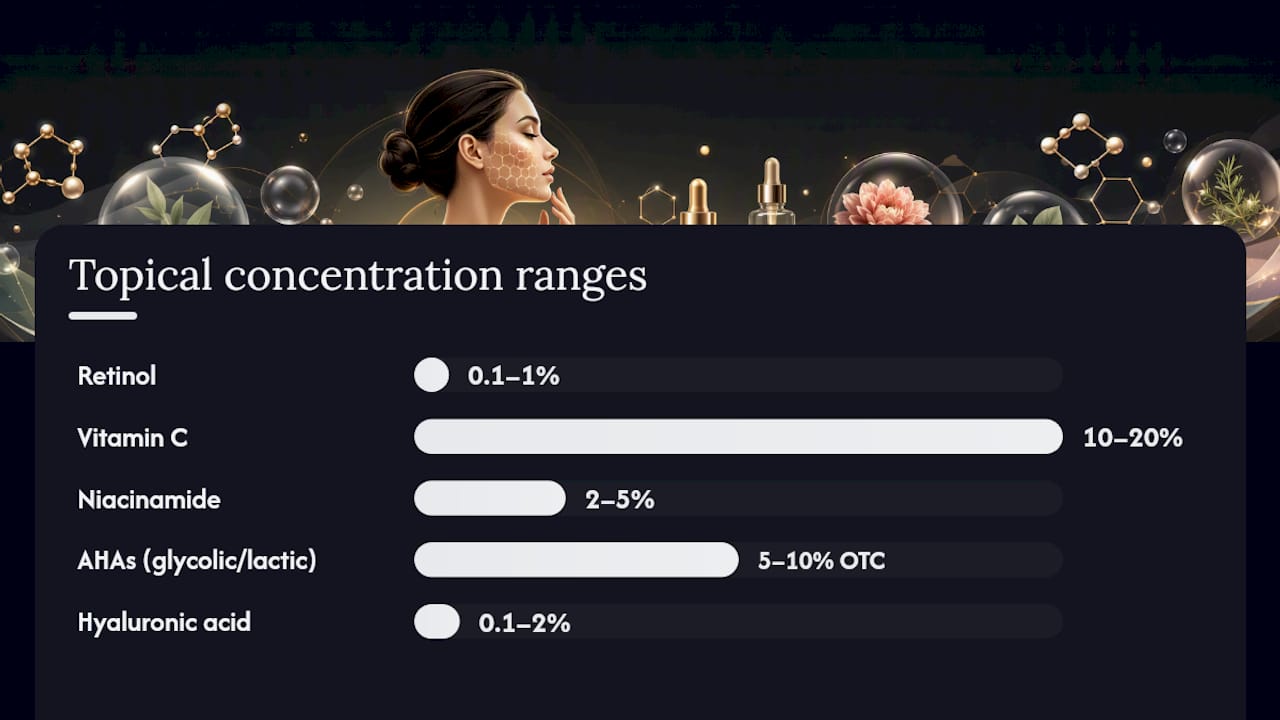
| Ingredient | Evidence-backed concentration | Key benefit | Caution |
|---|---|---|---|
| Retinol | 0.1–1% | Collagen, cell turnover | Avoid in pregnancy; irritation risk |
| Vitamin C (L-ascorbic acid) | 10–20% | Antioxidant, brightening | Stability; low pH required |
| Niacinamide | 2–5% | Barrier, pigment | Minimal; very well tolerated |
| AHAs (glycolic/lactic) | 5–10% OTC | Exfoliation, texture | Photosensitivity; PIH in darker types |
| Bakuchiol | 2–5% | Retinol-comparable repair | Generally well tolerated |
| Hyaluronic acid | 0.1–2% | Hydration | None significant |
How to build a simple AM/PM routine with these actives
Morning routine:
- Gentle cleanser
- Vitamin C serum (L-ascorbic acid, 10–20%)
- Niacinamide or peptide serum (optional, layer after vitamin C)
- Moisturizer with hyaluronic acid
- Broad-spectrum SPF 30+ (always last)
Evening routine:
- Gentle cleanser
- Retinoid or bakuchiol serum
- Moisturizer (seal in the active)
Stepwise introduction for new users:
- Weeks 0–4: SPF every morning, bakuchiol or low-dose retinol two nights per week. No AHAs yet.
- Weeks 4–12: If tolerating retinoid well, increase to four nights per week. Add a vitamin C serum in the morning. Introduce niacinamide if barrier feels compromised.
- Week 12+: Consider adding an AHA exfoliant once or twice per week at night (not on the same night as a strong retinoid). Peptide serums can layer in at any stage.
The Cleveland Clinic recommends starting with the simplest possible routine and building tolerance before adding actives. A multi-step skincare routine guide for women 40+ from Miraclegelnaturalskincare walks through exactly this progression.
Layering rules, safety, and who needs extra caution
The international consensus on anti-aging dermocosmetics rates sunscreen and antioxidants as appropriate across all Fitzpatrick skin types, while retinoids are deprioritized as a first-line option for sensitive skin and certain phototypes due to irritation and PIH risk.
Safe pairings:
- AM: vitamin C + vitamin E + ferulic acid + SPF (classic antioxidant stack)
- PM: retinoid + moisturizer (applied before or after — see below)
- Any time: niacinamide + hyaluronic acid + peptides
Combinations to separate:
- Strong retinoid + AHA on the same night: alternate nights until tolerance is established
- High-dose vitamin C + niacinamide: some older guidance flagged flushing, though modern evidence suggests this is rarely a real issue at typical concentrations; still, applying them at different times of day is the simplest solution
Special precautions:
- Pregnancy: avoid retinoids (all forms); bakuchiol is the preferred alternative, but confirm with your doctor
- Fitzpatrick types IV–VI: introduce AHAs slowly; always follow with SPF; watch for PIH
- Sensitive skin: start with bakuchiol instead of retinol; use niacinamide to support barrier recovery
Pro Tip: The “sandwich method” for retinoids reduces irritation without sacrificing efficacy. Apply a light moisturizer first, let it absorb for a few minutes, apply your retinoid, then seal with another thin layer of moisturizer. The moisturizer buffers the active’s contact rate with the skin, which is the main driver of initial redness and peeling.
What to look for when shopping for natural/organic anti-aging products
A label can tell you a lot if you know what to read.
- Active ingredient name and concentration: “retinol 0.3%,” “niacinamide 5%,” “L-ascorbic acid 15%” should appear in the ingredient list or product description, not just in marketing copy
- Broad-spectrum SPF claim: look for both UVA and UVB coverage; mineral filters (zinc oxide, titanium dioxide) are the most common in natural formulations
- pH indicators for vitamin C and AHAs: effective L-ascorbic acid needs a pH below 3.5; AHAs work best below pH 4. Brands that publish pH ranges signal formulation transparency
- Packaging: vitamin C serums belong in dark, airless bottles; clear dropper bottles accelerate degradation. Retinoids also benefit from opaque, airtight packaging
- Preservative approach: natural/organic formulations often use phenoxyethanol, ethylhexylglycerin, or plant-derived alternatives like rosemary extract. Check that a preservative system is present; unpreserved water-based products spoil quickly and can destabilize actives
- Certifications: COSMOS Organic, USDA Organic, and Ecocert are the most recognized standards for genuinely natural/organic sourcing. Look for these on the packaging rather than relying on “natural” marketing language alone
| Formulation flag | What to look for | Why it matters |
|---|---|---|
| Vitamin C packaging | Opaque, airless pump or sealed ampoule | Prevents oxidation and potency loss |
| AHA pH | Below pH 4 for efficacy | Higher pH renders AHAs largely inactive |
| Preservative system | Named preservative in INCI list | Protects actives and prevents microbial growth |
| Organic certification | COSMOS, Ecocert, USDA | Verifies ingredient sourcing claims |
The Mayo Clinic’s guidance on wrinkle creams specifically flags L-ascorbic acid stability and the importance of vitamin E as a stabilizing co-ingredient.
When should you see a dermatologist instead?
At-home topical actives handle the majority of age-related skin concerns well, but some situations call for a professional.
- Rapid or asymmetric pigment changes: see a dermatologist promptly; this can signal something beyond cosmetic concern
- Suspicious lesions: any new or changing mole, rough patch, or non-healing spot warrants a skin check
- Severe photodamage: deep furrows, significant volume loss, and extensive sun damage respond better to prescription tretinoin, professional chemical peels, laser resurfacing, or injectables than to OTC actives alone
- Non-responsive pigmentation: melasma that does not improve with tranexamic acid or azelaic acid after three to four months often needs prescription-strength azelaic acid (15–20%) or hydroquinone under supervision
- Before any professional treatment: pause AHAs and retinoids at least five to seven days before a peel or laser procedure; your provider will give specific guidance
Prescription tretinoin is the most studied topical retinoid and outperforms OTC retinol in head-to-head comparisons, though it also carries a higher irritation burden. Professional peels use glycolic acid at 30% and above, far beyond OTC concentrations, and require controlled application and post-procedure care.
Why a short, ingredient-first routine is the right approach
The evidence hierarchy for topical anti-aging actives is clear: SPF and retinoids do the structural work; antioxidants like vitamin C and vitamin E protect and brighten; hydrators and barrier actives like niacinamide and hyaluronic acid support tolerability and consistency. Everything else is refinement.
What gets lost in the marketing noise around skincare is that a ten-step routine rarely outperforms a three-step one if those three steps include SPF, a retinoid or bakuchiol, and a vitamin C serum. Shelly Maguire, founder of Miraclegelnaturalskincare, has built the brand’s product philosophy around exactly this principle: formulations that concentrate the actives that matter, in packaging that preserves them, without unnecessary complexity. The result is a line designed for women who want clinical results without a cabinet full of products.
Tolerability is not a compromise. A gentle formula you use every night beats a potent one you abandon after two weeks of irritation.
Miraclegelnaturalskincare: where these essentials meet natural formulation
Spending time researching ingredients is only useful if the products you buy actually deliver them in stable, effective forms.
The 2 Minute Miracle Gel from Miraclegelnaturalskincare is built around the Tri-Moisture Cryo Complex™, a multi-active hydration and repair system designed to deliver visible results quickly. The formulation aligns with the core routine priorities covered here: hydration, barrier support, and antioxidant protection in a single, fast-absorbing step. It fits naturally into either an AM or PM routine as your moisturizer layer, sitting after your vitamin C serum in the morning or after your retinoid at night.
For shoppers who want a natural skincare regimen that maps directly to the ingredient hierarchy in this article, Miraclegelnaturalskincare’s full range includes cleansers, eye serums, and targeted treatments formulated for mature skin. Free shipping applies on orders over €85. Browse the anti-aging serum collection to find the right active for your current routine stage.
Sources
The clinical evidence behind the ingredient recommendations in this article draws from the following sources:
- Dermatology consensus on core anti-aging ingredients (PMC12936241)
- Clinical trial evidence for topical niacinamide (PubMed 16029679)
- Bakuchiol as a retinol alternative (PubMed 29947134)
This article is general information, not a substitute for advice from a qualified doctor. Consult a qualified healthcare professional about your own circumstances before acting on anything here.