
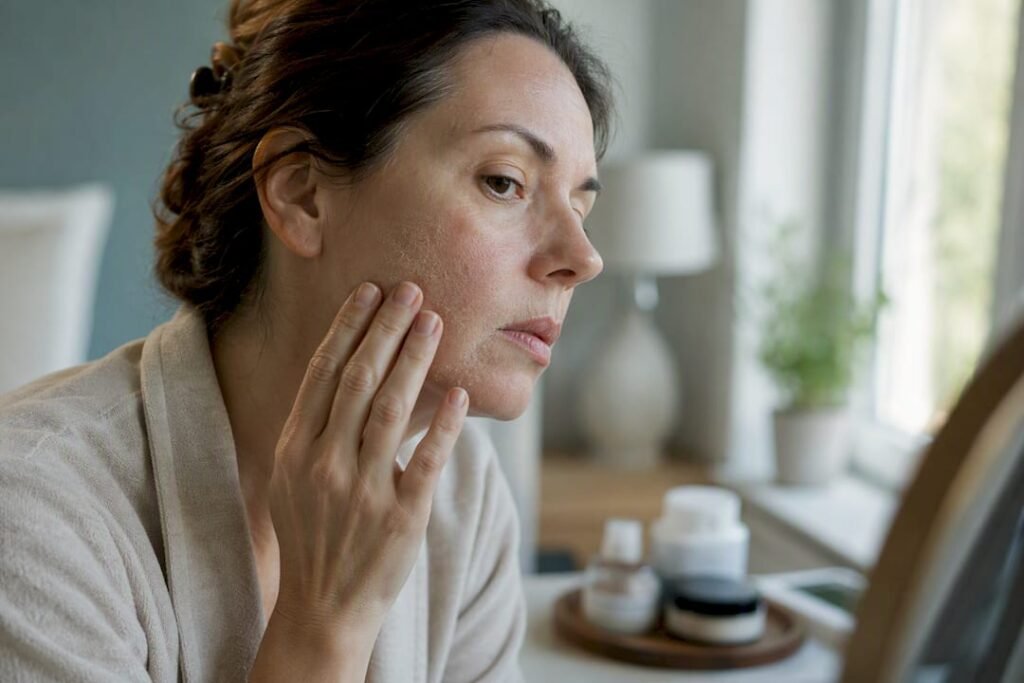
Dry skin is a skin type caused by low oil production. Dehydrated skin is a temporary condition caused by low water content, and it can happen to anyone, including people with oily skin. The fix depends entirely on which one you’re dealing with.
If your skin flakes, cracks, or feels rough to the touch, reach for a lipid-rich cream that restores oil. If it looks dull, feels tight, and shows fine lines that seem to disappear after you apply moisturizer, you’re likely dehydrated, and a humectant followed by a sealing layer will do more good than a heavier cream alone. Plenty of people have both problems stacked on top of each other, which is why a hybrid routine (hydrate, then seal) tends to outperform either approach used alone.
- Flaky, rough, cracked → oil deficit → use an emollient or occlusive cream
- Dull, tight, fine lines that soften after product → water deficit → use a humectant, then seal it in
- Both patterns at once → layer humectant first, lipid-rich moisturizer second
Key Takeaways
Dry skin is an oil deficit you treat with emollients and occlusives, while dehydrated skin is a water deficit you treat with humectants, and layering both in the right order solves most mixed cases.
| Point | Details |
|---|---|
| Know the core difference | Dry skin lacks oil (a skin type); dehydrated skin lacks water (a temporary state). |
| Match the fix to the cause | Flaking calls for emollients and occlusives; dullness and tightness call for humectants. |
| Layer in the right order | Apply humectants to damp skin first, then seal with a lipid-rich cream or occlusive. |
| Fix habits before products | Shorter, cooler showers and a humidifier reduce water loss without buying anything new. |
| Know your red flags | Cracking, bleeding, or unresolved symptoms after two to three weeks warrant a dermatologist visit. |
| Consider a barrier-first formula | Miraclegelnaturalskincare’s Tri-Moisture Cryo Complex™ combines humectant and barrier support in one step for mixed or uncertain cases. |
Table of Contents
- Dehydrated vs Dry Skin: What Actually Causes Each One
- How Can You Tell If Your Skin Is Dry or Dehydrated?
- What Should You Actually Put on Dry vs Dehydrated Skin?
- Small Habit Changes That Prevent Both Problems
- When Should You See a Dermatologist for Dry Skin?
- How Miraclegelnaturalskincare’s Formulas Fit This Guidance
- Sources
Dehydrated vs Dry Skin: What Actually Causes Each One
Dry skin, known clinically as xerosis, comes from your sebaceous glands simply not producing enough lipids. Genetics, age, and certain medical conditions all play a role, and this is why dry skin tends to be a lifelong or seasonal pattern rather than a one-off event. It’s a skin type, not a phase.
Dehydration works differently. It’s a state, not a type, and it’s driven mostly by what your skin loses rather than what it fails to make. Low humidity, long hot showers, air travel, and overusing strong actives like retinoids or acids all pull water out of the stratum corneum faster than it can be replaced. Illness, alcohol, and simply not drinking enough water can add to the effect from the inside out.
Here’s where the two connect: a damaged skin barrier accelerates water loss regardless of your natural oil production. So someone with naturally oily skin can still become dehydrated, especially if they’re over-exfoliating and stripping the very lipids meant to lock moisture in. Oily and dehydrated skin isn’t a contradiction. It’s actually a common combination.
- Dry skin causes: low sebum production, genetics, aging, certain skin conditions
- Dehydration causes: dry climates, hot showers, air travel, harsh actives, low water intake, illness
- The overlap: a compromised barrier lets water escape faster no matter your skin type
How Can You Tell If Your Skin Is Dry or Dehydrated?
Dry skin tends to show up as visible texture problems: flaking, redness, rough patches, and sometimes cracking severe enough to sting. Dehydrated skin shows up differently. It looks dull rather than rough, and you’ll often notice fine lines and a slightly crepey texture that weren’t as obvious the day before.
The classic home test is the pinch test: pinch a small section of skin on your cheek and watch how quickly it bounces back. Slow to recover, and dehydration is suspected. But this test has real limits. Skin turgor changes with age and with the part of the body you test, so an older adult’s skin may spring back slowly even when hydration is fine. Dermatology offices often skip the pinch test altogether in favor of a corneometer, a device that measures moisture content directly.
- Check texture first: rough and flaky points to dry skin; smooth but dull points to dehydration.
- Look for fine lines that seem to soften temporarily after applying a hydrating serum. That’s a dehydration signal.
- Try the pinch test on your inner forearm rather than your face for a slightly more reliable read.
- If your skin is oily but still tight after cleansing, suspect dehydration underneath the oil.
Pro Tip: Take a phone photo of your skin first thing in the morning, before any product. Dehydrated skin often looks visibly different by midday once your skin has had time to lose more surface water, while true dryness stays fairly constant.
What Should You Actually Put on Dry vs Dehydrated Skin?
Ingredient choice is where most people go wrong, mostly because “hydrating” and “moisturizing” get used interchangeably when they describe two different jobs. Humectants like hyaluronic acid and glycerin pull water into the skin, which makes them the right call for dehydration. Emollients and occlusives, including ceramides, shea butter, squalane, and petrolatum, work by replacing missing lipids and sealing moisture in, which is what dry skin actually needs.
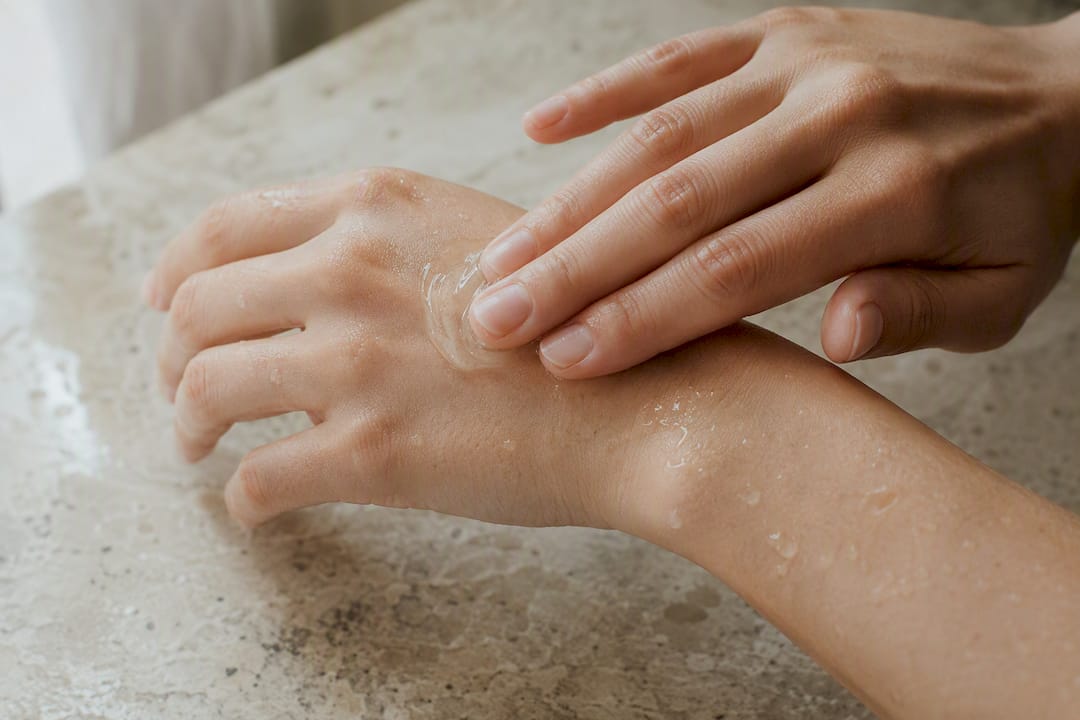
Order matters as much as the ingredient itself. Apply humectants to slightly damp skin so there’s water available to draw in, then follow immediately with an emollient or occlusive to trap it before it evaporates. Applying a humectant to bone dry skin without a sealing layer can occasionally pull moisture out of deeper layers and leave skin feeling worse, which is a mistake worth avoiding.
For skin dealing with both issues at once, dermatologists generally recommend the same layering logic: hydrate first, seal second, and ease off potent actives like retinoids or exfoliating acids until the barrier settles down. You can read more about moisturizing complexes and how the ingredient categories differ if you want to match specific formulas to your skin’s needs.
A simple AM/PM structure by presentation:
- Dry skin: gentle cleanser, then a ceramide or shea butter based cream both morning and night, with an occlusive layer added at night if skin still feels tight.
- Dehydrated skin: hyaluronic acid serum on damp skin, then a lightweight moisturizer both morning and night, with SPF added in the AM.
- Mixed presentation: hyaluronic acid serum, then a lipid-rich cream, both morning and night, with active ingredients scaled back to two or three times a week until things improve.
Small Habit Changes That Prevent Both Problems
Central heating, air conditioning, and long hot showers all pull moisture from your skin faster than most people realize, and none of them require a product to fix. Lowering the water temperature and cutting shower time by even a few minutes reduces how much natural oil gets stripped away, which matters for both dry and dehydrated skin. Running a humidifier in dry indoor air is one of the highest-impact, lowest-effort changes you can make, especially during winter months when heating systems dry out indoor air.
- Keep showers short and lukewarm rather than long and hot
- Pat skin dry rather than rubbing, then moisturize within a couple of minutes
- Run a humidifier in bedrooms and offices during dry seasons
- Wear gloves for dishwashing and cleaning to protect hands from detergents
- Cut back on alcohol and stay ahead of hydration if you’re managing an illness with fever or vomiting
Pro Tip: If you travel by air often, dehydration from cabin air is nearly universal. Apply a hydrating serum before boarding and again mid-flight rather than waiting until you land.
When Should You See a Dermatologist for Dry Skin?
Most dryness and dehydration respond well to routine changes within a couple of weeks. Skip the trial-and-error stage and see a professional if your skin cracks, bleeds, itches intensely, or develops a spreading rash that doesn’t improve with basic care — alternatively, you might explore professional skincare services that offer expert assessment and treatment options delivered at home.
A clinician can assess for underlying conditions like eczema or a thyroid issue and may prescribe topical steroids or medical-grade emollients that go beyond what’s available over the counter.
- Cracking, bleeding, or open skin
- Itching intense enough to disrupt sleep
- No improvement after two to three weeks of consistent care
- A rash that’s spreading rather than resolving
Before your appointment, jot down when symptoms started, what products you’ve tried, and whether anything (new soap, medication, season change) lined up with the flare.
How Miraclegelnaturalskincare’s Formulas Fit This Guidance
Our approach was built around the same layering logic this article recommends: hydrate first, then support the barrier. The Tri-Moisture Cryo Complex™ combines humectant and barrier-supporting ingredients in one step, which suits people who want the hydrate-then-seal routine without juggling multiple products.
- Suits dehydrated, dry, and combined presentations depending on which formula you choose
- Clinical testing and founder Shelly Maguire’s formulation background back the brand’s efficacy claims
- Fits directly into the AM/PM routines outlined above rather than replacing them
A note on getting this wrong (and two quick fixes)
The most common mistake isn’t picking the wrong product. It’s stripping the skin with harsh cleansers or heavy exfoliation, then wondering why nothing feels hydrated. If you’re unsure which you have, try this for a week: apply a hyaluronic acid serum on damp skin every morning, then seal it with a richer cream at night. Watch which symptom improves first.
— Barbara
Try Miracle Gel’s Barrier-First Approach
If you’ve read this far wondering whether your skin is dry, dehydrated, or both, you don’t need to solve that puzzle alone with trial-and-error purchases. Miraclegelnaturalskincare built its formulas specifically around the humectant-then-seal order dermatologists recommend, so you’re not stacking random products and hoping they layer well together.

The 2 Minute Miracle Gel works well for dehydrated, tight-feeling skin that needs a fast humectant boost, while our richer moisturizers suit skin dealing with genuine oil loss and flaking. Clinical testing results and product details are outlined on the product page if you want the specifics before you buy. Browse the moisturizer collection to find the formula that matches whichever pattern you identified above, and check current shipping offers at checkout.
Sources
- Dry skin – diagnosis & treatment | Mayo Clinic
- Dry Skin vs. Dehydrated: How to Tell the Difference | Healthline
- Dry vs Dehydrated skin — signs & treatment (Leahy’s Pharmacy Tralee)
This article is general information, not a substitute for advice from a qualified doctor. Consult a qualified healthcare professional about your own circumstances before acting on anything here.