
TL;DR:
- True organic moisturizers require independent certification like COSMOS Organic to ensure ingredient purity.
- Key ingredients for mature skin include emollients like jojoba oil, shea butter, and brightening agents like vitamin C.
- Selecting the right texture and seasonally adapting your routine optimizes hydration and reduces irritation.
You want radiant, youthful skin, but the organic moisturizer aisle feels like a maze. Bottles shout “natural,” “pure,” and “plant-based,” yet without knowing what those claims actually mean, it is nearly impossible to tell a genuinely effective product from a cleverly packaged one. This guide cuts through the noise. You will learn how to spot real certifications, identify the best ingredients for mature skin, choose the right texture for Ireland’s damp winters, and build a routine that delivers visible results. No guesswork, no wasted money. Just a clear, practical roadmap tailored for women over 40 who want their skincare to actually work.
Table of Contents
- Know what makes a moisturizer truly organic
- Choose ingredients for mature, radiant skin
- Pick textures, test for sensitivity, and fit your climate
- Common pitfalls and maximizing results with your routine
- Why most women over 40 choose the wrong organic moisturizer and what actually works
- Ready to transform your skin with trusted organic moisturizers?
- Frequently asked questions
Key Takeaways
| Point | Details |
|---|---|
| Certifications matter most | Only independent certifications like COSMOS confirm a moisturiser is truly organic and safe. |
| Choose targeted ingredients | Look for high concentrations of actives like antioxidants, hyaluronic acid, and vitamin C for mature skin benefits. |
| Texture and climate fit | Select a lighter or richer formula based on season and personal sensitivity for best comfort and results. |
| Patch test and monitor efficacy | Always patch test new products and watch your skin’s response for several weeks to ensure lasting benefits. |
| Routine maximizes results | Consistent use as part of a simple routine with SPF delivers the best hydration and anti-aging improvements. |
Know what makes a moisturizer truly organic
Before you can select the right formula, you need to understand what “organic” truly means in skincare. The word “natural” is everywhere, but it is legally meaningless in cosmetics. A product can call itself natural while containing synthetic preservatives, petrochemicals, or pesticide-laden botanicals. Organic is different, but only when it is backed by an independent certification.
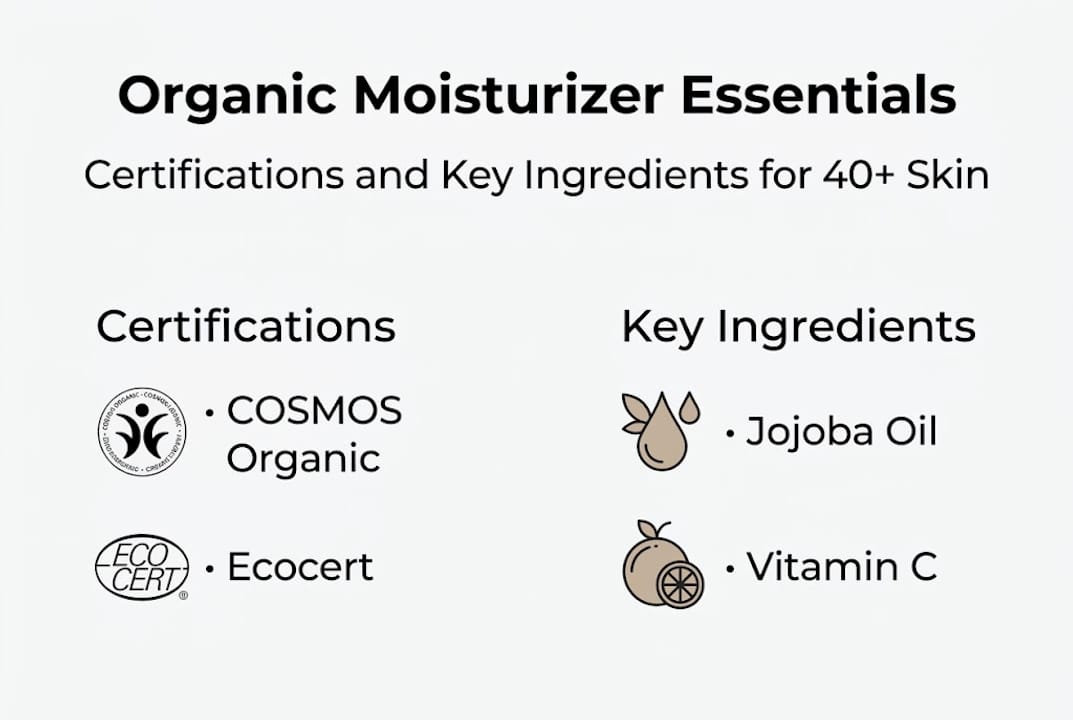
The gold-standard certifications to look for are COSMOS Organic, the Soil Association, and Ecocert. These are not marketing badges. They are rigorous third-party standards. To earn the COSMOS Organic label, a brand must ensure 95% of agro-ingredients are organically sourced for leave-on products, with no GMOs, parabens, or synthetic fragrances allowed. That is a high bar, and it is the bar that matters.
When you pick up a bottle, flip it over and read the ingredient list. Ingredients appear in descending order of concentration, so the first five to ten entries are doing the heavy lifting. Greenwashing is rampant in beauty, with vague “natural” claims appearing without any certification to back them up. Look for allergens listed at the bottom, check for a non-comedogenic note if your skin is prone to congestion, and always verify the certification logo is from a recognized body.
Here is a quick comparison to help you decode the shelf:
| Feature | Certified organic | “Natural” label | Conventional |
|---|---|---|---|
| Third-party verified | Yes | Rarely | No |
| Synthetic fragrance | Prohibited | Sometimes present | Often present |
| Pesticide limits | Strictly controlled | Not required | Not controlled |
| Parabens allowed | No | Possible | Yes |
| GMO ingredients | Prohibited | No restriction | Possible |
Some ingredients are instant red flags regardless of what the front label says. Watch for these:
- Parfum or fragrance (a catch-all term hiding hundreds of synthetic chemicals)
- Phenoxyethanol in high concentrations
- Mineral oil or petrolatum
- Sodium lauryl sulfate in leave-on formulas
- Butylated hydroxytoluene (BHT)
Knowing what makes a moisturizer truly effective before you even look at the label is the foundation. Certification is not a bonus feature. It is the starting point.
Choose ingredients for mature, radiant skin
With certifications understood, the next step is choosing a formula packed with the right ingredients for radiant, mature skin. After 40, skin produces less collagen, loses moisture faster, and becomes more susceptible to oxidative stress. The right actives can genuinely counteract these changes.
Emollients are your first priority. Jojoba oil mimics the skin’s own sebum, making it exceptionally well tolerated. Shea butter provides deep barrier repair, which is critical when skin starts to thin. Squalane, derived from olives or sugarcane, is feather-light yet intensely hydrating. Women over 40 benefit most from formulas pairing these emollients with antioxidants and brightening actives like baicalin, pineapple enzymes, and vitamin C to support radiance and even tone.

Brightening is a top goal for many women in this age group, and the science backs up several organic options. Vitamin C stimulates collagen and fades pigmentation. Baicalin, derived from Chinese skullcap root, is a powerful antioxidant that calms inflammation while brightening. Pineapple enzymes gently resurface the skin by dissolving dead cells without abrasion. Clinical studies on organic formulas show plant oils and botanical actives measurably improve hydration and smoothness, with evidence that hyaluronic acid and antioxidant combinations brighten skin tone over time.
Here is a practical ingredient reference table:
| Ingredient | Primary benefit | Best for |
|---|---|---|
| Jojoba oil | Barrier support, sebum balance | All skin types |
| Shea butter | Deep nourishment, repair | Dry, mature skin |
| Squalane | Lightweight hydration | Oily or sensitive skin |
| Vitamin C | Brightening, collagen support | Dull, uneven tone |
| Hyaluronic acid | Plumping, moisture retention | All skin types |
| Baicalin | Antioxidant, calming | Sensitive, aging skin |
| Pineapple enzyme | Gentle exfoliation | Dull, congested skin |
When reading a label with ingredients in mind, use this checklist:
- Check that your target active (vitamin C, HA, baicalin) appears in the top half of the list.
- Look for an antioxidant blend: ideally two or more working together for greater effect.
- Prioritize based on your main goal: hydration, brightening, or barrier repair.
Pro Tip: Rotate between a lighter serum-like moisturizer in spring and summer and a richer cream in autumn and winter. Your skin’s needs shift with humidity and temperature, and your anti-aging oils for mature skin should shift too. Explore key natural anti-aging ingredients to build a more targeted routine.
Pick textures, test for sensitivity, and fit your climate
With the ingredients decided, make sure the formula and texture truly fit your unique skin needs and climate. This is where many women get tripped up. They find a beautifully certified, ingredient-rich moisturizer and then choose the wrong texture for their skin type or the Irish weather.
Gels work well in humid conditions, absorbing quickly without leaving a greasy film. They suit oily or combination skin and are ideal during Ireland’s milder months. Rich creams, on the other hand, create an occlusive layer that locks in moisture during cold, wind-driven winters. For most women over 40 in Ireland or the UK, a medium-weight cream is the year-round workhorse, with a switch to richer formulas from October through March.
Sensitivity is more common in mature skin because the barrier function weakens over time. Fragrance-free, dermatologically tested formulas with SPF 30 or higher integrated into daytime versions offer the best protection without adding complexity to your routine. Night creams without SPF can focus purely on repair.
Organic formulas show a meaningful advantage here. Studies report 22% fewer irritation cases with certified organic moisturizers compared to conventional formulas in women with mature or sensitive skin. That number matters when you are already dealing with reactive or thinning skin.
Patch testing is non-negotiable with any new product. Follow these steps:
- Apply a small amount of the moisturizer to the inside of your wrist or behind your ear.
- Leave it on for 24 hours without washing the area.
- Check for redness, itching, or swelling.
- If no reaction occurs, apply to a small area of your face for another 24 hours.
- Only then introduce it into your full routine.
Pro Tip: When climate-adapted textures are chosen correctly, your moisturizer works harder. A rich cream in summer can clog pores, while a light gel in January leaves skin exposed to cold-weather dehydration. Your complete skincare regimen should adapt with the seasons, not stay static all year.
Common pitfalls and maximizing results with your routine
Armed with product know-how, you can now maximize benefits and sidestep common mistakes. Even women who invest in quality products often undermine their results through easily avoidable habits.
The most common pitfall is trusting front-label claims without checking certifications. “Organic rose extract” appearing as the 27th ingredient in a formula loaded with synthetic fillers does not make a product organic. Another mistake is skipping the patch test, especially with brightening actives like vitamin C, which can cause mild stinging or redness if introduced too fast. Underapplying SPF is equally damaging. Even the most potent antioxidant moisturizer cannot undo the aging caused by unprotected UV exposure.
Experts are clear that no single moisturizer suits every skin type. The most effective approach blends peptides, hyaluronic acid, and botanicals based on individual skin goals, rather than relying on one product to do everything.
A reliable daily routine for women over 40 looks like this:
- Cleanse: Use a gentle, sulfate-free organic cleanser morning and evening.
- Treat: Apply a targeted serum (vitamin C in the morning, peptides or retinol alternatives at night).
- Moisturize: Follow with your certified organic moisturizer, pressing gently into the skin.
- Protect: Finish with SPF 30 or higher every morning, even in winter.
Results tracking is something most women skip entirely. Keep a simple weekly note on your phone: rate your skin’s hydration, brightness, and any irritation on a scale of 1 to 10. After 4 to 8 weeks, you will have a clear picture of whether the product is working. This is far more reliable than judging results day to day, when mood and lighting influence perception more than actual skin change. Pairing these habits with non-toxic skincare routines built around proven actives gives your skin the consistency it needs to genuinely improve. You can also explore anti-aging tips to layer these habits effectively.
Why most women over 40 choose the wrong organic moisturizer and what actually works
Here is the uncomfortable truth: most women buy based on the word “organic” on the front of the bottle, and they get it wrong almost every time. The beauty industry knows this. “Organic” sells without delivering. The front label is a marketing tool. The back label is where the truth lives.
The bigger mistake is assuming that any certified organic formula will automatically suit mature skin. Certification tells you what is not in the product. It does not tell you whether the actives are potent enough, whether the texture fits your climate, or whether the formula addresses your specific skin goals. Radiant, healthy skin after 40 requires all three things working together: the right certification, the right actives at effective concentrations, and the right texture for your environment.
Skincare advice rarely emphasizes seasonality. Your skin in February in Dublin is genuinely a different skin than your skin in July. Treating them identically produces mediocre results. Choosing the right moisturizer means accepting that the answer changes throughout the year. Steady, ingredient-focused routines always outperform product-hopping in search of a single miracle formula.
Ready to transform your skin with trusted organic moisturizers?
If this guide has given you a clearer picture of what to look for, the next step is finding products that actually meet these standards. At Miracle Gel Natural Skincare, every formula is built around certified organic ingredients chosen specifically for women over 40, with a focus on visible anti-aging and brightening results.

Whether you are starting fresh or refining an existing routine, our range of age-defying skincare for 40+ is formulated with full ingredient transparency and clinically tested performance. Explore our organic skincare workflow to see how each product fits together, and check out clinically proven mature skin results from real women who have made the switch. Your skin deserves formulas that genuinely deliver.
Frequently asked questions
How do I verify if a moisturizer is truly organic?
Look for independent certifications like COSMOS Organic or Soil Association, which require at least 95% organic agro-ingredients. A certification logo on the back of the bottle is the most reliable proof, far more trustworthy than front-label claims.
What is the best ingredient for brightening mature skin?
Vitamin C is one of the best-studied brightening agents and works safely in certified organic formulas. It stimulates collagen and fades dark spots, and when combined with actives like baicalin and pineapple enzymes, the brightening effect is noticeably stronger.
Should I use a lighter or richer moisturizer in winter?
Choose richer creams in cold or dry weather and lighter gel-type textures in warmer or more humid months. Adapting your texture to the season, as suggested by climate-adapted guidance, keeps your barrier strong year-round and prevents both dehydration and congestion.
How long should I test a new organic moisturizer for results?
Monitor your skin for 4 to 8 weeks to accurately assess efficacy, hydration improvement, and any irritation. Day-to-day judgments are unreliable; consistent tracking over weeks gives you real data to work with.