
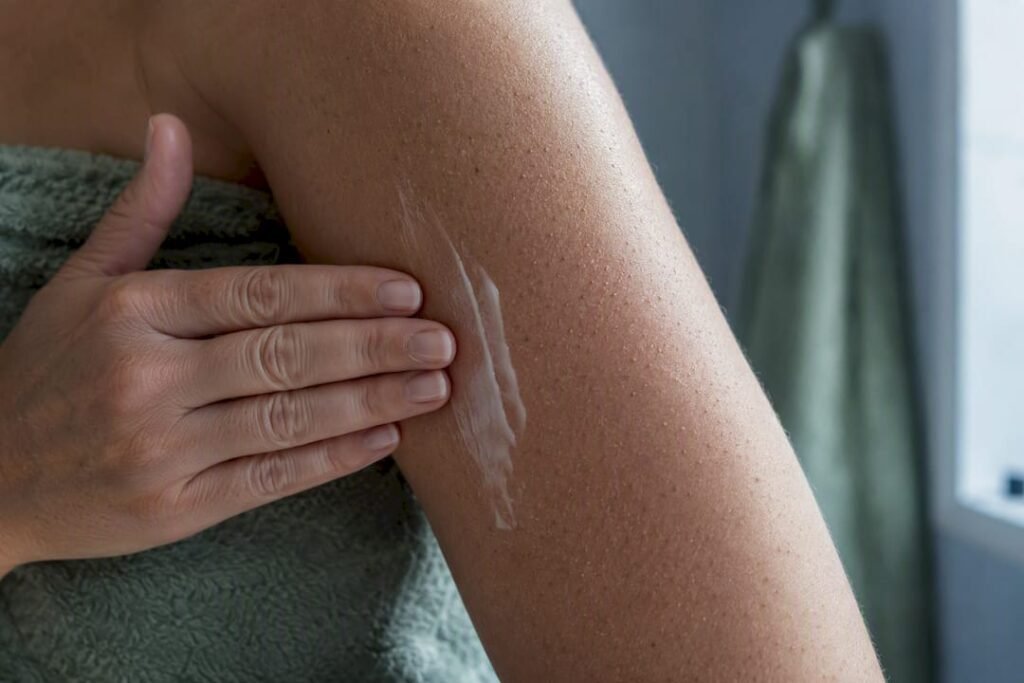
The most effective natural treatment for keratosis pilaris combines gentle chemical exfoliation two to three times a week with daily moisturizer applied to damp skin, plus a few lifestyle tweaks around humidity and shower habits. Give it six to twelve weeks before judging results. KP is harmless and often fades with age on its own, but always patch-test new products and stop if you see redness or stinging.
TL;DR:
- Gentle chemical exfoliation with lactic acid, urea, or salicylic acid two to three times weekly is more effective and safer than physical scrubbing.
- Moisturizing within five minutes of showering using a dense cream or ointment helps lock in hydration and improve skin texture.
- Patch-testing new products and reducing aggressive DIY remedies minimize the risk of irritation and skin damage.
- A consistent routine of gentle exfoliation and prompt moisturizing over six to twelve weeks is key to seeing improvements.
- Using formulated natural products with stable active ingredient concentrations offers more reliable results than homemade mixtures.
Table of Contents
- Your Natural Treatment Routine For Keratosis Pilaris, Step By Step
- Why Chemical Exfoliation Beats Physical Scrubbing For KP
- Choosing And Applying A Moisturizer That Actually Helps
- Kitchen And DIY Remedies: What’s Safe And What Isn’t
- Daily Habits That Cut Down Flare-Ups
- When Should You See A Dermatologist For Keratosis Pilaris?
- Where A Formulated Natural Product Fits Into Your Routine
- Does Diet Actually Change Keratosis Pilaris?
- Natural Oils That Can Help, And How To Use Them Correctly
- Rebuilding Your Skin Barrier Beyond Just Moisturizer
- What Actually Moves The Needle On Keratosis Pilaris
- Where Miraclegelnaturalskincare Fits Into Your Routine
- Sources
Your Natural Treatment Routine For Keratosis Pilaris, Step By Step
Keratosis pilaris shows up as tiny, rough bumps, usually on the upper arms, thighs, or cheeks, caused by keratin plugging up hair follicles. You don’t need a complicated regimen to calm it down. You need the right two or three moves, done consistently, in the right order.
Here’s the sequence dermatology sources recommend:
- Shower warm, not hot, and keep it short. Long, scalding showers strip the oils your skin needs to stay flexible, which worsens the rough, bumpy texture. Five to ten minutes with a mild, fragrance-free cleanser is the target.
- Introduce a chemical exfoliant 2 to 3 times a week. Look for lactic acid, urea, or salicylic acid. Patch-test on a small area first, and start with the lowest frequency before increasing, since gentle chemical exfoliation followed by moisturizing is the approach dermatology sources recommend most consistently.
- Moisturize within five minutes of stepping out of the shower. Damp skin absorbs and locks in moisturizer far better than dry skin does. Use a thick cream or ointment, not a light lotion.
- Build daily habits around it. Run a humidifier in dry months, wear loose breathable fabrics that don’t rub against the bumps, and skip the loofah entirely.
A realistic six day a week schedule looks like this: cleanse and moisturize morning and night every day, and layer in your exfoliant on three of those nights, alternating so your skin gets a rest day between treatments. Give the full routine six to twelve weeks before deciding whether it’s working. Skin cell turnover takes time, and KP responds to patience more than intensity.
Pro Tip: Apply your exfoliating product first on damp skin, wait a minute for it to absorb, then seal everything in with your moisturizer. Reversing that order wastes the exfoliant’s effect.
If your skin gets tight, flaky, or irritated at any point, drop back to twice a week and lean harder on the moisturizing step until things settle.
Why Chemical Exfoliation Beats Physical Scrubbing For KP
Keratosis pilaris happens when keratin, the protein that makes up your skin’s outer layer, builds up and hardens inside individual hair follicles instead of shedding normally. That hardened plug is what you feel as a tiny bump. Scrubbing at it with a loofah or a gritty body scrub doesn’t dissolve the plug. It just abrades the skin around it.
That distinction matters for what you choose:
- Lactic acid loosens the bonds between dead skin cells and works as a humectant at the same time, drawing moisture in as it exfoliates.
- Urea softens keratin directly and doubles as a moisturizing ingredient, which is why it shows up in a lot of dedicated KP creams.
- Salicylic acid cuts through oil and debris inside the follicle, useful if your bumps tend to look slightly inflamed or reddish.
- AHAs generally (glycolic acid included) work similarly to lactic acid but can run a bit stronger, so they’re worth introducing slowly.
Aggressive physical exfoliation creates micro tears you often can’t see but can absolutely feel, and a compromised skin barrier tends to make keratosis pilaris look worse, not better. Dermatology guidance consistently favors the gentle chemical route over scrubbing.
Between 50% and 80% of adolescents deal with some degree of keratosis pilaris, and many cases improve naturally by adulthood, which is worth remembering before you reach for anything harsh.
To patch-test a new exfoliant, apply a small amount to the inside of your forearm and wait 48 hours. No redness, itching, or burning means it’s safe to try on a larger area. If you notice stinging that doesn’t fade within a few minutes of the first full application, wash it off and cut back to once a week, or drop the strength.
Choosing And Applying A Moisturizer That Actually Helps
The exfoliant does half the job. The moisturizer does the other half, and it’s the half most people rush through. Skip it, or apply it wrong, and you’ll undo a lot of the benefit from step one.
What to look for on a label:
- Urea (works as both a softener and a hydrator)
- Lactic acid in lower concentrations for daily-use formulas
- Glycerin, a reliable humectant that pulls water into the skin
- Ceramides, which help rebuild the barrier that keeps moisture from escaping
- Petrolatum, an occlusive that seals everything in underneath it
Texture matters more than most people expect. A thin, fast-absorbing lotion feels nice but usually can’t hold up against rough, bumpy skin the way a dense cream or ointment can. If your skin is on the sensitive side, go simpler: fewer ingredients, no fragrance, no dye.
Timing is where the real gains hide. Applying moisturizer to damp skin within five minutes of bathing traps far more moisture than applying it to fully dry skin, because you’re sealing in water that’s already sitting on the surface rather than trying to add it back in later.
Pro Tip: On the nights you use a chemical exfoliant, apply it first, let it sit for about a minute, then follow immediately with your moisturizer. If your skin feels dry or tight the next day, skip the exfoliant that evening and just moisturize twice.
For an easy, low-irritation option to fold into this step, a gentle exfoliant alternative built for sensitive skin can take the guesswork out of picking a strength that won’t overdo it.
Kitchen And DIY Remedies: What’s Safe And What Isn’t
Plenty of natural treatment advice for keratosis pilaris points people toward the pantry. Some of it is fine in moderation. Some of it can genuinely hurt you. The honest caveat first: clinical evidence consistently favors standardized keratolytic creams over kitchen remedies, because DIY mixtures carry a real risk of skin irritation and contact dermatitis that a formulated cream is built to avoid.
With that in mind, here’s how the common ones stack up:
- Colloidal oatmeal soaks or masks are genuinely soothing and low risk, good for calming irritated skin after exfoliating.
- Diluted apple cider vinegar, mixed roughly 1:1 with water and left on for a short contact time only, is a milder option some people tolerate, though dermatology sources specifically recommend dilution to reduce irritation risk.
- A very gentle sugar or oat scrub, used with light pressure and rinsed quickly, can work as an occasional supplement to a chemical exfoliant, never a replacement for one.
- Undiluted vinegar or concentrated baking soda pastes should stay off your skin entirely. Both can burn or disrupt your skin’s natural pH badly enough to make KP look worse.
Patch-test every DIY mixture the same way you would a store-bought product: small area, 48 hours, watch for redness or burning. If you get a reaction, rinse immediately with cool water and stop using it. A primer on why patch testing matters before committing to a product walks through the process in more detail.
Daily Habits That Cut Down Flare-Ups
Topical treatment does a lot of the work, but the environment your skin lives in day to day matters almost as much. A few small changes tend to have an outsized effect:
- Run a humidifier during dry months, especially in bedrooms, since dry indoor air pulls moisture straight out of already rough skin.
- Keep showers lukewarm and brief. Hot water feels good but strips natural oils fast, and short, lukewarm showers are a standard recommendation for managing KP.
- Choose loose, breathable fabrics. Tight jeans or synthetic leggings rubbing against affected skin all day adds friction that irritates already sensitive bumps.
- Switch to a mild, fragrance-free detergent for laundry, and skip fabric softeners with heavy scent loads if your skin reacts to them.
None of these alone will clear keratosis pilaris. Together with exfoliation and moisturizing, they close the gap between a routine that helps a little and one that actually holds up over months. A gentle cleansing workflow built around mild products is a good reference point if you’re rebuilding your bathing habits from scratch.
When Should You See A Dermatologist For Keratosis Pilaris?
Home treatment handles most cases, but a few signs mean it’s time to get professional input rather than keep adjusting on your own. Book an appointment if you notice severe redness, pain, signs of infection like pus or warmth, or simply no visible improvement after six to twelve weeks of consistent effort.
A dermatologist has options beyond what’s available over the counter:
- Stronger prescription keratolytics, at concentrations higher than store shelves carry.
- Topical retinoids, which speed up cell turnover and can help with stubborn plugging.
- Laser therapy, generally reserved for cases where redness or discoloration is the main concern rather than texture.
It helps to walk in prepared. Bring a list of every product you’ve tried, how often you used it, and for how long. Keratosis pilaris is a chronic, manageable condition rather than something you cure once and forget, so prescription-level options tend to work best as part of an ongoing plan rather than a one-time fix.
Where A Formulated Natural Product Fits Into Your Routine
DIY remedies vary from batch to batch. Formulated products don’t, and that consistency is worth something when you’re dealing with skin that reacts badly to guesswork. A cream with a fixed, tested concentration of active ingredients tends to produce steadier results than a fresh vinegar mix stirred up in your kitchen sink each week, simply because the irritation risk is engineered out rather than left to chance.
This is where Miraclegelnaturalskincare’s approach earns a look. The brand builds its formulas, including the 2 Minute Miracle Gel with its Tri-Moisture Cryo Complex™, around natural ingredients at stable, repeatable concentrations rather than harsh synthetic fillers, with founder Shelly Maguire’s industry background behind the formulation choices.
- Introduce any new product on its own for the first week, applied after your exfoliant, before you fold it into a full daily rotation.
- Patch-test on your forearm first, same 48 hour rule as any other new skincare product.
- Use it in place of a separate moisturizer if the formulation is designed as a stand-alone step, rather than stacking two heavy creams on top of each other.
| If you’re dealing with | Prioritize | Skip |
|---|---|---|
| Rough, bumpy texture | Chemical exfoliant + damp-skin moisturizing | Loofahs, gritty scrubs |
| Redness alongside bumps | Salicylic acid, gentler frequency | Undiluted vinegar |
| Very dry, tight skin | Thicker cream or ointment, humidifier | Long hot showers |
Explore the natural skincare formulations built for skin over 40 to see how a stable formula might slot into the routine above.
Does Diet Actually Change Keratosis Pilaris?
People ask this constantly, and the honest answer is more nuanced than most wellness blogs let on. There are no controlled clinical trials proving that dietary changes or supplements cure keratosis pilaris. Topical management remains the approach with actual evidence behind it.
That doesn’t mean diet is irrelevant to skin generally. General skin health benefits from adequate hydration, enough dietary fat to support the skin barrier, and nutrients like vitamin A and essential fatty acids, which play a role in normal skin cell turnover. Some people report their bumps look slightly calmer when they’re well hydrated and eating a varied diet with enough healthy fats, but this is anecdotal territory, not a documented treatment pathway.
If you want to experiment, do it as a supplement to your topical routine, never a replacement for it. Cutting out entire food groups chasing a KP cure, without medical guidance, risks nutritional gaps for a benefit that isn’t backed by research. Focus your effort and expectations on the exfoliation and moisturizing routine covered earlier. Treat diet as a general wellness habit that might support skin health broadly, not a lever that will visibly shrink your bumps on its own.
Natural Oils That Can Help, And How To Use Them Correctly
Not every natural oil belongs on rough, bump-prone skin, and a few popular ones can backfire. Jojoba oil is one of the safer choices because its structure closely resembles the skin’s own sebum, which means it tends to absorb without leaving a heavy, pore-clogging film behind. A few drops massaged in after your moisturizer, while skin is still slightly damp, can add a layer of slip without undoing the humectant work you just did.
Tea tree oil gets mentioned often for KP because of its reputation for calming inflamed skin, but it needs real caution. It should never go on undiluted. Mix a couple of drops into a carrier oil or your regular moisturizer, patch-test exactly as you would any new ingredient, and watch for stinging. Tea tree can be genuinely drying and irritating at higher concentrations, which works against the whole point of a moisturizing-focused routine.
Coconut oil shows up in a lot of home remedy lists too, but it’s comedogenic for a meaningful number of people, meaning it can clog follicles rather than clear them. If you want to try it, patch-test on a small area away from your main KP patches first, and stop immediately if you notice new bumps forming.
The rule that applies across all of these: oils layer on top of, not instead of, your exfoliation and moisturizing steps. They’re a finishing touch, not the treatment itself.
Rebuilding Your Skin Barrier Beyond Just Moisturizer
A damaged skin barrier makes every other part of this routine harder to pull off. If your barrier is compromised, even a good moisturizer struggles to hold water in, and exfoliants that would normally be gentle start to sting.
Occlusive layering is the most underused technique here. After your regular moisturizer sinks in, a thin layer of a heavier occlusive, petrolatum or a dense balm, on top locks everything underneath it in place overnight. It sounds excessive for daytime use, but at night, especially during dry winter months, it can make a visible difference within a couple of weeks.
Avoiding irritants matters just as much as adding good ingredients. Fragrance is the single biggest hidden offender in body washes and lotions marketed as “gentle.” Alcohol-based products, including some toners and quick-dry sprays, strip the very oils your barrier needs. Read labels, and when in doubt, choose the shorter ingredient list.
Give your skin recovery days. Every product on your skin, even the good ones, asks something of your barrier. Building in one or two days a week with nothing but a plain moisturizer, no exfoliant, no active ingredients, gives your skin a chance to catch up. A routine built around skin renewal for adults past 30 covers this kind of barrier-first thinking in more depth.
What Actually Moves The Needle On Keratosis Pilaris
Most advice on this topic treats keratosis pilaris like a puzzle to be solved with the right miracle ingredient. It isn’t. The evidence points to something almost boring: consistency with two unglamorous steps, gentle chemical exfoliation and prompt moisturizing, beats novelty every time.
Where conventional wisdom falls short is the obsession with speed. People try a new scrub, see no change in three days, and jump to the next thing before either product had a real chance to work. Skin cell turnover doesn’t operate on a three day clock. It operates on a six to twelve week one, and most of the “this doesn’t work” verdicts online never made it that far.
What I’d prioritize first isn’t the fanciest ingredient on the shelf. It’s picking one exfoliant, one moisturizer, and sticking with both long enough to actually judge them. A formulated product with a stable concentration removes one variable of guesswork that DIY remedies can’t. Consistency, not intensity, is what your skin is actually asking for.
— Barbara
Where Miraclegelnaturalskincare Fits Into Your Routine
If you’ve made it this far, you already know the drill: consistent gentle exfoliation, prompt moisturizing, and patience measured in weeks rather than days. What’s often missing is a product you can trust to deliver the same result every single time you reach for it, without wondering if this batch of your DIY mix is stronger or weaker than last week’s.

Some skincare products are formulated with stable, tested concentrations of natural ingredients, designed for people seeking visible skin improvement without harsh chemicals or unpredictable homemade mixtures. This consistency supports a KP routine over the six to twelve week period typically needed. If your skin runs sensitive or reactive, patch-test any new product the same way outlined earlier in this guide before working it into your nightly routine.
Take a look at the natural skincare formulations designed for radiant, age-defying results and see which one fits the rough, bumpy patches you’re trying to smooth out.
This article is general information, not a substitute for advice from a qualified doctor. Consult a qualified healthcare professional about your own circumstances before acting on anything here.
Sources
- Keratosis pilaris treatment and self-care — Harvard Health
- Keratosis Pilaris — Cleveland Clinic
- Keratosis pilaris – Lifestyle and home remedies — Mayo Clinic
- Keratosis Pilaris — StatPearls (NCBI Bookshelf)