
TL;DR:
- As women age, declining estrogen reduces hydration, collagen, and cell turnover, causing dullness.
- A layered skincare routine with retinoids, vitamin C, hyaluronic acid, and SPF restores radiance over time.
Brightening mature skin is the practice of restoring radiance by addressing three biological factors: hydration, cell turnover, and pigmentation control. After 40, your skin changes in ways that make a standard glow routine fall short. Estrogen decline reduces hyaluronic acid production, collagen thins, and dead cells accumulate faster than they shed. The result is a complexion that looks flat, uneven, and tired. The good news is that targeted ingredients like retinoids, vitamin C, and niacinamide, combined with a consistent anti-aging skincare routine, can visibly reverse that dullness.
How does mature skin change and affect brightness?
Mature skin loses its natural glow for biological reasons, not cosmetic ones. Understanding those reasons is the first step toward fixing them.
After 40, estrogen levels drop significantly. That decline directly reduces the skin’s ability to produce hyaluronic acid, which is the molecule responsible for holding water in the skin. Estrogen-related declines reduce hyaluronic acid, which means skin loses the structural plumpness that reflects light evenly. Dry, dehydrated skin scatters light instead of reflecting it, which is why it looks dull rather than radiant.
Cell turnover also slows with age. In your 20s, skin renews itself roughly every 28 days. By your 50s, that cycle can stretch to 45 days or longer. Dead cells pile up on the surface and create a rough, uneven texture. That texture is the primary reason brightening serums often feel ineffective: they cannot penetrate or reflect light through a layer of built-up dead skin.
Here are the key biological changes that directly affect skin brightness after 40:
- Collagen loss: Skin thins and loses firmness, reducing the structural base that gives skin a plump, lit-from-within appearance.
- Slowed cell turnover: Dead cells accumulate on the surface, creating dullness and uneven texture.
- Reduced hyaluronic acid: Skin holds less water, leading to dryness and a loss of reflective plumpness.
- Pigmentation buildup: Cumulative sun exposure triggers melanin clusters, producing age spots and an uneven tone.
- Compromised skin barrier: A weakened barrier causes water loss and makes skin more reactive to actives. A damaged skin barrier increases visible dullness and roughness through uneven light reflection.
Each of these changes compounds the others. Addressing them requires a layered approach, not a single product.
What are the top ingredients for mature skin brightening?
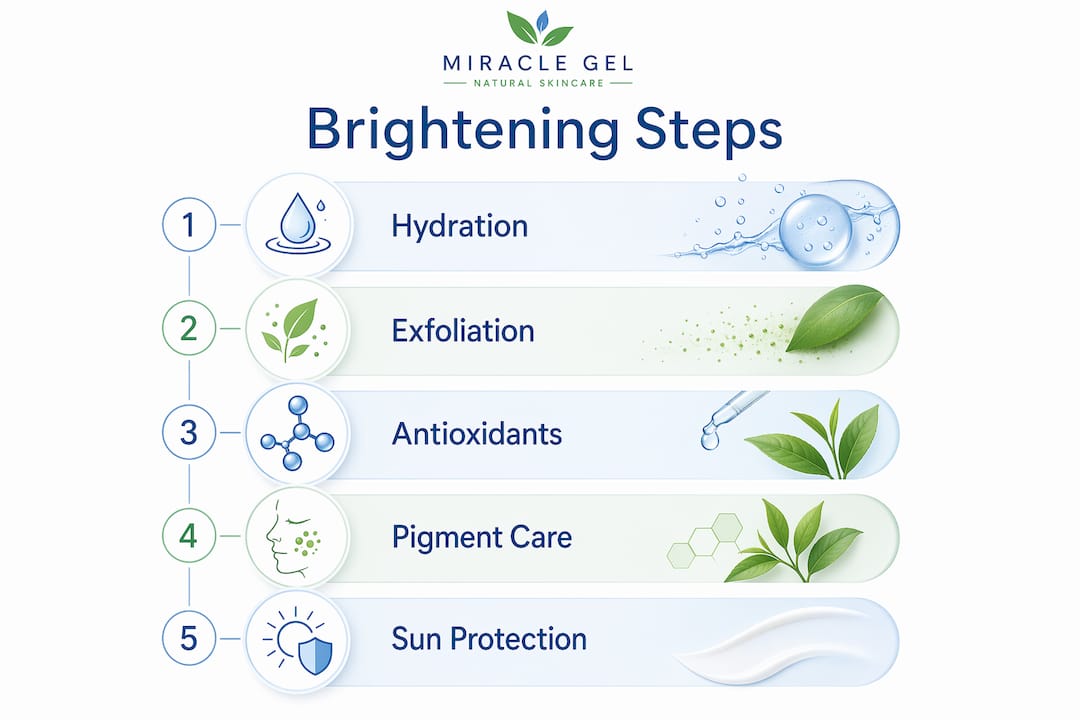
The most effective ingredients for mature skin work on multiple levels at once: they speed up cell renewal, fight pigmentation, restore hydration, and repair the barrier. Balancing potent actives with barrier-supportive ingredients produces the best results for brightness and anti-aging.

Retinoids
Retinoids, including tretinoin and over-the-counter retinol, are the gold standard for mature skin. Consistent retinoid use increases cell turnover and collagen production, improving texture and reducing uneven pigmentation over months. A low-strength retinoid introduced gradually at night improves mature skin tone without excessive irritation. Start two nights per week and build from there.
Vitamin C
Vitamin C in the form of L-ascorbic acid is the most studied brightening antioxidant available. Vitamin C applied consistently in the morning fades dark spots, boosts radiance, and protects against environmental damage. It also supports collagen synthesis, which makes it a dual-purpose ingredient for women over 40.
Hyaluronic acid and ceramides
Multi-weight hyaluronic acid blends hydrate both the surface and deeper skin layers, which is vital for maintaining plumpness and barrier function in mature skin. Ceramides work alongside hyaluronic acid to seal moisture in and keep irritants out. Together, they form the hydration foundation that every other brightening ingredient depends on.
Niacinamide and peptides
Niacinamide increases ceramide and fatty acid production, supporting hydration and reducing skin dullness. It also combats the yellowing that mature skin develops over time. Peptides signal the skin to produce more collagen, supporting firmness and a smoother surface for light reflection.
Gentle chemical exfoliants
AHAs (alpha-hydroxy acids) like glycolic and lactic acid dissolve the bonds holding dead cells to the surface. BHAs (beta-hydroxy acids) like salicylic acid go deeper into pores. Gentle exfoliation removes dull surface buildup and allows light to reflect evenly on smooth texture. For mature skin, lactic acid is often the gentler starting point.
Pigment-fighting agents
Kojic acid and azelaic acid both interrupt melanin production without the irritation that stronger agents can cause. They work well alongside vitamin C for women dealing with age spots or uneven tone. You can find these in serums and spot treatments formulated for brighter, youthful skin after 40.
How to build a brightening skincare routine for mature skin
A consistent anti-aging skincare routine is more powerful than any single product. The key is sequencing: apply products from thinnest to thickest consistency, and space out actives to avoid irritation. Correct layering maximizes absorption and efficacy in mature skin brightening routines.
Morning routine
- Gentle cleanser: Use a hydrating, low-foam cleanser that does not strip the barrier.
- Vitamin C serum: Apply 2–3 drops of an L-ascorbic acid serum to clean, dry skin. This is your antioxidant shield for the day.
- Hydrating serum: Layer a hyaluronic acid serum on top while skin is still slightly damp to lock in moisture.
- Moisturizer with ceramides: Seal everything in with a ceramide-rich moisturizer that supports barrier function.
- Broad-spectrum SPF 30+: This is non-negotiable. Daily SPF use preserves collagen and prevents further pigmentation, which is the single most important step for maintaining brightness long term.
Evening routine
- Gentle cleanser: Remove SPF, makeup, and pollutants without disrupting the barrier.
- Retinoid: Apply a pea-sized amount to dry skin. Start two nights per week and increase gradually over 4–6 weeks.
- Hydrating serum: Follow with hyaluronic acid to counteract any dryness the retinoid may cause.
- Nourishing moisturizer: Use a richer formula at night to support overnight repair.
Weekly exfoliation
Add a mild AHA or BHA exfoliant once or twice per week, applied after cleansing. Do not use it on the same night as your retinoid. This combination is too aggressive for mature skin and will compromise the barrier.
Pro Tip: If your skin feels tight or flaky after introducing a new active, drop back to every third night and add an extra layer of ceramide moisturizer. Irritation is a sign your barrier needs support, not more actives.
Lifestyle factors matter too. Aim for 7–8 hours of sleep, drink enough water throughout the day, and manage stress consistently. These habits directly affect cortisol levels, which influence collagen breakdown and skin hydration.
What mistakes cause dullness in mature skin?
Most brightening routines fail not because of the wrong products, but because of avoidable habits. Identifying the real cause of persistent dullness saves time and money.
- Over-exfoliating: Using AHAs, BHAs, and retinoids too frequently strips the barrier. A compromised barrier cannot retain moisture, and dull, reactive skin is the result. Limit exfoliation to 1–2 times per week.
- Skipping sunscreen: UV exposure is the leading cause of pigmentation and collagen loss after 40. Skipping SPF even occasionally undoes weeks of brightening progress.
- Using harsh products: Alcohol-heavy toners, strong fragrance, and high-concentration actives increase sensitivity in mature skin. Sensitivity and dryness directly cause dullness.
- Inconsistency: Retinoids and vitamin C require weeks of daily use before visible results appear. Stopping and starting resets the clock every time.
- Ignoring the barrier: Even the best serums fail without repairing and hydrating the skin barrier first. Brightening ingredients cannot work on a compromised surface.
- Reactive skin: If your skin stings, flushes, or breaks out with new products, pause all actives for one week and focus only on a gentle cleanser, ceramide moisturizer, and SPF. Rebuild from there.
“Glow is not about shine or shimmer. It comes from the skin’s biological function: hydration, even texture, and cell renewal. These create lasting radiance that no highlighter can replicate.” — Esthetician’s guide to glowing skin
When brightening efforts stall despite a consistent routine, consider consulting a dermatologist. Professional treatments like prescription tretinoin, chemical peels, or laser therapy can address deeper pigmentation that topical products cannot reach alone.
What natural remedies and lifestyle habits support a brighter complexion?
Skincare products work best when your body supports them from the inside. These habits amplify the results of any evidence-backed brightening routine.
- Hydration: Drinking adequate water throughout the day supports the skin’s ability to maintain turgor and reflect light. Dehydration shows up on the face faster after 40.
- Antioxidant-rich diet: Foods high in vitamins C and E, such as berries, leafy greens, and nuts, reduce oxidative stress that accelerates skin aging and dullness.
- Facial massage and gua sha: Regular facial massage improves lymphatic drainage and circulation, which brings fresh blood and oxygen to the skin surface. Even five minutes daily makes a visible difference over weeks.
- Sleep: Skin repairs itself during deep sleep. Consistently poor sleep raises cortisol, which breaks down collagen and increases inflammation.
- Avoid smoking and excess alcohol: Both deplete skin of oxygen and antioxidants, accelerating the dullness and uneven tone that mature skin is already prone to.
- Antioxidant teas: Green tea and white tea contain polyphenols that reduce inflammation and support collagen. Drinking 2–3 cups daily provides a meaningful antioxidant boost alongside topical care.
These habits do not replace a good skincare routine. They make every product you apply work harder and last longer.
Key Takeaways
Brightening mature skin requires consistent hydration, barrier repair, and targeted actives applied in the correct order every day.
| Point | Details |
|---|---|
| Hydration comes first | Hyaluronic acid and ceramides must be in place before brightening actives can work effectively. |
| Retinoids and vitamin C are the core actives | Used consistently, they increase cell turnover, fade pigmentation, and support collagen production. |
| SPF is non-negotiable | Daily broad-spectrum SPF 30+ prevents new pigmentation and preserves the brightness you build. |
| Exfoliate gently and sparingly | AHAs or BHAs once or twice per week remove dull surface buildup without compromising the barrier. |
| Consistency beats intensity | Stopping and restarting actives resets results. A simple, steady routine outperforms an aggressive one. |
What I’ve learned about chasing radiance after 40
After years of working with women on mature skin concerns, the pattern I see most often is this: women invest in the right ingredients but skip the foundational steps. They reach for a vitamin C serum before their skin barrier is intact, or they layer three actives in the first week and wonder why their skin is red and reactive.
The truth is that texture and hydration have to come before glow. A plump, well-hydrated surface reflects light naturally. A dry, rough one absorbs it. No brightening serum changes that physics.
I also see a lot of frustration with timelines. Retinoids take 8–12 weeks to show meaningful results. Vitamin C takes consistent daily use for 4–6 weeks before pigmentation visibly fades. Women who stick with a routine that long almost always see real change. Women who switch products every three weeks rarely do.
The other thing worth saying plainly: potent actives and sensitive mature skin are not a natural fit. The women I see with the most radiant skin over 50 are not using the strongest formulas. They are using well-formulated products with proven natural ingredients at appropriate concentrations, applied consistently, with barrier support built into every step.
Patience is not passive. It is the most active choice you can make for your skin.
— Barbara
Natural skincare for radiant, age-defying skin at 40+
If you are ready to put these principles into practice, Miraclegelnaturalskincare has built a range of natural skincare products specifically for women over 40. The formulations focus on the ingredients that matter most for mature skin: hydration, barrier support, and gentle brightening actives that work without stripping or irritating.

The natural skincare range for 40+ brings together cleansers, serums, and moisturizers designed to work as a complete routine. For women who want to see what clinically supported results look like in practice, the clinically proven results page shows real outcomes from real women. Free shipping is available on orders over €85, making it easy to build a full routine in one step.
FAQ
What is the fastest way to brighten mature skin?
Gentle exfoliation with an AHA like lactic acid removes dead surface cells and immediately improves light reflection. Pair it with a vitamin C serum in the morning for the fastest visible improvement in tone and radiance.
How long does it take to see results from a brightening routine?
Vitamin C shows early results in 4–6 weeks of daily use. Retinoids typically require 8–12 weeks before significant texture and pigmentation improvements appear. Consistency is the deciding factor.
Can I use retinol and vitamin C together?
Apply vitamin C in the morning and retinol at night to avoid potential irritation and degradation of both actives. This split-schedule approach delivers the full benefit of each ingredient without conflict.
Why does my skin look dull even when I moisturize?
Moisturizer alone does not address dead cell buildup or pigmentation. Without regular gentle exfoliation and an antioxidant serum, hydration improves comfort but does not restore visible radiance.
Is SPF really necessary for skin brightening after 40?
SPF is the most important step in any brightening routine. UV exposure triggers new pigmentation and breaks down collagen, directly reversing the results of every other brightening product you use.