

TL;DR:
- Dry skin results from a compromised skin barrier that cannot retain moisture, causing tightness and irritation. Effective hydration involves gentle cleansing, layered application of humectants, emollients, occlusives, and environmental adjustments like humidifiers and proper hydration. Consistent routines and patience are essential for barrier repair, especially for aging skin or severe dryness.
Dry skin is defined as a condition where the skin barrier fails to retain adequate moisture, leading to tightness, flaking, and irritation. Knowing how to hydrate dry skin correctly means more than drinking extra water. It requires a layered approach: gentle cleansing, the right moisturizing ingredients applied at the right time, and environmental adjustments that stop moisture from escaping. The standard clinical term for this process is transepidermal water loss (TEWL) management. Products like ceramide-rich creams, humectants such as hyaluronic acid and glycerin, and tools like humidifiers all play specific roles in a complete hydrating skin routine.
What causes dry skin and why hydration matters
Dry skin develops when the skin barrier breaks down and can no longer hold water effectively. Several factors accelerate this process.
- Environmental triggers: Cold air, low humidity, and central heating strip moisture from the skin’s surface faster than it can be replaced.
- Hot water exposure: Long, hot showers dissolve the natural lipid layer that seals moisture in.
- Age-related changes: Oil gland activity slows with age, reducing the skin’s natural ability to stay lubricated.
- Nutritional gaps: Vitamin deficiencies including vitamin D, vitamin A, niacin, and zinc directly impair barrier function. This means what you eat affects your skin’s ability to hold water, not just topical products.
- Harsh products: Soaps and cleansers containing alcohol, synthetic fragrances, or dyes strip the lipid barrier and trigger inflammation.
The consequences of untreated dryness go beyond discomfort. Cracked skin creates entry points for bacteria. Chronic dryness accelerates the appearance of fine lines. The skin barrier, made up of lipids, ceramides, and natural moisturizing factors (NMFs), acts like a brick-and-mortar wall. When that wall is compromised, water escapes and irritants get in. Restoring hydration is not cosmetic. It is a functional repair job.
How to hydrate dry skin through gentle cleansing
Cleansing is where most people unknowingly make their dry skin worse. The goal is to remove dirt and excess oil without stripping the barrier you are trying to rebuild.
Limit showers or baths to 5–10 minutes using lukewarm water. Hot water feels good in the moment but dissolves the skin’s protective lipid layer every single time. Once that layer is gone, moisture evaporates rapidly.
- Choose fragrance-free, dye-free, and alcohol-free cleansers. Products with these irritants cause further lipid barrier damage even when used briefly.
- Wash your face once daily, preferably in the evening. Morning cleansing with plain water is sufficient for most dry skin types.
- Avoid physical scrubs, loofahs, or washcloths used with pressure. Mechanical friction tears at an already fragile barrier.
- Pat skin dry with a soft towel. Never rub.
For women over 40, where skin is naturally thinner and produces less oil, the gentle cleansing approach becomes even more critical. A compromised barrier at this stage takes longer to recover.
Pro Tip: Apply your moisturizer within two minutes of stepping out of the shower. Damp skin absorbs humectants more effectively and the occlusive layer you apply on top seals that absorbed water in.
What moisturizer ingredients actually work for dry skin
Not all moisturizers treat dry skin the same way. The three categories of moisturizing ingredients each do a different job, and using them together produces the best results.
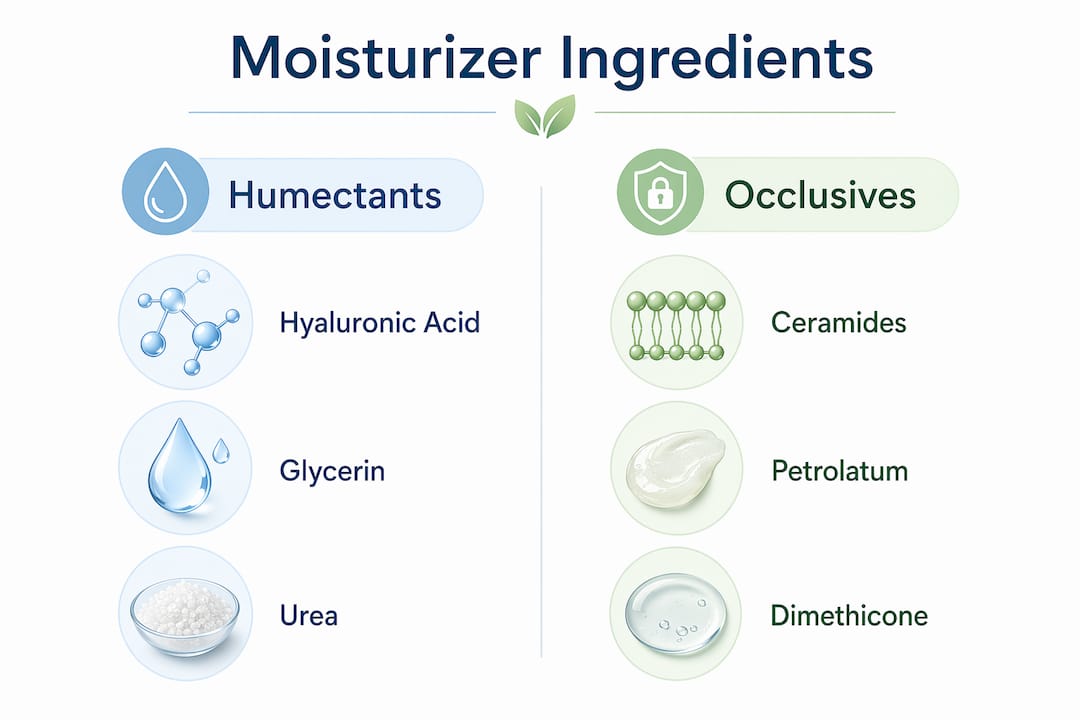
- Humectants attract water from the environment or deeper skin layers to the surface. Examples include hyaluronic acid, glycerin, and urea.
- Emollients fill the gaps between skin cells and soften texture. Ceramides, squalane, and shea butter fall into this category.
- Occlusives form a physical barrier on the skin’s surface to prevent water from evaporating. Petrolatum, beeswax, and dimethicone are the most effective options.
Moisturizers with ceramides, urea, glycerin, and hyaluronic acid offer proven barrier repair and hydration benefits. Using all three ingredient types together is more effective than relying on any single one.
Humectants vs. occlusives: what to use when
| Ingredient Type | Function | Best Used |
|---|---|---|
| Hyaluronic acid (humectant) | Draws water to skin surface | On damp skin, followed by an occlusive |
| Glycerin (humectant) | Attracts and holds moisture | Layered under a cream or ointment |
| Ceramides (emollient) | Repairs lipid barrier gaps | In daily moisturizers, morning and night |
| Petrolatum (occlusive) | Seals moisture in | As the final step in a nighttime routine |
| Urea (humectant + keratolytic) | Hydrates and softens rough patches | On heels, elbows, and very dry areas |
One of the most common mistakes in treating dry skin is applying hyaluronic acid to completely dry skin in a low-humidity environment without sealing it afterward. Hyaluronic acid applied this way pulls moisture from deeper skin layers to the surface, where it then evaporates. The result is skin that feels drier than before. Always apply hyaluronic acid to damp skin and follow immediately with a cream or ointment.
Moisturizer thickness correlates directly to effectiveness. Thick creams and ointments that hold their shape prevent transepidermal water loss better than thin lotions that pour easily from a pump. If your moisturizer runs off your hand, it is probably not occlusive enough for dry skin.
A technique called skin flooding, which involves layering multiple hydration products in sequence, can deepen hydration significantly. The standard order is toner or essence, serum, moisturizer, and then an occlusive. For sensitive skin, introduce new layers one at a time over several weeks to avoid inflammation.
Pro Tip: For a detailed breakdown of how to sequence your products for maximum effect, the layering skincare guide from Miraclegelnaturalskincare walks through each step with specific product types.
Lifestyle and environmental tips to keep skin hydrated
Topical products alone cannot fully compensate for a lifestyle that constantly depletes skin moisture. These environmental and daily habits make a measurable difference.
- Run a humidifier indoors. Using a humidifier in dry climates or during winter heating season maintains ambient moisture and slows transepidermal water loss while you sleep.
- Drink enough water daily. Daily water intake recommended for adequate hydration is approximately 124 oz for men and 92 oz for women from all fluid sources. That translates to roughly 3.7 liters for men and 2.7 liters for women. Consistent hydration from the inside supports skin cell function, though it does not replace topical moisturizing.
- Cut back on alcohol and caffeine. Both act as diuretics and reduce overall hydration levels in the body.
- Wear sunscreen daily. UV damage breaks down the skin barrier over time, making dryness worse. SPF 30 or higher applied every morning is non-negotiable.
- Eat for your skin. Foods rich in omega-3 fatty acids (salmon, walnuts, flaxseed), vitamin E (avocado, almonds), and vitamin C (bell peppers, citrus) support lipid production and barrier repair. Coconut water and vitamin-rich drinks also support skin hydration and protection from oxidative damage.
The role of hydration in mature skin is especially significant because oil production declines with age, making environmental factors hit harder. A humidifier in the bedroom costs very little and delivers consistent results overnight.
Common mistakes that make dry skin worse
Even well-intentioned routines can backfire. These are the errors that most consistently undo hydration progress.
- Over-exfoliating. Using AHAs, BHAs, or physical scrubs more than twice a week on dry skin strips away the barrier before it has time to repair. Signs of over-exfoliation include stinging, redness, and increased sensitivity to products that previously felt fine.
- Using hyaluronic acid incorrectly. As covered above, applying it to dry skin without an occlusive causes it to draw moisture out rather than in. Always apply to damp skin and seal immediately.
- Choosing products with fragrances or dyes. These are among the most common contact irritants and cause barrier damage even in small amounts.
- Overusing retinoids. Retinol and prescription retinoids accelerate cell turnover, which temporarily increases dryness and sensitivity. Start with the lowest concentration and use no more than two to three nights per week until your skin adjusts.
“Hydration requires a combination of humectants to attract water and occlusives to seal it. No single product does both jobs well enough on its own.” Source: Ubie Health
When dry skin does not respond to over-the-counter products after four to six weeks, see a dermatologist. Conditions like eczema, psoriasis, and contact dermatitis require targeted treatment. Prescription-strength urea creams (20–40%) or barrier repair formulas may be necessary for severely compromised skin.
Key takeaways
Effective dry skin hydration depends on combining the right ingredients in the right order, not on any single product or habit.
| Point | Details |
|---|---|
| Cleanse gently and briefly | Limit showers to 5–10 minutes with lukewarm water and use fragrance-free cleansers. |
| Layer humectants before occlusives | Apply hyaluronic acid or glycerin to damp skin, then seal with a cream or ointment. |
| Moisturizer thickness matters | Thick creams and ointments prevent water loss more effectively than thin pump lotions. |
| Environment affects hydration | Use a humidifier indoors and drink approximately 3.7 liters (men) or 2.7 liters (women) daily. |
| Avoid common irritants | Skip products with alcohol, fragrances, and dyes to protect the skin barrier. |
What i’ve learned from putting the barrier first
Most people come to dry skin care looking for the one product that will fix everything. I understand that impulse completely. But after years of working with skincare formulations and watching how real people respond to different routines, the single most consistent finding is this: the order and timing of products matters more than the price tag.
The hyaluronic acid mistake is the one I see most often. Someone buys a well-reviewed serum, applies it to dry skin in a heated apartment in January, and their skin feels worse within a week. They blame the product. The product is fine. The application method is the problem. Once you understand that humectants need moisture to work with, and occlusives need to come after, everything clicks.
I also want to push back on the idea that more products equal better results. Skin flooding works, but only when your barrier is stable enough to handle it. If your skin is already reactive and tight, adding five new layers will likely cause more inflammation, not less. Start with one good moisturizer applied to damp skin. Get that right for two weeks. Then add layers.
Patience is the part no one wants to hear. A compromised barrier takes four to six weeks to show meaningful repair. The people who stick with a simple, consistent routine almost always see better results than those who switch products every two weeks chasing faster results.
— Barbara
Discover natural skincare solutions for dry skin
If you are ready to put a proper hydrating routine into practice, Miraclegelnaturalskincare offers a range of natural formulations built around the ingredients that actually work for dry skin: ceramides, hyaluronic acid, and plant-based oils that support barrier repair without harsh chemicals.

The 2-Minute Miracle Moisturizer is designed specifically for deep hydration, with a texture thick enough to lock in moisture and a formula gentle enough for sensitive and mature skin. For a complete routine built around natural ingredients, explore the full age-defying skincare collection at Miraclegelnaturalskincare, where every product is formulated to support lasting skin health.
FAQ
What is the fastest way to hydrate very dry skin?
Apply a humectant like glycerin or hyaluronic acid to damp skin immediately after bathing, then seal it with a thick cream or ointment containing ceramides or petrolatum. This two-step method delivers and locks in moisture faster than any single product can.
Can drinking more water fix dry skin?
Drinking adequate water supports skin function, but it does not replace topical moisturizing. The recommended intake is approximately 3.7 liters daily for men and 2.7 liters for women, and consistent hydration helps, but topical barrier repair is still required.
Why does hyaluronic acid make my skin feel drier?
Hyaluronic acid applied to completely dry skin in low humidity pulls moisture from deeper skin layers to the surface, where it then evaporates. Always apply it to damp skin and follow with an occlusive moisturizer to prevent this effect.
How often should i moisturize dry skin?
Moisturize at least twice daily: once immediately after bathing while skin is still damp, and once before bed. Nighttime application with a thicker cream or ointment gives the barrier the longest uninterrupted window to repair.
When should i see a doctor about dry skin?
See a dermatologist if your skin does not improve after four to six weeks of consistent over-the-counter care, or if you experience cracking, bleeding, or severe itching. These may indicate eczema, psoriasis, or another condition that requires prescription treatment.