
TL;DR:
- Fragrance-free skincare contains no scent-related chemicals, making it the safest choice for sensitive and allergy-prone skin. It reduces the risk of contact dermatitis caused by common fragrance allergens like linalool and limonene, which can build immune responses over time. Reading full ingredient lists is essential, as “unscented” products may still contain allergenic masking fragrances.
Fragrance-free skincare is defined as products containing no fragrance materials or masking scents whatsoever, making them the safest category for sensitive, reactive, or allergy-prone skin. According to the US EPA’s Safer Choice factsheet, this distinction separates truly fragrance-free products from “unscented” ones, which may still contain chemicals that neutralize odor. Fragrance chemicals are the leading cause of cosmetic contact dermatitis, affecting up to 15% of dermatitis patients. If your skin reddens, itches, or breaks out after applying a product you assumed was gentle, fragrance is the most likely culprit. Understanding why fragrance-free formulas matter is the first step toward building a routine that actually works for your skin.
Why use fragrance-free skincare: the core case
The term “fragrance-free” is the recognized industry standard for products that exclude all scent-related chemicals, including both synthetic fragrance compounds and naturally derived aromatic ingredients. This is the category dermatologists and allergists consistently recommend for patients with eczema, rosacea, contact dermatitis, and general skin sensitivity. The benefits of fragrance-free formulas extend beyond comfort. They reduce the cumulative chemical load on your skin barrier, lower the risk of developing new sensitivities over time, and allow active ingredients to do their job without interference from irritating additives.
Fragrance is not a functional skincare ingredient. It serves no moisturizing, protective, or restorative purpose. Its sole role is sensory appeal, and that appeal comes at a real biological cost for a significant portion of the population.
What makes fragrance ingredients risky for sensitive skin?
Fragrance is not a single chemical. It is a category that can contain hundreds of individual compounds, many of which are known allergens. Common examples include linalool, limonene, and cinnamal. These molecules appear in both synthetic fragrance blends and natural essential oils, which means natural fragrances are not inherently less allergenic than their synthetic counterparts.
The mechanism behind fragrance reactions is called skin sensitization. On first exposure, your immune system may register a fragrance compound as a threat and build a response to it. No visible reaction occurs at this stage. On subsequent exposures, the immune response activates, producing the redness, itching, swelling, or rash associated with allergic contact dermatitis. Repeated exposure to fragrance allergens can cause sensitization over weeks to months before symptoms ever appear. This delayed timeline is why many people are surprised when a product they have used for years suddenly causes a reaction.
Sensitization is a one-way door. Once your immune system has learned to react to a specific fragrance compound, that sensitivity is permanent. Avoiding the trigger is the only management strategy.
The most common fragrance allergens found in skincare products include:
- Linalool (found in lavender, bergamot, and many floral blends)
- Limonene (found in citrus-derived oils and many “fresh” scented products)
- Cinnamal (found in cinnamon and spice-based fragrances)
- Eugenol (found in clove and rose essential oils)
- Geraniol (found in rose, geranium, and palmarosa oils)
Each of these compounds appears in products marketed as “natural” or “botanical,” which is why the natural versus synthetic distinction is largely irrelevant when it comes to allergic risk. Patch test data from dermatology clinics consistently shows that fragrance allergy rates are higher in sensitive populations, and many people benefit from fragrance avoidance even without a confirmed allergy diagnosis.
How do “fragrance-free” and “unscented” labels actually differ?
This distinction is one of the most misunderstood areas in skincare labeling, and getting it wrong can keep your skin inflamed for months.
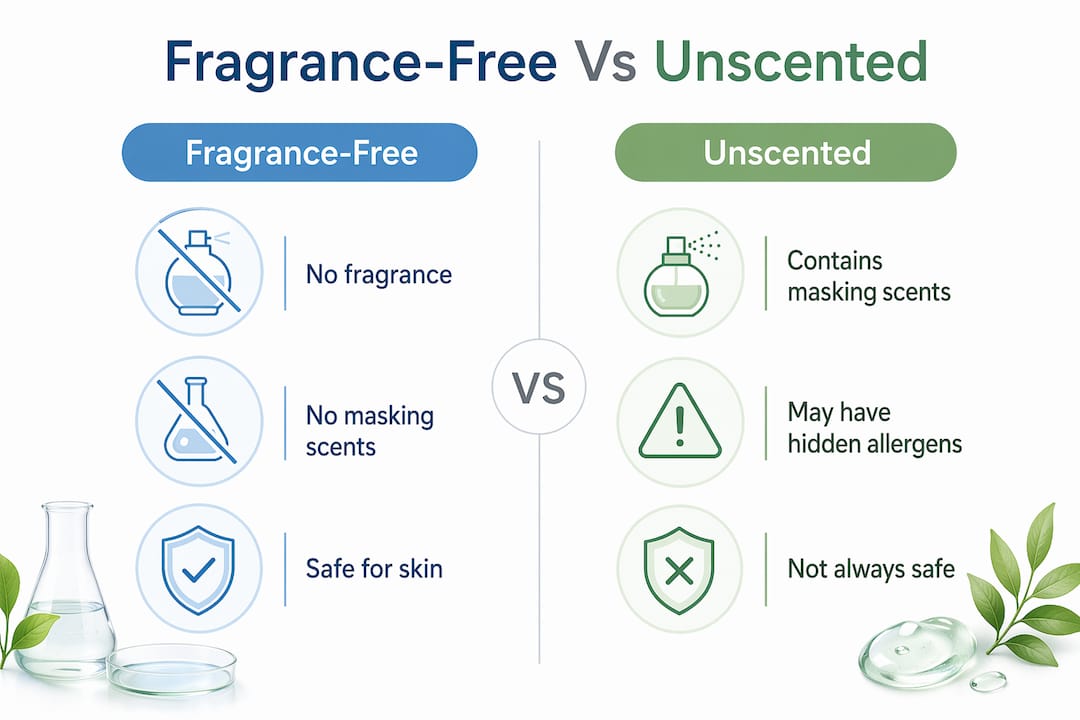
A fragrance-free product contains no fragrance ingredients at all. No aromatic compounds are added, whether for scent or to mask the natural odor of other ingredients. An “unscented” product, by contrast, may contain masking fragrances that neutralize odors without creating a perceptible scent. These masking chemicals are still fragrance compounds with full allergenic potential. The absence of smell does not mean the absence of fragrance chemistry.
The regulatory gap makes this worse. The EU requires declaration of 26 specific allergenic fragrance substances on labels, giving European consumers a meaningful tool for identifying risky products. The US has no equivalent requirement. American labels can list the entire fragrance blend under the single word “fragrance” or “parfum,” concealing dozens of individual compounds from the consumer.
| Category | Contains fragrance? | Masking scents? | Safe for sensitive skin? |
|---|---|---|---|
| Fragrance-free | No | No | Yes, generally |
| Unscented | Possibly | Yes, often | Not reliably |
| Scented | Yes | N/A | Higher risk |
Pro Tip: When reading an ingredient list, search for “parfum,” “fragrance,” “essential oil,” and individual allergen names like linalool or limonene. A product can be labeled fragrance-free and still contain fragrant botanical extracts, so ingredient-level verification is always more reliable than front-label claims.
The non-standardized nature of fragrance-free claims means that marketing language alone cannot be trusted. Reading the full ingredient list is not optional for sensitive skin. It is the only reliable method.
How to identify and choose truly fragrance-free skincare
Building a fragrance-free routine requires a systematic approach, not just swapping one product for another. Follow these steps to make the transition effectively.
Start with leave-on products first. Moisturizers and sunscreens have the longest skin contact time, which means they carry the highest sensitization risk. Prioritizing leave-on facial products when switching to fragrance-free delivers the greatest reduction in allergen exposure. Rinse-off products like cleansers matter too, but they are lower priority.
Read every ingredient list, not just the label. Look for “parfum,” “fragrance,” essential oil names (lavender oil, eucalyptus oil, citrus aurantium), and declared allergens like linalool or limonene. Some products labeled fragrance-free still contain fragrant botanical extracts that can trigger reactions.
Choose products with shorter ingredient lists. Fragrance-free products with minimal complexity reduce the number of potential irritants in each application. Long ingredient lists with multiple botanical extracts increase the probability that at least one compound will cause a reaction.
Use an ingredient checker. Tools like SkinDetekt allow you to paste an ingredient list and flag known allergens and fragrance compounds. This removes the guesswork from label reading, especially for products with long or unfamiliar ingredient names.
Run a 4 to 8 week trial with minimal changes. Practitioners recommend changing only one or two products at a time and keeping your actives stable during the trial period. This isolates the effect of fragrance removal and gives your skin barrier time to recover. Changing multiple products simultaneously makes it impossible to identify what is helping or hurting.
Avoid unnecessary botanicals and essential oils. Even in fragrance-free products, botanical extracts can introduce allergenic compounds. Ingredients like tea tree oil, peppermint extract, and citrus-derived actives carry fragrance allergens regardless of how they are classified on the label. Learning to avoid harsh chemicals in your routine means looking beyond the obvious offenders.
Pro Tip: Patch test new products on your inner arm for 48 hours before applying them to your face. This is especially useful during a fragrance-free transition when your skin barrier may already be compromised.
Benefits of fragrance-free skincare across different skin types
Fragrance-free skincare is not a niche solution for people with extreme sensitivities. The benefits of fragrance-free formulas apply across a wide range of skin types and concerns.
For eczema and rosacea: Fragrance is a primary trigger for both conditions. Removing it from your routine reduces flare frequency and severity. Clinical testing of gentle, fragrance-free formulations like Venusia Cleanser has demonstrated hypoallergenic and non-irritant results in HRIPT testing, confirming that well-formulated fragrance-free products can be used repeatedly without disrupting the skin barrier.
For acne-prone skin: Many fragrance compounds are comedogenic or pro-inflammatory. Switching to fragrance-free products reduces background inflammation, which can improve the skin’s response to acne treatments and reduce the frequency of new breakouts.
For aging skin: Chronic low-grade irritation from fragrance accelerates barrier degradation over time. For anyone focused on age-defying skincare for 40+, fragrance-free formulas support barrier integrity, which is directly linked to skin firmness, hydration retention, and overall resilience.
For all skin types: Consistent fragrance-free selection reduces sensitization exposure opportunities, helping prevent allergic contact dermatitis from developing in the first place. You do not need to have a diagnosed allergy to benefit from this protection.
| Skin concern | Key benefit of fragrance-free |
|---|---|
| Eczema and rosacea | Fewer flare-ups, reduced redness and itch |
| Acne-prone | Lower inflammation, better tolerance of actives |
| Aging skin (40+) | Preserved barrier function, improved hydration |
| General sensitivity | Reduced risk of developing new allergies |
| All skin types | Simpler formulas with fewer irritant variables |
Key takeaways
Fragrance-free skincare is the most reliable way to reduce irritation, prevent sensitization, and support long-term skin barrier health across all skin types.
| Point | Details |
|---|---|
| Fragrance-free vs. unscented | Only fragrance-free guarantees no scent chemicals; unscented products may still contain masking fragrances. |
| Sensitization risk is cumulative | Repeated fragrance exposure builds immune responses over months before symptoms appear. |
| Leave-on products are highest priority | Moisturizers and sunscreens have the longest contact time and the greatest sensitization risk. |
| Natural does not mean safe | Linalool, limonene, and other allergens appear in essential oils just as they do in synthetic blends. |
| Ingredient lists beat label claims | Front-label “fragrance-free” claims are not standardized; always verify by reading the full ingredient list. |
What I’ve learned from years of watching fragrance cause quiet skin damage
Fragrance is the most underestimated problem in skincare, and I say that after watching it derail routines that looked perfect on paper. People spend money on barrier-repair serums and prescription actives, then apply them in a base loaded with linalool and limonene and wonder why their skin never fully settles. The fragrance is doing damage faster than the actives can repair it.
The thing that surprises most people is the delay. Sensitization does not announce itself immediately. You can use a product for two years before your immune system reaches the threshold where it starts reacting visibly. By that point, most people blame stress, diet, or aging rather than the product they have trusted for years. I have seen this pattern repeatedly, and it is the main reason I think fragrance avoidance is worth adopting proactively, not just reactively.
The other mistake I see constantly is trusting “natural” as a proxy for safe. Essential oils are not gentle. Lavender, citrus, and rose extracts contain some of the most documented fragrance allergens in dermatology. If you are reading labels on natural skincare for women 40+ and assuming botanical ingredients are automatically skin-friendly, that assumption needs revisiting.
My practical advice: commit to a genuine 6-week fragrance-free trial. Change your moisturizer and sunscreen first, keep everything else stable, and document how your skin responds. Most people see a meaningful reduction in baseline redness and reactivity within that window. The results are not dramatic or instant, but they are consistent. And consistency is what actually changes your skin long term.
— Barbara
Gentle, fragrance-free skincare built for sensitive skin
If you are ready to make the switch, Miraclegelnaturalskincare offers a curated range of natural formulas designed specifically for sensitive and mature skin. The products prioritize barrier-repair ingredients and clean, minimal formulations without the fragrance compounds that trigger reactions.

The age-defying skincare range for 40+ from Miraclegelnaturalskincare is built around the principle that effective skincare does not need fragrance to perform. Formulas like the 2 Minute Miracle Gel use the Tri-Moisture Cryo Complex™ to deliver visible hydration and skin-brightening results without the irritant load of scented products. For anyone managing sensitivity alongside aging concerns, this is a practical starting point for a routine that works with your skin rather than against it.
FAQ
What does fragrance-free mean in skincare?
Fragrance-free means a product contains no fragrance materials or masking scents of any kind. The US EPA defines it as excluding all scent-related chemicals, which distinguishes it from “unscented” products that may still contain odor-neutralizing fragrance compounds.
Is fragrance-free skincare better for sensitive skin?
Fragrance-free skincare is the safer choice for sensitive skin because it eliminates the leading cause of cosmetic contact dermatitis. Fragrance chemicals affect up to 15% of dermatitis patients, and removing them reduces both immediate irritation and long-term sensitization risk.
Can natural or botanical skincare products still contain fragrance allergens?
Yes. Natural fragrance ingredients such as essential oils contain allergens including linalool and limonene that are comparable in risk to synthetic fragrances. A product can be plant-based and still trigger allergic contact dermatitis in sensitive individuals.
How is fragrance-free different from unscented?
Fragrance-free products contain no fragrance ingredients at all. Unscented products may contain masking fragrances that neutralize odor without creating a perceptible scent, but those chemicals still carry allergenic potential and can trigger reactions in sensitive skin.
How long does it take to see results from switching to fragrance-free skincare?
Most practitioners recommend a 4 to 8 week trial period with minimal other changes to your routine. Skin barrier recovery and reduced baseline reactivity typically become noticeable within this window, though individual results vary based on existing sensitivity levels.